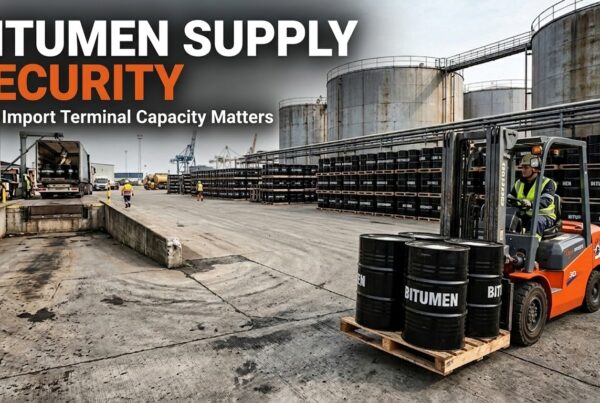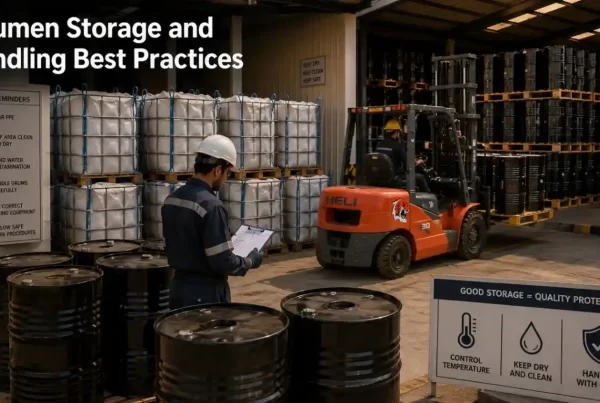
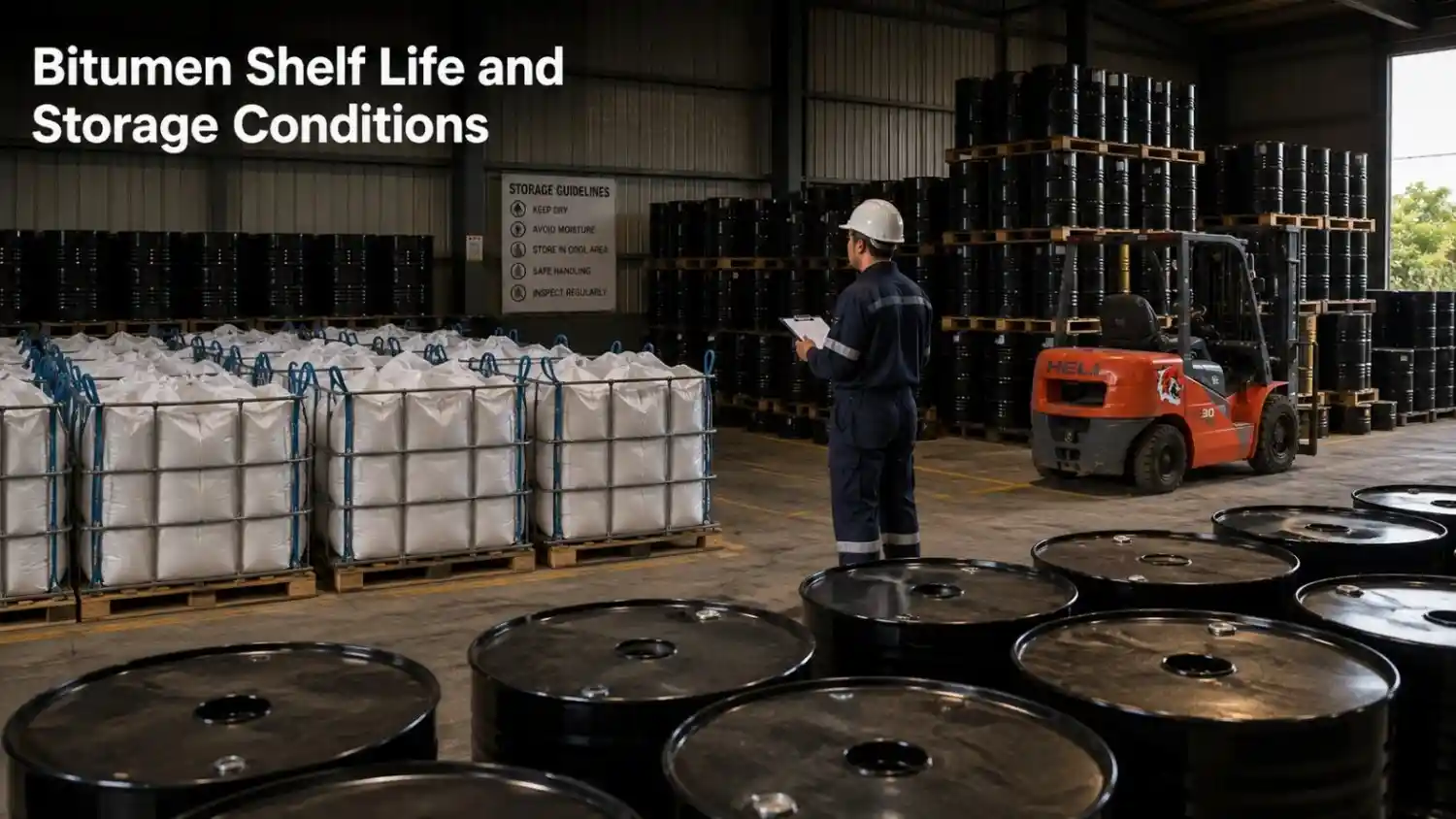
Proper storage is essential for maintaining the quality and performance of bitumen. Even quality-controlled bitumen products can lose their desired characteristics if they are stored under unsuitable conditions or handled incorrectly after delivery.
Whether you are importing bitumen for highway construction, airport projects, waterproofing, or industrial applications, understanding the correct storage practices helps protect your investment and ensures the product performs as intended when it is finally used.
This guide explains bitumen shelf life and storage conditions, including the key factors that affect product quality and the best practices for storing bitumen safely and efficiently.
How Long Can Bitumen Be Stored?
There is no single shelf-life period that applies to every bitumen product. The practical storage period depends on the grade, packaging, storage temperature, environmental exposure, and supplier recommendations. Buyers should check the product documentation and follow the manufacturer’s recommended storage conditions before extended storage.
Why Proper Storage Matters
Bitumen is a durable material, but like many industrial products, its performance depends on how it is stored.
Good storage practices help to:
- Maintain product quality
- Prevent contamination
- Preserve physical properties
- Improve workplace safety
- Reduce material waste
- Support efficient project planning
Incorrect storage conditions may lead to unnecessary handling difficulties and additional project costs.
Expert Tip from Tiger Bitumen
Quality doesn’t end at manufacturing. Proper storage and handling after delivery are equally important for maintaining the performance of bitumen throughout your project.
What Affects Bitumen Shelf Life?
Bitumen does not have one universal shelf-life period for every product and packaging type. Storage duration depends on the bitumen grade, packaging, temperature, moisture exposure, and manufacturer or project requirements. Buyers should follow the supplier’s technical documentation and recommended storage conditions rather than relying on a single fixed shelf-life period.
The most important factors include:
- Storage temperature
- Exposure to moisture
- Packaging condition
- Storage duration
- Handling procedures
- Environmental conditions
By controlling these factors, buyers can help preserve the product until it is ready for use.
Store Bitumen in a Dry Environment
Bitumen should always be stored in a clean and dry location.
The storage area should:
- Be protected from standing water
- Have adequate drainage
- Remain free from contaminants
- Allow easy access for loading and unloading
- Provide sufficient space for safe handling
Keeping the storage area organized helps improve both safety and operational efficiency.
Protect Packaging During Storage
Packaging plays a vital role in protecting the product throughout transportation and storage.
Common export packaging includes:
- New Steel Drums
- Jumbo Bags
- Bitutainers
- Bulk Vessel Supply
Buyers should inspect packaging upon arrival and check for signs of damage before placing products into storage.
Related Reading
Bitumen Packaging Guide for International Buyers
Temperature Considerations
Temperature management is important when storing bitumen.
Extreme conditions may affect handling characteristics and application efficiency.
To maintain product quality:
- Avoid unnecessary heating cycles.
- Follow recommended handling procedures.
- Monitor storage conditions where applicable.
- Use appropriate heating methods when preparing bitumen for application.
Following good temperature management practices helps maintain consistent product performance.
Safe Handling Practices
Proper handling reduces the risk of product loss and workplace incidents.
Recommended practices include:
- Using suitable lifting equipment
- Handling drums carefully
- Avoiding impact damage
- Keeping storage areas organized
- Following workplace safety procedures
Training personnel in correct handling techniques also improves operational efficiency.
Inventory Management
Large infrastructure projects often receive multiple shipments over an extended period.
Effective inventory management includes:
- Recording delivery dates
- Rotating stock appropriately
- Inspecting packaging regularly
- Monitoring storage conditions
- Planning material usage
Good inventory control helps minimize waste while ensuring product availability throughout the project.
How Tiger Bitumen Supports Buyers
Reliable suppliers understand that quality extends beyond manufacturing.
Tiger Bitumen supports international buyers through:
- Premium-quality export packaging
- Professional shipment planning
- Flexible packaging options
- SGS inspection coordination
- Export documentation support
- Reliable international logistics
Our objective is to help customers receive products in excellent condition and maintain that quality until final application.
Common Storage Mistakes
Avoiding common procurement and storage mistakes can help preserve product quality and improve project efficiency. Read our guide on common mistakes when buying bitumen to learn more.
Some of the most common storage issues include:
- Storing products in unsuitable environments
- Damaging packaging during handling
- Ignoring routine inspections
- Poor inventory rotation
- Inadequate storage planning
- Improper heating practices
Avoiding these mistakes helps preserve product quality and improve project efficiency.
Final Thoughts
Proper storage plays a vital role in preserving bitumen quality from delivery through to application. By maintaining suitable storage conditions, protecting packaging, following safe handling procedures, and implementing effective inventory management, international buyers can maximise product performance while reducing unnecessary costs.
Working with experienced suppliers such as Tiger Bitumen gives buyers access to quality-focused export solutions, professional packaging, reliable logistics, and expert export guidance.