Following bitumen storage and handling best practices is essential for maintaining product quality depends heavily on proper storage and handling. Even properly specified bitumen can experience quality issues if it is exposed to unsuitable temperatures, contamination, moisture, or poor handling practices.
For international buyers, understanding how to store and handle bitumen correctly is just as important as selecting the right grade. Proper storage helps preserve product quality, improves safety, reduces waste, and ensures the material performs as expected when it reaches the job site.
This guide explains bitumen storage and handling best practices for contractors, distributors, and infrastructure developers.
Why Proper Storage Matters
Bitumen often remains in storage before being used in construction projects.
Incorrect storage can lead to:
- Product contamination
- Oxidation
- Increased heating costs
- Reduced workability
- Material wastage
- Delays in project execution
Following proper storage procedures helps maintain consistent quality throughout the supply chain.
Expert Tip from Tiger Bitumen
Always plan storage before your shipment arrives. A well-prepared storage facility protects product quality and helps avoid unnecessary handling costs.
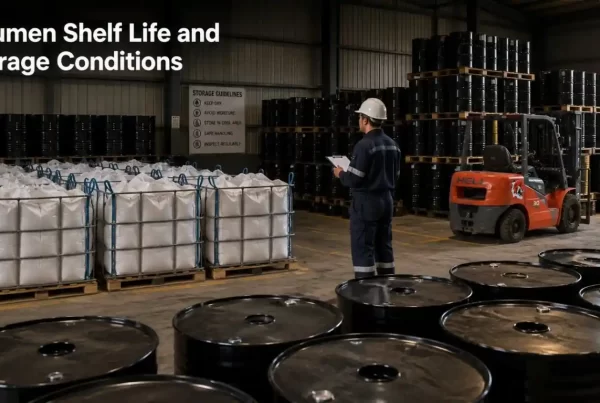
Choosing the Right Storage Method
The best storage method depends on the packaging and project size.
Common storage options include:
- Steel Drums
- Jumbo Bags
- Heated Storage Tanks
- Bitutainers
- Bulk Storage Facilities
Each option should be selected according to project requirements, unloading equipment, and expected storage duration.
Tiger Bitumen assists international buyers in selecting suitable packaging and storage solutions based on shipment size and destination.
Temperature Control
Bitumen performs best when stored within the recommended temperature range. The appropriate storage temperature depends on the specific bitumen grade and supplier’s technical recommendations.
Excessive heating may:
- Accelerate ageing
- Increase oxidation
- Affect product properties
Insufficient heating may:
- Reduce pumpability
- Make unloading difficult
- Delay asphalt production
Maintaining stable temperatures helps preserve product quality and simplifies handling.
Protect Against Moisture and Contamination
Storage areas should remain clean and dry.
Avoid exposure to:
- Rainwater
- Dust
- Dirt
- Chemicals
- Fuel contamination
Contamination can affect bitumen performance and may compromise the quality of the finished asphalt mixture.
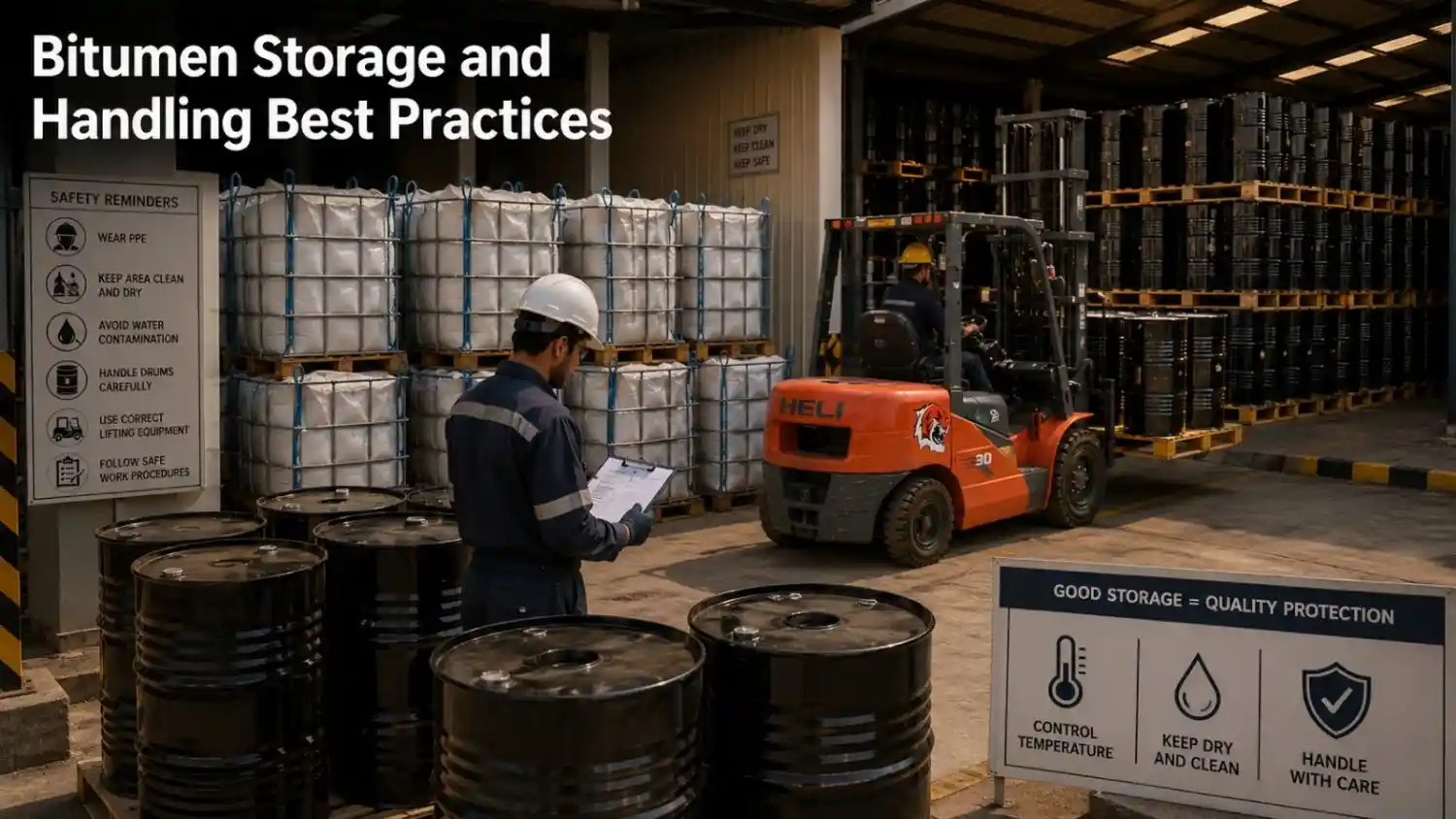
Safe Drum Handling
When bitumen is supplied in steel drums, careful handling is essential.
Best practices include:
- Use forklifts correctly
- Avoid dropping drums
- Store drums on stable surfaces
- Keep drums upright where applicable
- Inspect packaging before use
Proper handling reduces the risk of damage during storage and transportation.
Bulk Bitumen Storage
Large infrastructure projects often use heated storage tanks.
Important considerations include:
- Temperature monitoring
- Insulated tanks
- Agitation or circulation when required by the product and storage system
- Regular maintenance
- Safe pumping systems
Proper tank management helps maintain consistent product quality throughout long-term projects.
Workplace Safety
Handling hot bitumen requires appropriate safety measures. Workers should also follow the applicable site safety procedures, product documentation, and supplier recommendations for heating, storage, and handling.
Workers should use:
- Heat-resistant gloves
- Safety helmets
- Eye protection
- Protective clothing
- Safety footwear
Training personnel in safe handling procedures also helps reduce workplace accidents.
Transportation and On-Site Handling
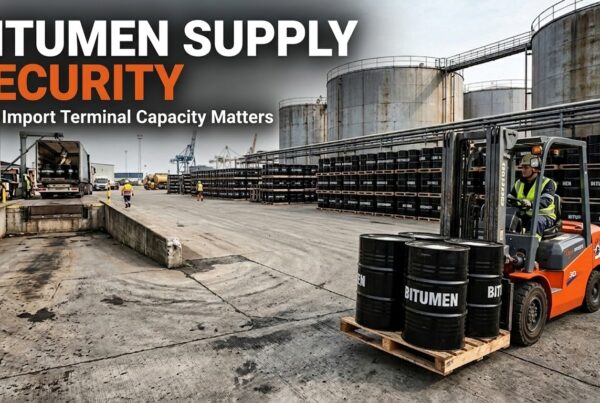
Good handling practices should continue after the shipment reaches the project site.
Buyers should:
- Inspect packaging on arrival
- Verify shipment quantities
- Check drum condition
- Follow safe unloading procedures
- Store products immediately after delivery
Tiger Bitumen prepares export shipments using reliable packaging methods that help minimise handling risks during international transportation.
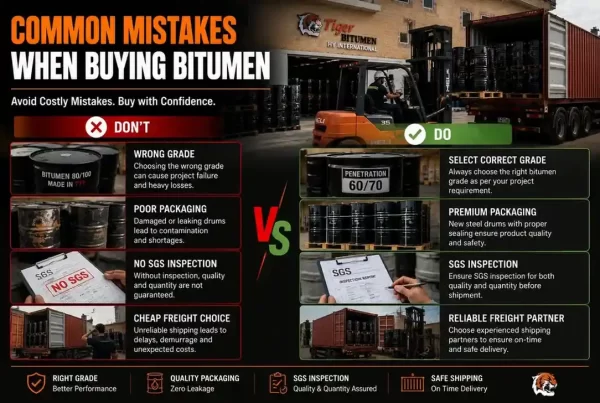
Common Storage Mistakes to Avoid
Some of the most common mistakes include:
- Overheating bitumen
- Allowing water contamination
- Poor drum stacking
- Long-term storage without inspection
- Inadequate safety procedures
- Improper unloading techniques
Avoiding these mistakes helps preserve product quality and improve operational efficiency.
Why Work with an Experienced Supplier
Storage begins long before the shipment reaches the buyer.
Reliable suppliers prepare products using proper packaging, careful loading procedures, and professional export logistics.
At Tiger Bitumen, export shipments are prepared with attention to packaging quality, loading procedures, and transportation requirements, helping buyers maintain product integrity from departure to final delivery.
Final Thoughts
Proper storage and handling play a vital role in maintaining bitumen quality, improving workplace safety, and ensuring successful project outcomes. Whether bitumen is supplied in steel drums, Jumbo Bags, Bitutainers, or bulk vessels, following recognised best practices helps protect the material throughout the supply chain.
By working with experienced exporters such as Tiger Bitumen, international buyers benefit from professional guidance, quality packaging, and reliable logistics that support efficient storage and long-term product performance.
About Tiger Bitumen
Tiger Bitumen supplies quality-controlled Bitumen Products with export packaging designed to protect product quality during international transportation and storage.Our experienced team supports customers with technical advice, flexible packaging options, SGS inspection coordination where applicable, and dependable global supply solutions for projects of every scale.