Buying bitumen may seem straightforward, but international procurement involves much more than comparing prices and placing an order. Selecting the wrong supplier, ordering an unsuitable bitumen grade, or overlooking quality inspections can lead to project delays, increased costs, and performance issues.
Whether you are purchasing bitumen for highways, airports, waterproofing, roofing, or industrial applications, understanding the common mistakes buyers make can help you avoid unnecessary risks and ensure a successful procurement process.
This guide highlights the most frequent purchasing mistakes and explains how international buyers can make informed decisions.
Focusing Only on the Lowest Price
One of the biggest mistakes buyers make is choosing a supplier based solely on the lowest quotation.
A lower price may not include:
- Quality inspection
- Reliable packaging
- Export documentation
- Professional logistics support
- Technical assistance
A slightly higher quotation from an experienced exporter often delivers better overall value by reducing operational risks and preventing costly delays.
Expert Tip from Tiger Bitumen
Always compare the complete export package—not just the product price. Inspection, packaging, logistics, and documentation all contribute to the total value of your purchase.
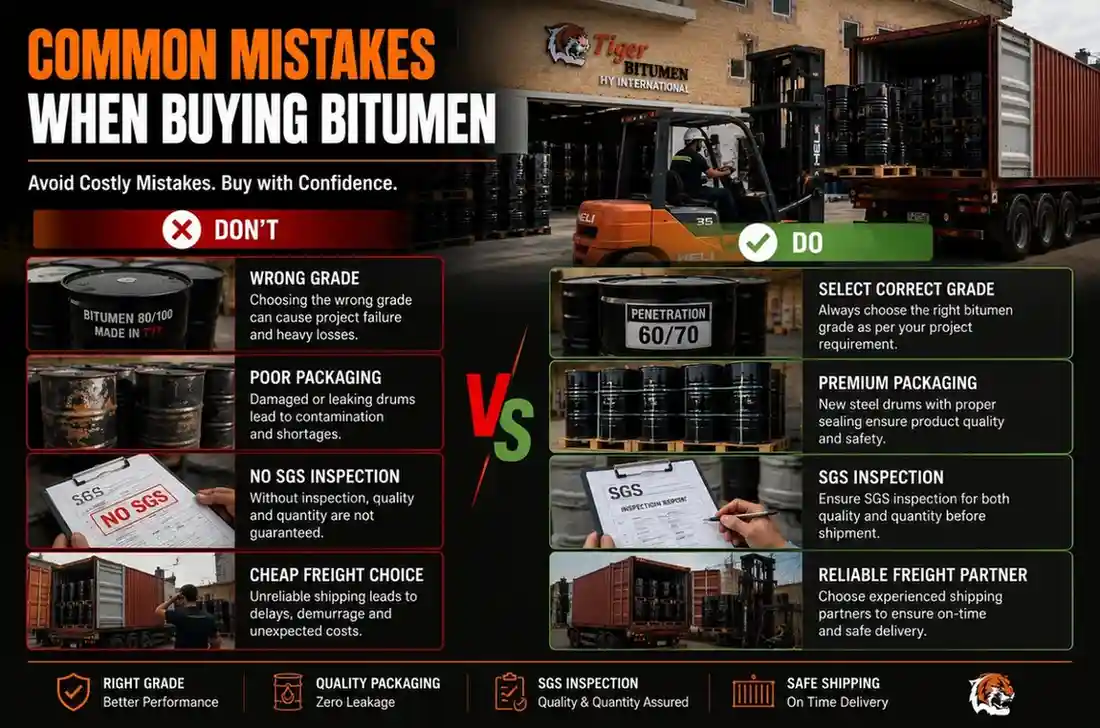
Choosing the Wrong Bitumen Grade
Every construction project has unique technical requirements.
Using the wrong grade can result in:
- Reduced pavement life
- Cracking
- Rutting
- Poor waterproofing performance
- Higher maintenance costs
Before ordering, buyers should consider:
- Climate conditions
- Traffic volume
- Project specifications
- Engineering requirements
Experienced exporters like Tiger Bitumen provide technical guidance to help buyers select the most suitable bitumen grade for their projects.
Related Reading
How to Choose the Right Bitumen Grade
Ignoring Product Quality
Not every shipment offers the same level of quality.
Buyers should always request:
- Certificate of Analysis (COA)
- Product specifications
- Quality reports
- Independent SGS inspection (when required)
Quality verification before shipment provides confidence that the product meets the agreed technical standards.
Overlooking Supplier Experience
Exporting bitumen requires knowledge of international logistics, documentation, packaging, and shipping procedures.
An experienced supplier can help buyers avoid many common procurement issues, including customs delays and incorrect documentation.
At Tiger Bitumen, our export team supports international buyers throughout the entire procurement process, from quotation to final delivery.
Not Understanding Shipping Terms
Many buyers misunderstand the responsibilities associated with international shipping terms.
Before placing an order, understand the difference between:
- FOB
- CFR
- CIF
Choosing the right Incoterm helps avoid unexpected freight costs and logistical misunderstandings.
Related Reading:
Selecting the Wrong Packaging
Packaging should match the project’s transportation and storage requirements.
Available options include:
- New Steel Drums
- Jumbo Bags
- Bitutainers
- Bulk Vessel Supply
Selecting unsuitable packaging can increase handling costs and complicate unloading operations.
Tiger Bitumen offers multiple packaging solutions to ensure products arrive safely and efficiently.
Related Reading
Bitumen Packaging Guide for International Buyers
Incomplete Documentation
Incorrect or incomplete export documents can delay customs clearance and increase project costs.
Essential documents generally include:
- Commercial Invoice
- Packing List
- Bill of Lading
- Certificate of Origin
- Inspection Certificate
Working with an experienced exporter helps ensure documentation is prepared accurately.
Failing to Plan Logistics
International procurement involves more than purchasing the product.
Buyers should also consider:
- Transit time
- Port congestion
- Freight availability
- Delivery schedules
- Marine insurance
Proper logistics planning helps prevent unnecessary delays and keeps projects on schedule.
Not Inspecting the Shipment Before and After Delivery
Upon arrival, buyers should inspect:
- Packaging condition
- Drum integrity
- Product identification
- Quantity received
- Shipping documentation
Prompt inspection allows any issues to be reported immediately.
Building Long-Term Supplier Relationships
Many companies purchase bitumen from different suppliers every time they place an order.
Developing a long-term relationship with a reliable exporter provides several advantages:
- Consistent product quality
- Faster quotations
- Better logistics coordination
- Technical support
- Stable supply planning
This approach improves procurement efficiency and supports long-term infrastructure projects.
Final Thoughts
Successful bitumen procurement requires careful planning, technical understanding, and reliable supply chain management. By avoiding common mistakes such as focusing only on price, selecting the wrong grade, overlooking quality inspections, or misunderstanding shipping terms, international buyers can significantly reduce procurement risks.
Working with experienced exporters such as Tiger Bitumen provides access to professional guidance, quality-focused bitumen products, reliable export logistics, and long-term supply solutions designed to support projects worldwide.
About Tiger Bitumen
Tiger Bitumen supplies internationally recognized bitumen products to contractors, distributors, government organizations, and industrial buyers across global markets. With strict quality control, SGS inspection support, flexible packaging, and dependable export logistics, we help customers procure premium-quality bitumen with confidence.