When importing bitumen from international suppliers, understanding FOB, CFR, and CIF shipping terms is just as important as selecting the right product. These internationally recognised Incoterms define the responsibilities of buyers and sellers for freight, insurance, risk transfer, and delivery throughout the shipping process. Many procurement issues occur because buyers and sellers have different expectations regarding these responsibilities.
These shipping terms define who is responsible for transportation, freight costs, insurance, and risk during the shipping process.
This guide explains how each shipping term works and helps international buyers choose the option that best fits their procurement strategy.
Why Incoterms Matter
FOB, CFR, and CIF are internationally recognised Incoterms® 2020 rules published by the International Chamber of Commerce (ICC), providing a common framework for international trade.
International trade involves multiple stages, including inland transportation, port handling, ocean freight, customs clearance, and final delivery.
Without clearly defined responsibilities, buyers may face:
- Unexpected shipping costs
- Delayed deliveries
- Insurance disputes
- Documentation issues
- Communication problems
Using internationally recognised Incoterms helps both buyers and suppliers understand their responsibilities before the shipment begins.
Industry Insight from Tiger Bitumen
Always confirm the agreed Incoterm before requesting a quotation. The same bitumen shipment can have different prices depending on whether it is quoted under FOB, CFR, or CIF terms.
What is FOB?
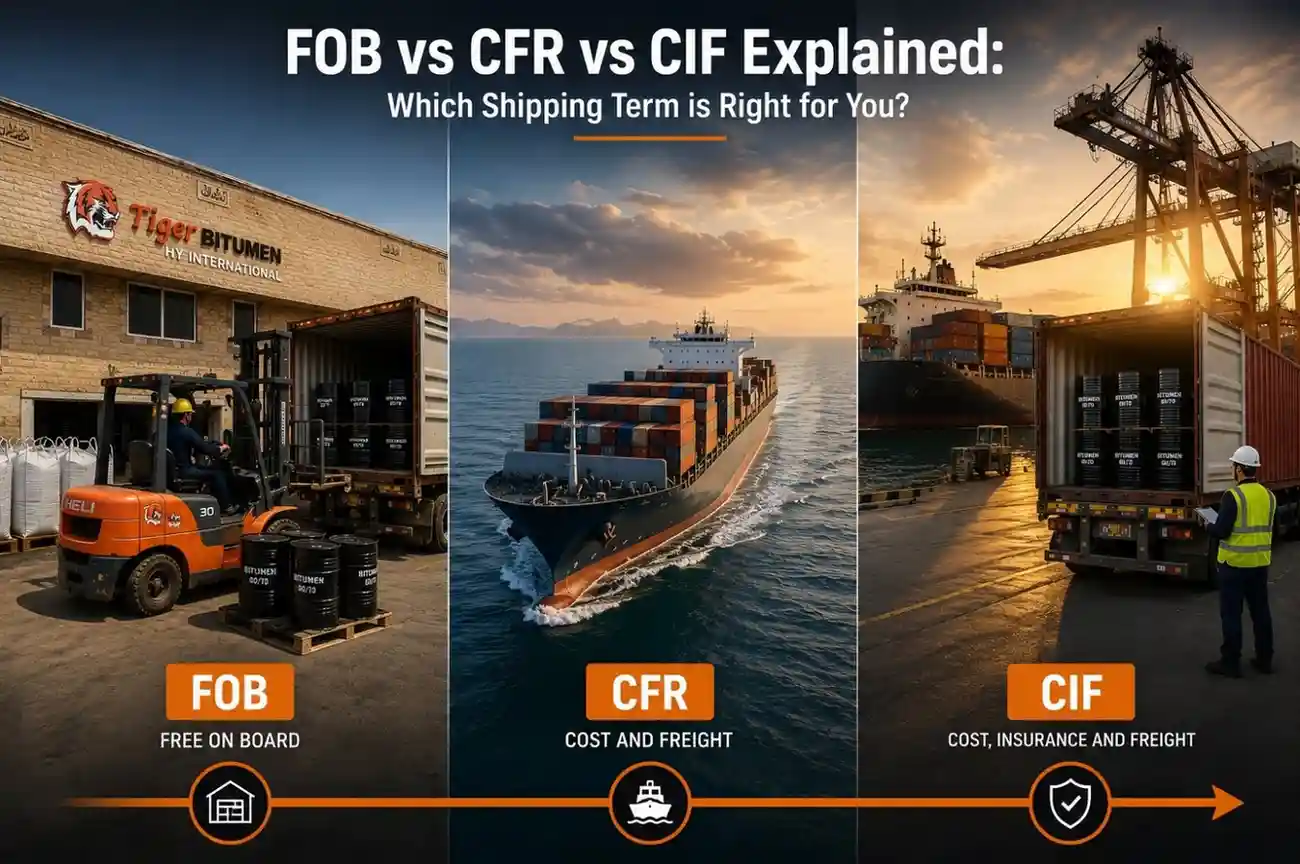
FOB (Free on Board) means the supplier is responsible for preparing the shipment and loading it onto the nominated vessel at the agreed port of departure.
After the cargo is loaded, responsibility transfers to the buyer.
Under FOB, the supplier usually handles:
- Export documentation
- Inland transportation to the port
- Port handling
- Container loading
- Export customs procedures
The buyer normally arranges:
- Ocean freight
- Marine insurance
- Import customs clearance
- Local transportation after arrival
FOB is often preferred by experienced importers who already have reliable freight forwarders and shipping partners.
What is CFR?
CFR (Cost and Freight) means the supplier arranges and pays for ocean freight to the destination port.
However, the buyer remains responsible for marine insurance.
Under CFR, the supplier provides:
- Export documentation
- Port handling
- Ocean freight
- Shipment coordination
The buyer is responsible for:
- Marine insurance
- Import customs clearance
- Local delivery
CFR is a practical option for buyers who want the supplier to manage shipping while arranging their own insurance.
What is CIF?
CIF (Cost, Insurance and Freight) offers one of the most comprehensive shipping solutions.
The supplier arranges:
- Export documentation
- Ocean freight
- Marine insurance
- Shipment coordination
The buyer generally manages:
- Import customs clearance
- Local transportation
- Delivery after arrival
CIF is often chosen by buyers who prefer a simplified procurement process with fewer logistics responsibilities.
Quick Comparison
| Feature | FOB | CFR | CIF |
| Ocean Freight | Buyer | Supplier | Supplier |
| Marine Insurance | Buyer | Buyer | supplier |
| Export Documentation | supplier | supplier | supplier |
| Import Clearance | Buyer | Buyer | Buyer |
| Best For | Experienced Importers | Buyers Managing Insurance | Buyers Seeking Convenience |
Which Option is Best?
There is no universal answer.
The right choice depends on:
- Procurement experience
- Logistics capability
- Freight contracts
- Insurance preferences
- Internal resources
- Project deadlines
Generally:
- FOB suits experienced importers.
- CFR suits buyers wanting freight arranged by the supplier.
- CIF suits buyers looking for the most convenient shipping solution.
Tiger Bitumen helps international buyers understand these options before preparing customized quotations.
How Tiger Bitumen Supports Buyers
Every customer has different logistics requirements.
Tiger Bitumen provides flexible quotation options under:
- FOB
- CFR
- CIF
Our export specialists assist buyers with:
- Shipment planning
- Packaging recommendations
- Export documentation
- Logistics coordination
- Port scheduling
- Technical support
This allows buyers to choose the shipping solution that best matches their procurement strategy.
Common Mistakes When Selecting Incoterms
Some buyers assume every quotation includes freight and insurance.
Before confirming an order, always verify:
- Which Incoterm applies
- Who pays freight
- Who arranges insurance
- Which port is specified
- What services are included
Clarifying these details early helps prevent misunderstandings later.
Final Thoughts
FOB, CFR, and CIF each provide different advantages depending on the buyer’s experience, logistics capabilities, and project requirements.
Understanding these shipping terms allows international buyers to compare quotations accurately, plan transportation efficiently, and reduce procurement risks.
Working with experienced exporters such as Tiger Bitumen ensures buyers receive professional guidance on selecting the most suitable shipping terms while benefiting from reliable export services and dependable global logistics.
About Tiger Bitumen
Tiger Bitumen supplies premium-quality bitumen products under flexible FOB, CFR, and CIF terms to international buyers worldwide. With professional export documentation, secure packaging, SGS inspection support, and reliable logistics coordination, we help customers simplify international procurement while ensuring timely and dependable deliveries.