
Polymer Modified Bitumen (PMB)
Polymer Modified Bitumen (PMB) Supplier
Polymer Modified Bitumen (PMB) is bitumen modified with polymers to improve its performance across a wider range of temperatures and traffic conditions. Compared with conventional paving bitumen, PMB can provide improved resistance to rutting, permanent deformation, fatigue, and cracking when the appropriate grade is selected for the project.
Tiger Bitumen supplies Polymer Modified Bitumen for international road, highway, airport, and other paving applications. PMB can be supplied according to the applicable EN 14023, IS 15462, AASHTO Performance Grade (PG), or project-specific specification. The complete grade designation, applicable standard, and technical requirements are confirmed for each enquiry.
What Is Polymer Modified Bitumen?
Ordinary paving bitumen is a thermoplastic material, meaning its stiffness depends on temperature. Under a slow, heavy wheel load on a hot day, it can flow and rut; in cold weather, under repeated thermal contraction, it can become brittle and crack. A well-produced unmodified grade generally handles normal traffic on a normal road adequately, but it can perform less well where loading is slow, heavy and repetitive, or where climate pushes pavement temperature toward either extreme.
PMB addresses this by dispersing a polymer through the bitumen to extend the binder's working range at one or both ends. It is not a single product but a family of modified binders. Depending on the applicable standard and grade, PMB specifications can include penetration, softening point, strain recovery, cohesion, storage stability and other performance characteristics. Different PMB products are formulated for different combinations of climate, traffic and application, so specifications and declared properties should always be checked against the individual product rather than assumed from the general term "PMB."
How Polymer Modification Works
PMB can be produced using different polymer modifiers. Elastomeric polymers such as SBS (styrene-butadiene-styrene) are commonly used in road-grade PMB, where the polymer disperses through the bitumen and forms an elastic network that allows part of the deformation to be recovered once the load is removed. Other modifier systems, including plastomers such as EVA or polyethylene, are also used in the market and generally raise stiffness and softening point efficiently without necessarily providing the same degree of elastic recovery as an elastomer.
The modifier type and dosage used in a given product determine which performance properties it actually achieves. Buyers should confirm these properties from the applicable technical data sheet rather than assume them from the term "PMB" alone. Tiger arranges PMB according to the modifier system and grade each project specifies.
PMB Performance Characteristics
Elastic (strain) recovery. In elastomer-modified PMB, this is an important property, since a well-modified elastomeric binder can recover part of its deformation once the load is removed. Not all PMB exhibits the same degree of elastic recovery. Plastomer-modified binders, for example, are typically stiffer but may recover less, so this should be checked against the declared value for the specific grade rather than assumed.
Resistance to rutting and permanent deformation. Raising high-temperature stiffness, generally without giving up flexibility at lower temperatures, helps resist the wheel-path channelling that can develop under slow, heavy or standing traffic. The degree of improvement depends on the base bitumen, the modifier and the dosage.
Fatigue and cracking resistance. Elastomer-modified binders, in particular, are generally understood to tolerate more repeated flexure before cracking initiates than an unmodified binder, which is a common reason long-life pavement designs specify a modified binder.
Temperature range. A modified binder is intended to widen the working temperature interval, not simply raise it at one end. A binder that gains high-temperature stiffness while losing low-temperature flexibility has had its range shifted rather than widened, which works against the purpose of specifying a modified binder.
PMB Applications
PMB is generally specified where a conventional binder is at or near the edge of its working range and the cost of pavement failure is high relative to the cost of the binder:
- Highways and heavy traffic roads – freight corridors, climbing lanes and other routes carrying high, repetitive axle loads.
- Intersections and slow traffic zones – locations where load is applied for longer per axle than in free-flowing traffic.
- Airports and airfields – aprons, taxiways and runway areas, where specifications commonly call for a modified binder.
- Bridges and structural overlays – thin surfacing over a stiff deck, which flexes more than pavement over subgrade.
- Maintenance, rehabilitation and gap-graded mixes (e.g. stone mastic asphalt) – mixes that need a binder film thick enough to resist draining off the aggregate.
PMB Grades and EN 14023
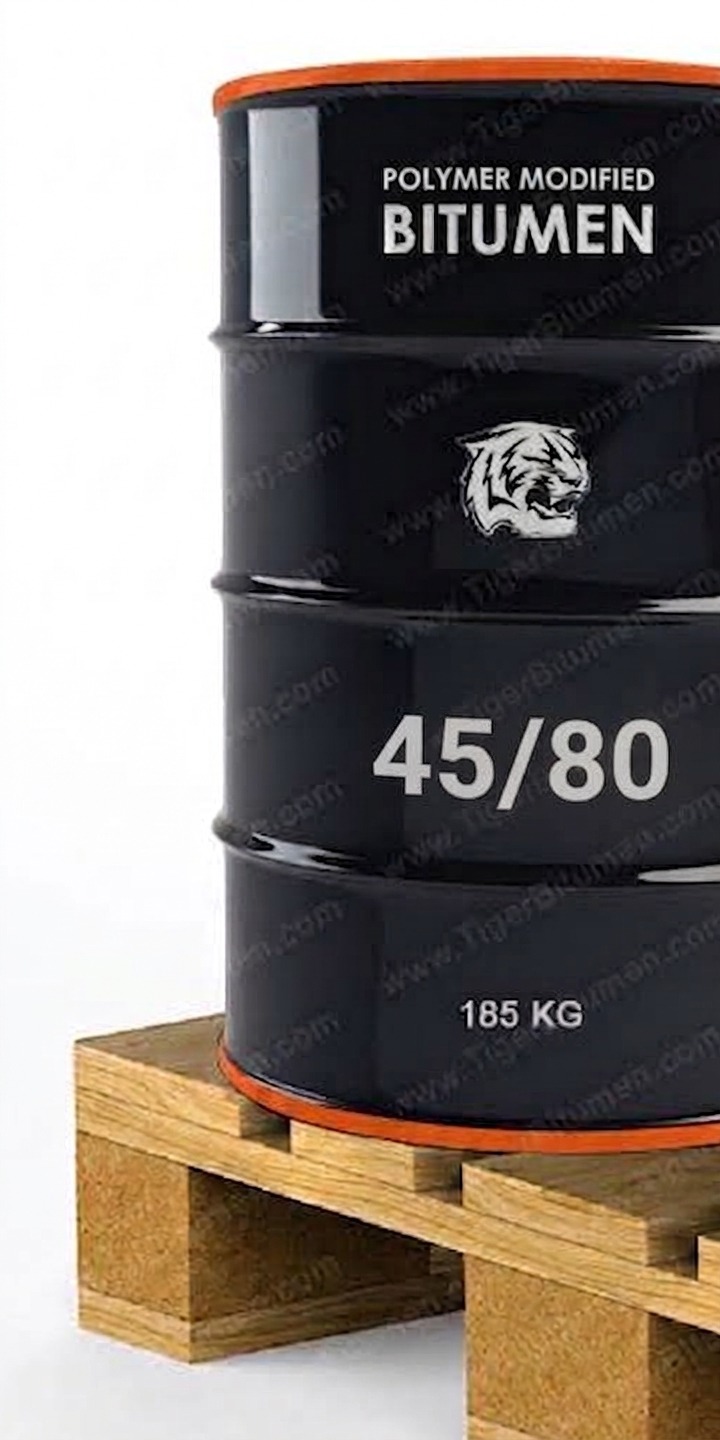
PMB is not identified by a single number in the same way as a penetration grade. Under EN 14023, a specification framework for polymer modified bitumens, the standard defines a set of nominal penetration ranges (Table 1). A complete PMB designation combines one of these penetration ranges with a minimum softening-point class, written as PMB [penetration range]-[minimum softening point]. For example, PMB 45/80-60 combines the 45/80 penetration range with a minimum softening point of 60°C.
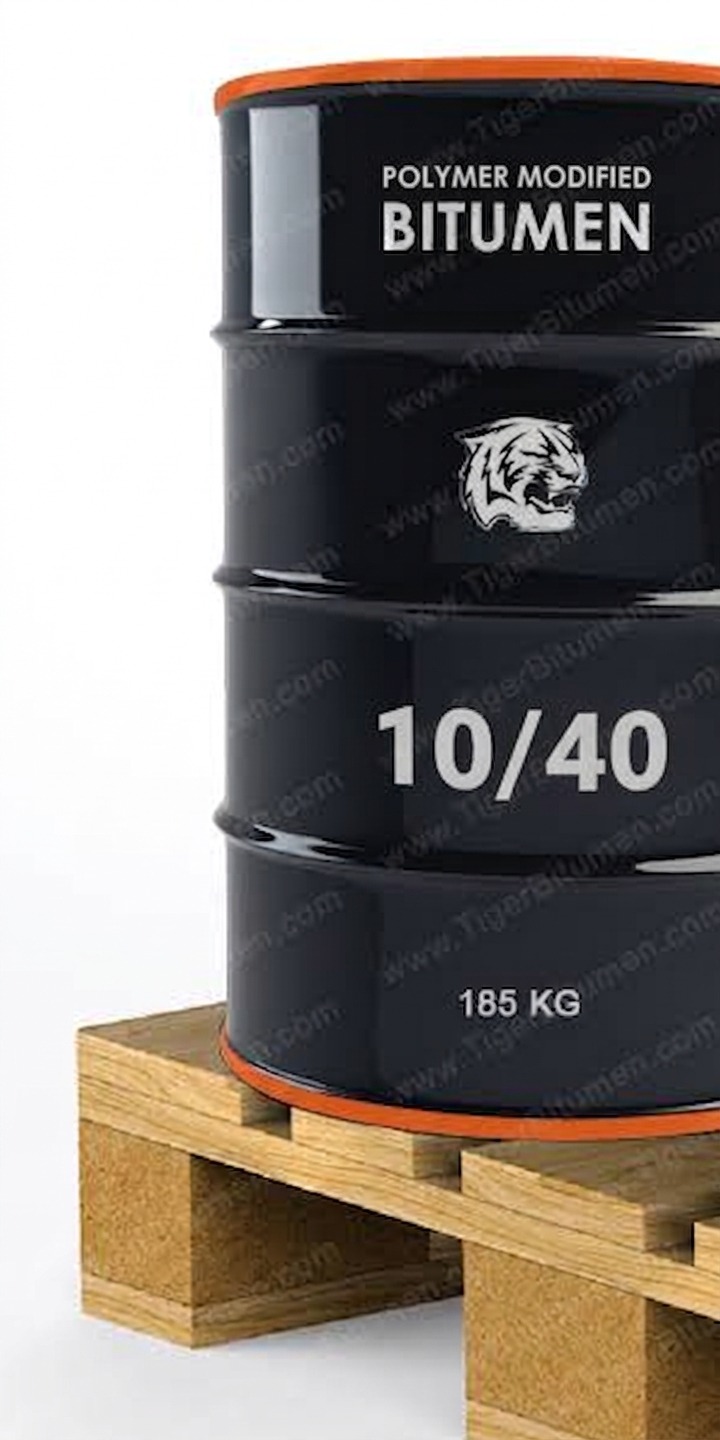
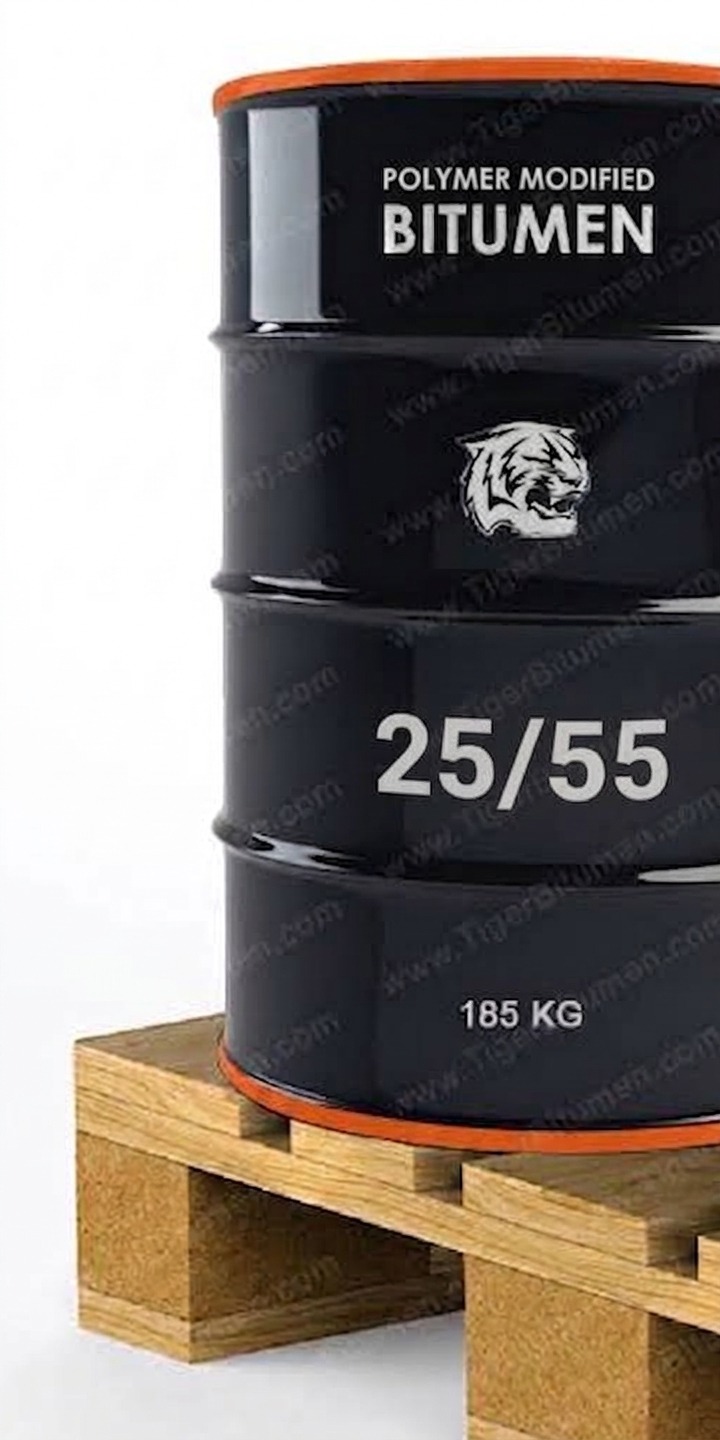
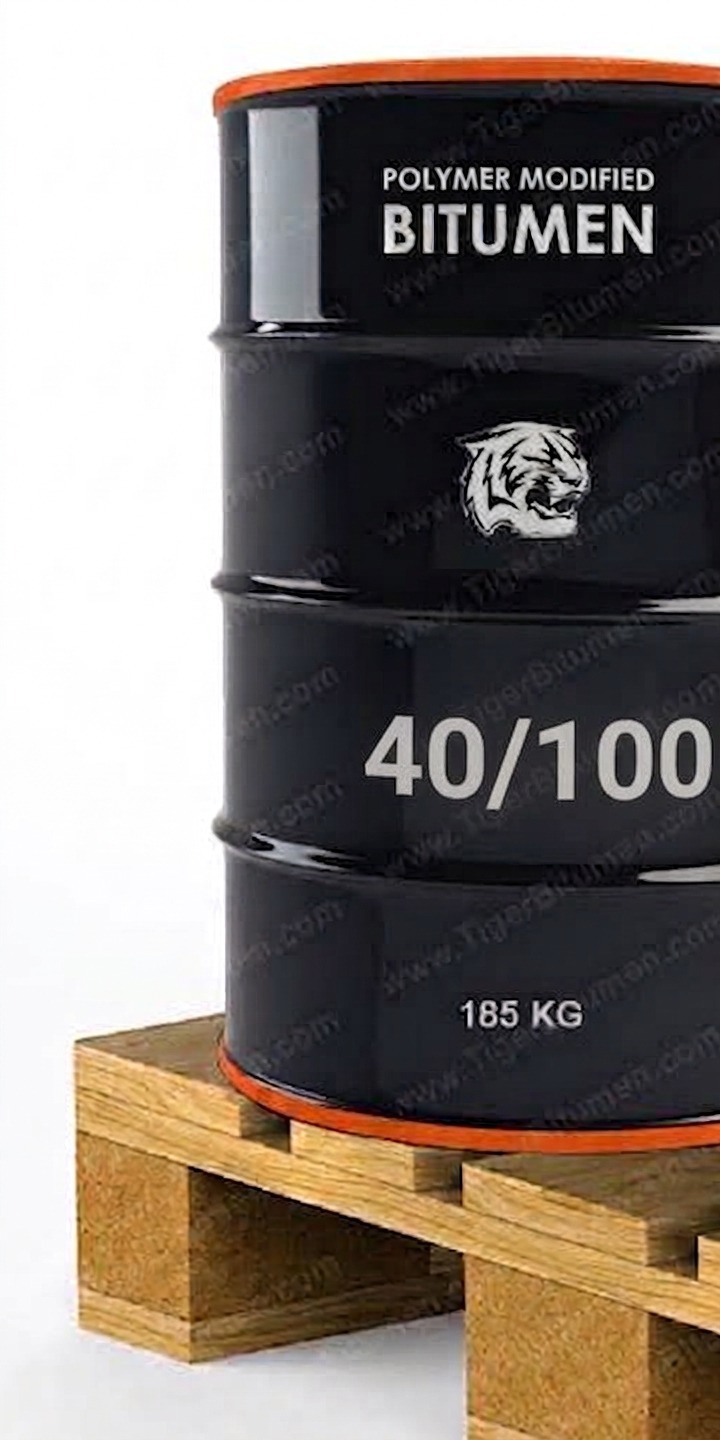
The nominal penetration ranges (0.1 mm) defined in EN 14023:2010:
Each of these ranges is only part of a complete PMB designation. The full designation used for ordering and testing also states the minimum softening-point class applicable to the project, as in the PMB 45/80-60 example above. Tiger Bitumen offers PMB across this full nominal penetration range framework, with the complete designation and applicable standard confirmed against each project's specification at the time of enquiry.
PMB may also be specified under IS 15462 or under AASHTO Performance Grade (PG) specifications, depending on the project and jurisdiction. These are different classification systems, not different products. A binder can be tested and shown to meet more than one system, but the designations are not directly interchangeable, and a supplier's offer should state clearly which standard and edition it is quoting.


What Is Polymer Modified Bitumen?
Ordinary paving bitumen is a thermoplastic material, meaning its stiffness depends on temperature. Under a slow, heavy wheel load on a hot day, it can flow and rut; in cold weather, under repeated thermal contraction, it can become brittle and crack. A well-produced unmodified grade generally handles normal traffic on a normal road adequately, but it can perform less well where loading is slow, heavy and repetitive, or where climate pushes pavement temperature toward either extreme.
| Penetration Bitumen | Polymer Modified Bitumen (PMB) | Performance grade (PG) Bitumen | |
| Classification basis | Penetration value at 25°C (e.g. 60/70) | Ploymer modified composition; graded by penetration range and minimum softening point (EN 14023) | Pavement temperature range and traffic loading the binder is shown to withwithstand (AASHTO M320/M332) |
| What the grade number tells you | Hardness/consistency of the unmodified bitumen | Penetration range and minimum softening point, plus (where declared) elastic recovery and related properties | The high and low temperature limits the binder meets, independent of composition |
| Composition | Unmodified | Modified the ploymer is part of the classification | May or may not be modified a higher PG grade is often, but not always, achieved through ploymer modification |
If your project specification calls for an unmodified binder, see Penetration Bitumen. If it calls for an AASHTO/Superpave PG grade specifically, see Performance Grade Bitumen.
Choosing the Right PMB Grade
Grade selection is project-specific and should follow your specification rather than a general rule. The main factors are:
- Traffic loading – volume, speed, and whether loading is free-flowing or slow/standing.
- Climate – the maximum and minimum pavement temperatures the binder will actually experience, not just ambient air temperature.
- Application – wearing course, binder course, a gap-graded mix such as SMA, or a specialized use such as airport or bridge-deck surfacing.
- Governing standard – EN 14023, IS 15462, AASHTO PG, or a national annex/project-specific document.
If your project doesn't specify a modified binder, our Penetration Bitumen range may be the more appropriate choice.
PMB Quality, Testing and Documentation
A meaningful PMB offer states the full grade designation and the standard and edition it's tested against. "Complies with EN 14023" alone, without the designation, doesn't tell you much on its own. Tiger provides a PMB-specific Technical Data Sheet and a shipment-specific Certificate of Analysis matched to the applicable grade and project specification. Third-party inspection through SGS or Bureau Veritas can also be arranged where required by the buyer or project. Typical parameters reported for PMB include penetration, softening point, and, for elastomeric grades, elastic recovery and storage stability (separation).
Packaging and Export Supply
Tiger Bitumen's packaging facility is located in the Karachi Export Processing Zone (Karachi Free Zone), close to Port Qasim and Karachi Port, supporting container export through Pakistan's major ports. Tiger's standard bitumen products are supplied in new steel drums and jumbo bags, loaded via 20' containers. See our drum and jumbo bag packing page for details.
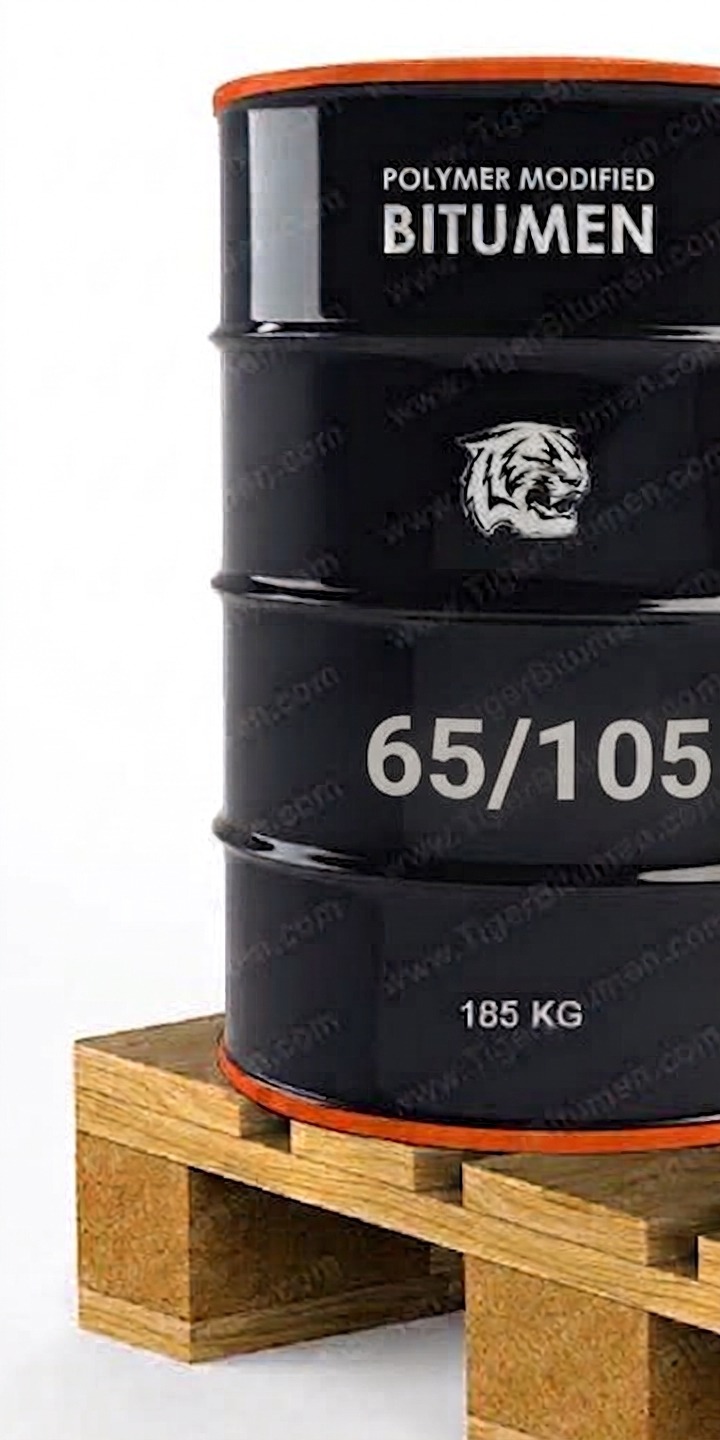
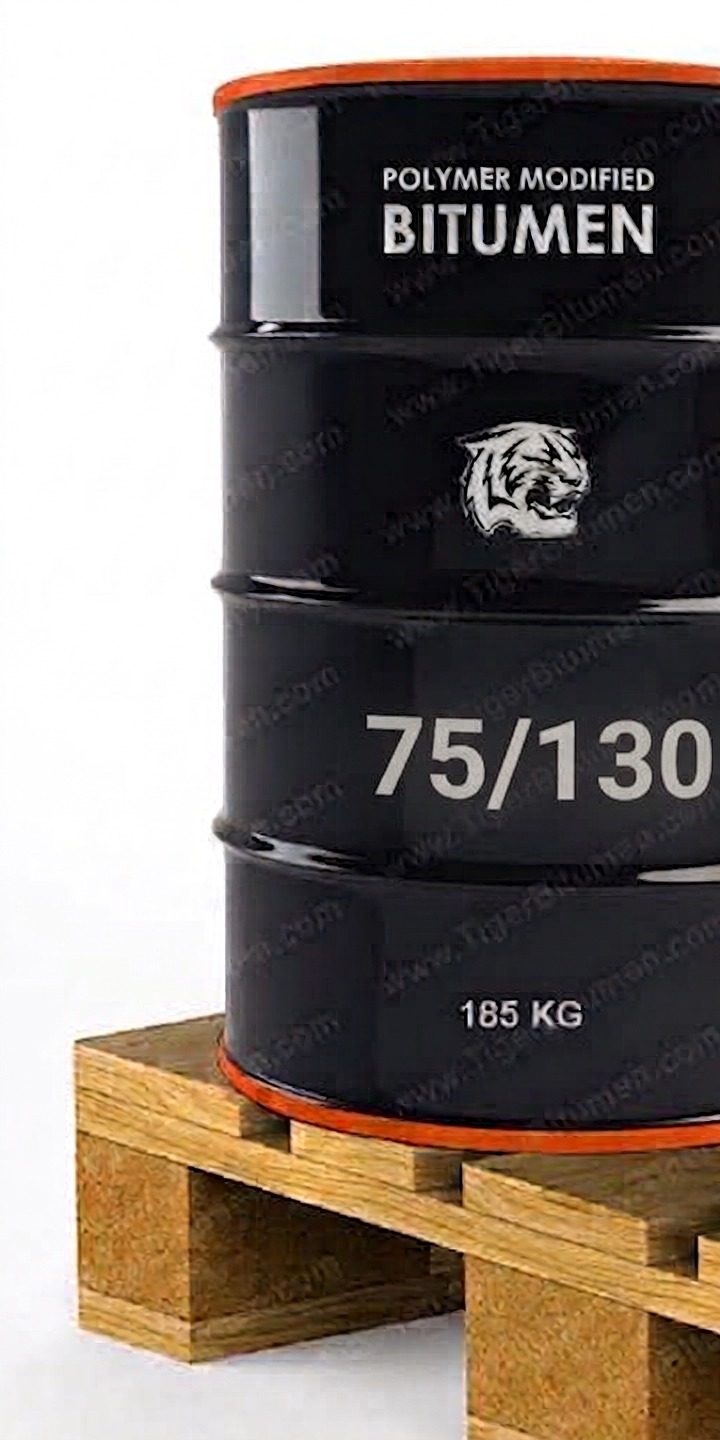
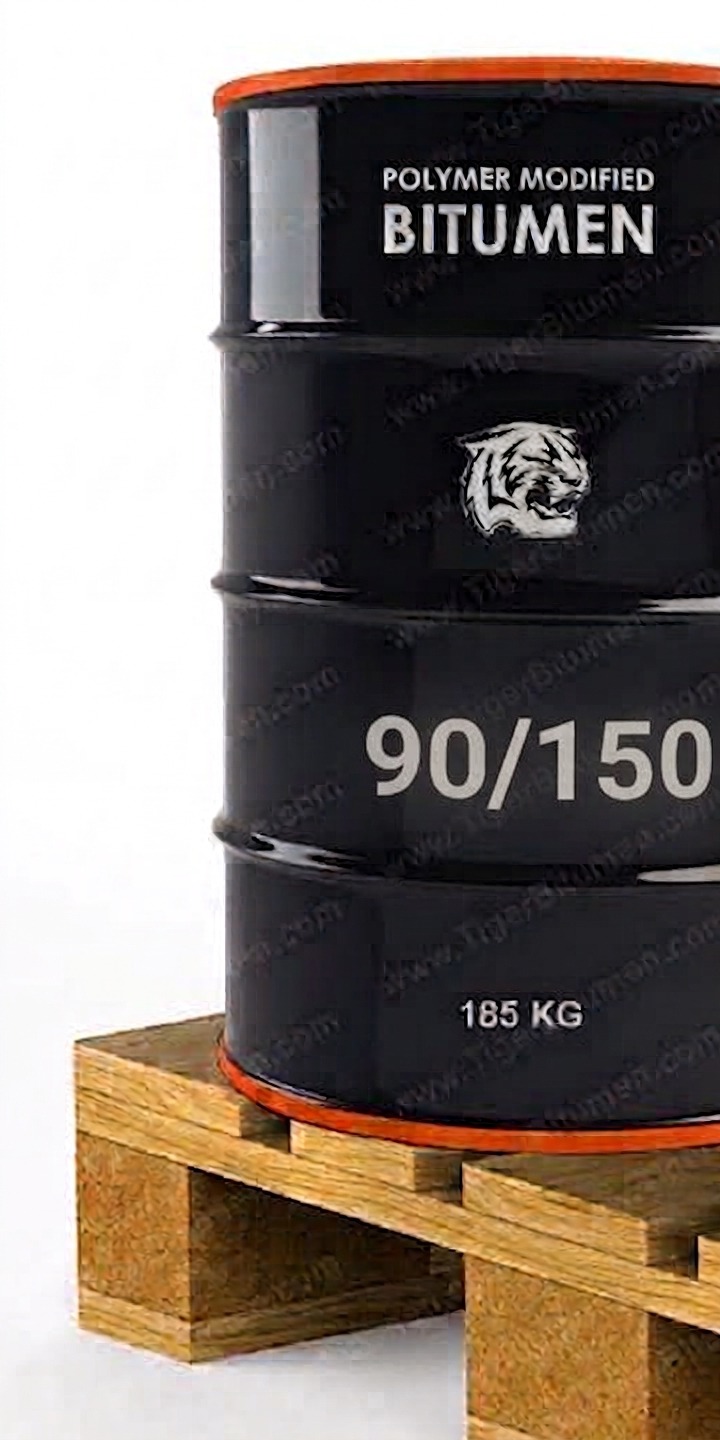
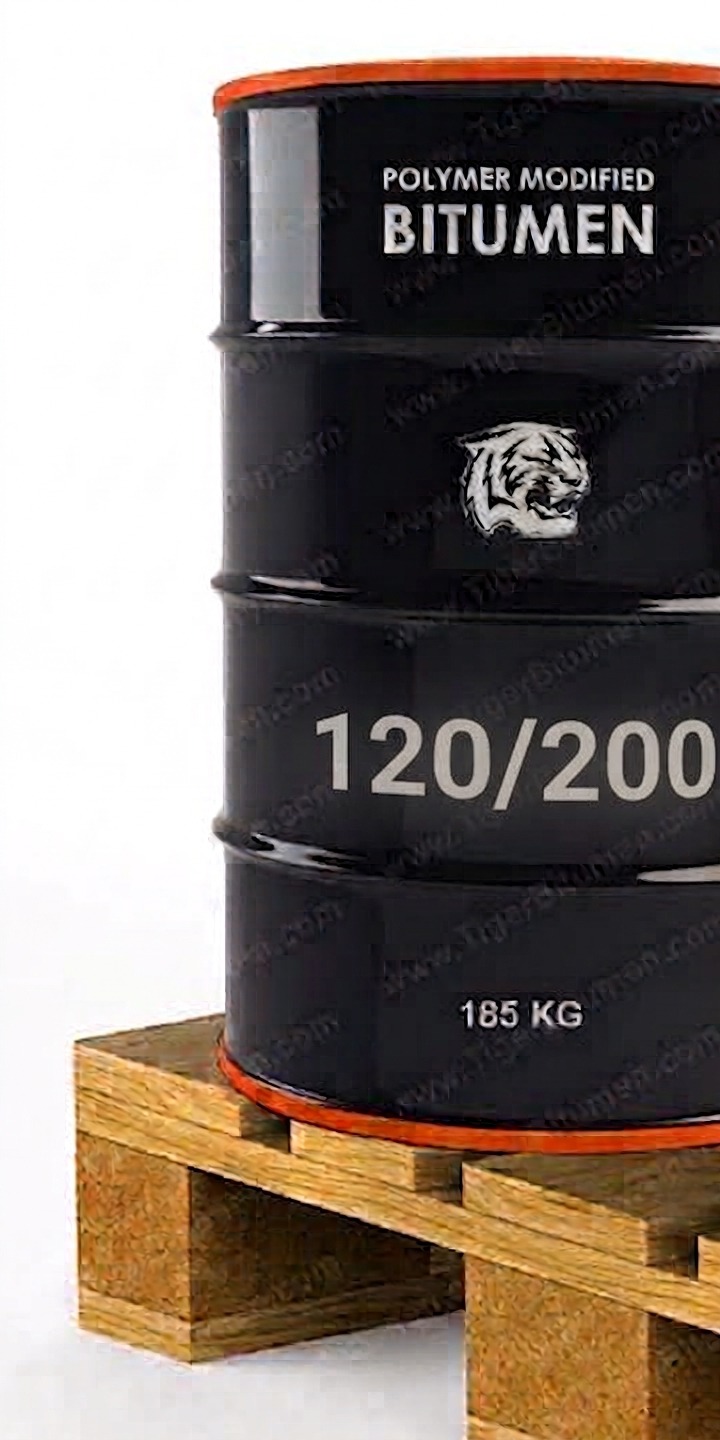
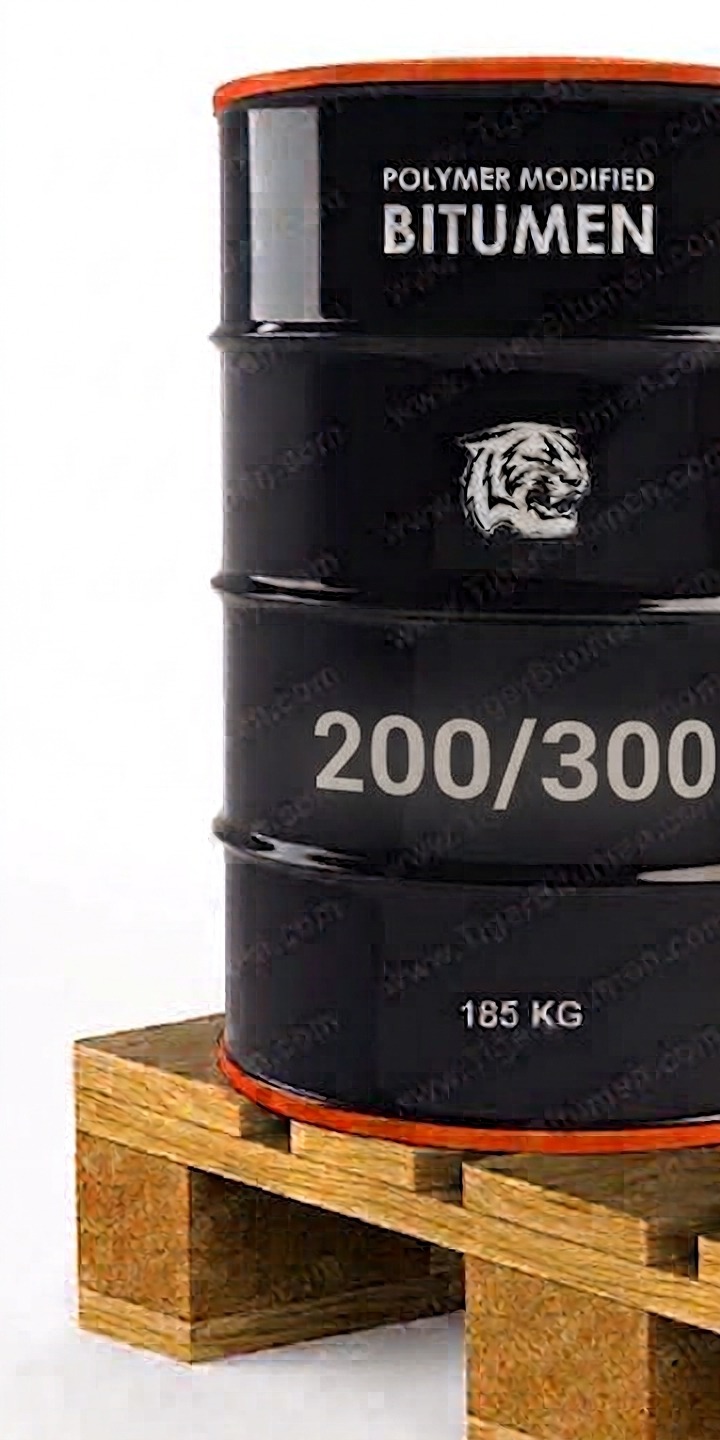
Polymer Modified Bitumen is supplied primarily in new steel drums. Where a project specifically requires bag packaging, PMB can also be supplied in 1 Metric Ton (1,000 kg) PP woven bags in a steel cage, subject to confirmation for the specific grade and order. Packaging is confirmed against each project's requirements at the time of quotation. PMB storage and handling requirements depend on the formulation and product specification. Some modified binders require controlled temperature and agitation during storage to maintain homogeneity, and buyers should follow the supplier's product-specific handling instructions.
Why Source PMB from Tiger Bitumen
Tiger Bitumen products are owned by HY International Group, with packaging and export operations based in the Karachi Export Processing Zone, a location offering direct access to Port Qasim and Karachi Port for international export shipments. Tiger Bitumen's PMB offering spans the full EN 14023 nominal penetration range, supplied according to the applicable EN 14023 designation and each project's specification. Shipments across Tiger's product range can be arranged for third-party inspection through agencies including SGS and Bureau Veritas, and Material Safety Data Sheets are available on request. Lead time and available quantity are confirmed at the quotation stage, based on the required grade, quantity, packaging and destination. Read more about Tiger Bitumen.
Frequently Asked Questions
What is the difference between PMB and ordinary bitumen?
Ordinary (unmodified) bitumen is a thermoplastic material whose behaviour depends heavily on temperature. PMB has a polymer blended into it to widen that working range. Depending on the modifier used, this commonly includes an improved ability to recover from deformation, which unmodified bitumen does not have.
What does a designation like PMB 45/80-60 mean?
Under the EN 14023 framework, a PMB designation states the nominal penetration range followed by the minimum softening point. PMB 45/80-60 is a binder with penetration between 45 and 80 (0.1 mm) and a minimum softening point of 60°C.
Is PMB the same as SBS modified bitumen?
Not necessarily. PMB can be produced using different polymer modifiers elastomeric polymers such as SBS are commonly used in road-grade PMB, but plastomeric modifiers such as EVA or polyethylene are also used, depending on the performance required. “SBS modified bitumen” describes PMB made specifically with that elastomer; it’s one form of PMB, not a definition of the category. The applicable modifier system for a given order is confirmed against the project specification at the time of enquiry.
How is PMB different from Performance Grade (PG) bitumen?
PMB (under EN 14023 or IS 15462) is classified by properties including penetration, softening point and, for elastomeric grades, elastic recovery. PG, under AASHTO M320/M332, classifies a binder by the pavement temperatures and traffic it’s shown to withstand, regardless of how that performance was achieved. A binder can be modified and still be described primarily by its PG designation. See our Performance Grade Bitumen range if your project specifies a PG grade.
How is PMB different from conventional Penetration Bitumen?
Penetration Bitumen is unmodified and classified purely by its penetration value. PMB has a polymer as part of its composition and classification, generally extending the temperature and loading range the binder can handle. See our Penetration Bitumen range for unmodified grades.
What information should I include when requesting a PMB quote?
The grade or standard your project specifies (or the project specification document itself), quantity required, preferred packing, destination port, and Incoterm.
What needs to be confirmed before ordering PMB from Tiger Bitumen?
Since PMB is supplied according to each project’s specification, please confirm with our team: the exact designation or standard your project requires, quantity, packaging, lead time, and any project-specific documentation needed.