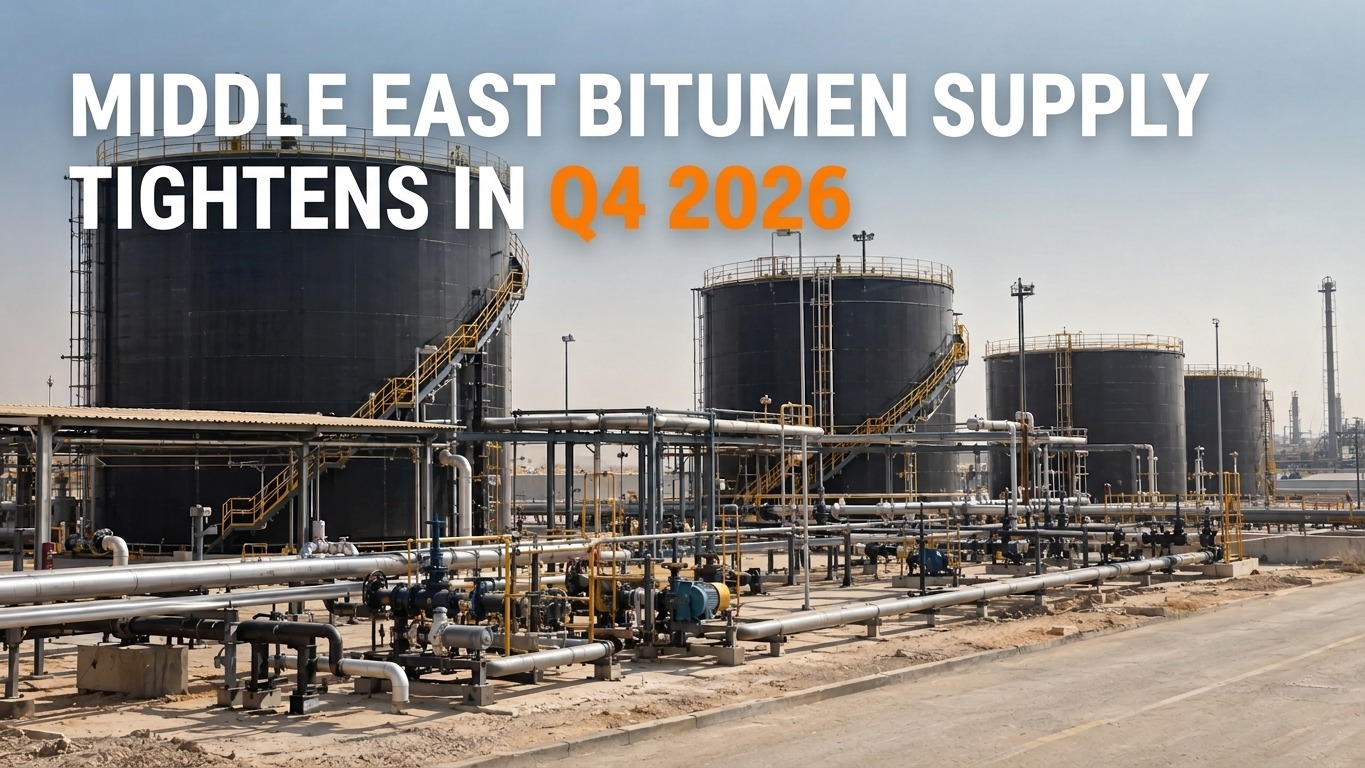
Middle East bitumen supply has tightened in the opening weeks of Q4 2026. In mid-October, regional bulk export prices edged slightly higher even though many buyers held back. Producers are facing feedstock constraints, some are focusing on earlier commitments, and shipping cargoes out of the Gulf has become slower and less predictable.
For importers who rely on Middle East bulk and drummed bitumen, securing supply now takes more planning than agreeing a price. This article looks at what is limiting availability, how trade flows are shifting, and the practical steps buyers can take for Q4 and early 2027.
Key points at a glance
- Regional bulk export prices firmed slightly in mid-October, driven by tight supply rather than strong demand.
- Several producers are loading cargoes sold earlier rather than taking on new spot business.
- Feedstock constraints are limiting production in parts of the region, and some market participants expect them to tighten further ahead of winter.
- Iraqi bitumen production has been cut back, and offers of Iraqi-origin material are limited.
- Shipping is the main constraint, with fewer vessels available and container loadings facing delays.
Prices are firming because supply is tight
Middle East bulk bitumen export prices moved slightly higher week on week in mid-October. The increase reflected limited supply rather than strong buying interest, as many buyers chose to wait.
With limited spot volumes on offer, the key question for importers is increasingly whether a cargo can be secured and shipped on time, not just what it costs.
Why fewer cargoes are available
Producers are prioritising existing commitments
Several suppliers spent mid-October loading cargoes sold under earlier agreements and stepped back from new spot business. That leaves fewer prompt cargoes for buyers looking to purchase now.
Feedstock is constrained
Bitumen production in parts of the region has been limited by disruption to feedstock deliveries, according to market participants. Some also expect refiners to direct more feedstock to fuel oil production ahead of winter, which would leave less available for bitumen.
Iraqi output has been cut back
Iraqi bitumen producers have reduced or stopped production since early September because higher costs have made seaborne sales unviable. Offers of Iraqi-origin material have been limited, so buyers who usually treat it as an alternative source have fewer options for now.
Shipping is now the main constraint
For many importers, the hardest part of buying Middle East bitumen today is arranging transport.
Fewer vessels available
Many vessel owners have been reluctant to take on voyages out of the Gulf. In mid-October, some importers who were ready to buy bulk cargoes could not secure a vessel.
Container delays
Container operators have slowed operations in the region. Market participants expect container freight to rise and some loadings to be delayed as vessel arrivals are rescheduled. This affects drummed bitumen as well as bulk.
How trade flows are shifting
Africa
Importers in East and Southern Africa have been turning to Mediterranean and European cargoes, which has raised delivered costs because of higher freight. Drummed freight from the Gulf to East African ports remains elevated, with little container activity reported.
Asia-Pacific
Southeast Asian prices are well above Mediterranean levels, and the gap is drawing some Mediterranean cargoes to the region via the Red Sea.
Overland trade
Overland trade within the wider region has also slowed, with border congestion and buyer resistance to higher prices both reported in mid-October.
What importers should do now?
- Plan longer lead times. Allow extra time in Q4 and early-2027 schedules for vessel rescheduling and loading delays.
- Secure freight before committing volume. A competitive price has little value if no vessel or container slot is available.
- Budget on landed cost. Allow for freight, insurance, and container charges as well as the product price.
- Stay flexible on format and route. Bulk, drums and jumbo bags face different transport constraints, and overland routes can carry border delays.
- Confirm documentation early. Check the import, quality, and regulatory documents your market requires before cargoes are loaded.
- Watch feedstock and freight conditions. Changes in feedstock supply or vessel availability are likely to be the earliest signs of easing or further tightening.
Outlook
Market participants expect container freight to rise and some feedstock to be diverted to fuel oil ahead of winter. If these conditions persist, Middle East bitumen supply is likely to stay tight in the near term. Importers who arrange freight early and stay flexible on format and route will be better placed to keep projects supplied.
Plan your supply with Tiger Bitumen
Tiger Bitumen is a brand of HY International Group. If you are planning bitumen purchases for the coming months, contact the Tiger Bitumen team to discuss your grade, packaging and delivery requirements.
Contact the Tiger Bitumen team
This article reflects market conditions in mid-October 2026, which can change quickly. It is for general information only and is not legal, compliance or trading advice.