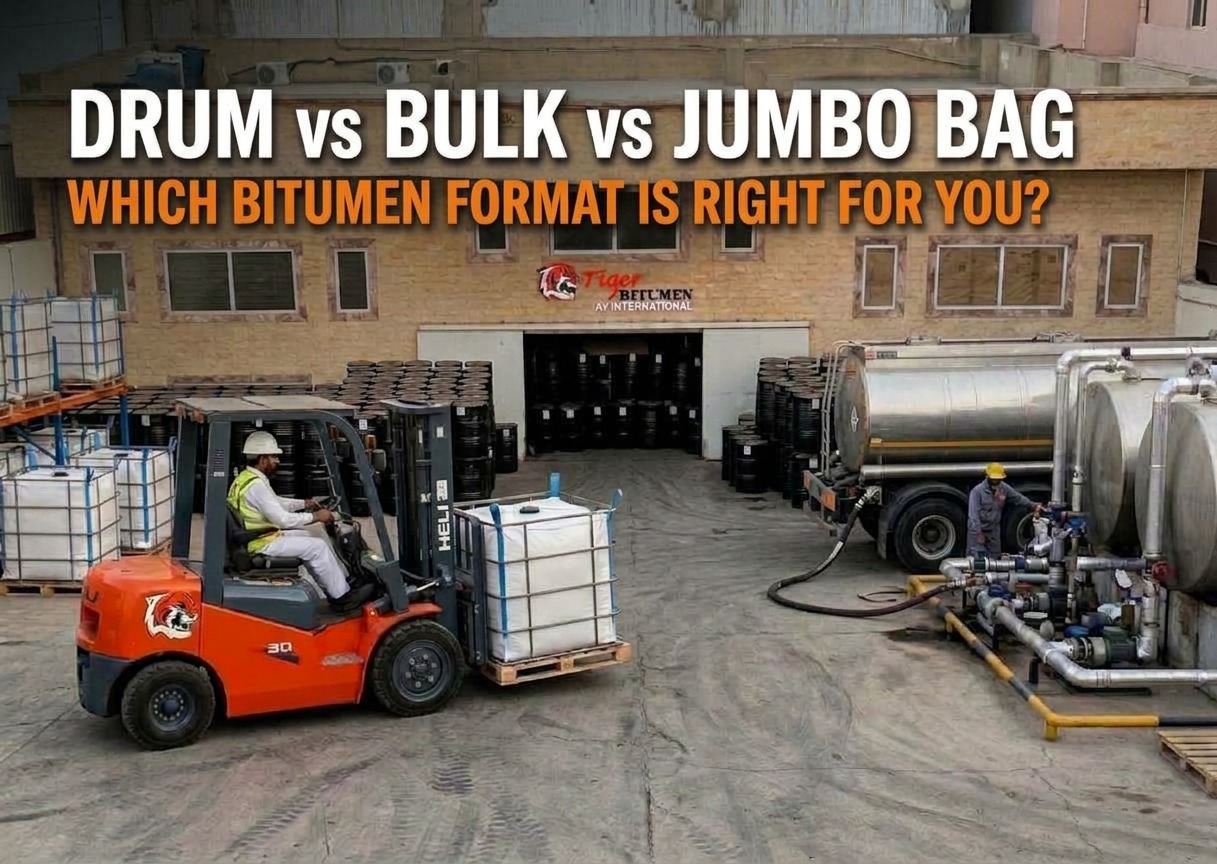
Bitumen can be supplied in three main formats: bulk, drums and jumbo bags. When comparing drum bitumen vs bulk bitumen, the key differences lie in how each format is transported, stored, handled and delivered to the job site. Although the product may be the same grade, choosing the right format can help avoid extra handling, equipment downtime and delivery delays.
This guide compares drum bitumen vs bulk bitumen, along with jumbo bags, so you can match the format to your project’s volume, site facilities and delivery route.
Drum, bulk and jumbo bag bitumen at a glance
| Bulk | Drums | Jumbo bags | |
| Physical state in transit | Kept hot and liquid | Solid once cooled | Solid once cooled |
| Typical transport | Heated bitumen tankers and tank trucks | Containers, trucks | Trucks, containers, rail |
| Storage at destination | Heated, insulated tanks | Open or covered yard storage | Covered, dry storage away from heat |
| Before use | Ready to pump at working temperature | Must be heated out of the drum | Must be melted in suitable equipment |
| Best suited to | large, steady volumes with terminal access | Smaller or remote projects without heated storage | Overland supply and sites without heated tanks |
Bulk bitumen
How it is transported
Bulk bitumen is moved hot and liquid in specialised, heated bitumen tankers by sea and in insulated tank trucks by road. Keeping the product at a pumpable temperature throughout the journey is essential.
Storage requirements
Bulk delivery needs a receiving terminal or plant with heated, insulated storage tanks and pumping equipment. Without this infrastructure, bulk is not a practical option.
When bulk makes sense
- Large or continuous volumes, such as major highway programmes or asphalt plants.
- Buyers with access to a port terminal or plant with heated storage.
- Projects where avoiding packaging and its disposal is a priority.
Limitations
Bulk depends on tanker availability, port facilities and heated storage at every stage. Delays in shipping or at the port can affect supply to the whole project, so lead times need careful planning.
Drum bitumen
How it is transported
Drum bitumen is filled hot into steel drums, which are sealed and allowed to cool so the bitumen solidifies. Drums are usually shipped in containers and moved by truck, so they can reach destinations without bulk receiving facilities.
Storage requirements
Because the product is solid, drums do not need heated tanks. They should be stored upright on firm ground, protected from damage and kept away from sources of ignition.
Preparing drum bitumen for use
Before use, the bitumen must be heated out of the drum using drum-melting or decanting equipment, following the supplier’s safety data sheet and site procedures. Allow time and fuel for this step in your project planning.
When drums make sense
- Small to medium projects, maintenance work, and patching.
- Inland, remote or port-constrained locations without heated storage.
- Buyers who need flexible, staged deliveries.
Limitations
Drums add packaging cost, require heating before use, and leave empty drums to be collected, reused or disposed of correctly. Some product may remain in the drum after decanting. Drum supply also depends on container availability.
Jumbo bag bitumen
How it is transported
Jumbo bag bitumen is supplied as solid bitumen in large flexible bags designed for lifting. Bags can be moved by truck, container or rail, which makes them practical for overland supply routes.
Storage requirements
Jumbo bags should be stored under cover, off the ground and away from direct sunlight and heat, as solid bitumen can soften and deform when warm. Handle bags using their lifting loops with suitable equipment, such as a forklift or crane.
Preparing jumbo bag bitumen for use
The bitumen must be melted in suitable equipment before use, following the supplier’s instructions and safety data sheet. Confirm that your site has the right melting capacity for your daily usage.
When jumbo bags make sense
- Overland deliveries by truck or rail.
- Sites without heated tanks that have suitable melting equipment.
- Buyers who want solid-form product with less rigid packaging than drums.
Limitations
Jumbo bags need covered storage and melting equipment on site, and the bags must be disposed of correctly after use. They are less suited to locations without lifting equipment.
How to choose the right packaging for your project?
There is no single best format. The right choice depends on your project and your supply chain. Work through these questions with your supplier:
- How much bitumen do you need, and over what period? Large, continuous volumes usually favour bulk. Smaller or irregular volumes often suit drums or bags.
- Do you have heated storage? Without heated tanks, drums or jumbo bags are the practical choice.
- What melting or decanting equipment is available on site? Packaged formats need equipment and time to heat the product before use.
- How will the product reach you? Sea routes suit bulk and containerised drums. Overland routes often suit drums and jumbo bags.
- What does it cost delivered to site? Compare the total landed cost: product, packaging, freight, handling, heating and disposal, not just the product price.
- Is your grade available in that format? Confirm that the penetration or viscosity grade you need is supplied in your preferred packaging.
Current market considerations
Logistics conditions can change the balance between formats. In late 2026, higher steel costs have been cited as a factor in rising drum prices in some markets, and container freight on some routes has become less predictable. Buyers should confirm freight and container availability before committing to a format.
Safety and handling
Hot bitumen can cause serious burns. Whatever the format, follow the supplier’s safety data sheet, use appropriate personal protective equipment, and make sure staff are trained in heating, pumping and transfer procedures.
Frequently asked questions
Is drum bitumen more expensive than bulk bitumen?
Drummed bitumen includes the cost of the drums, which bulk does not. However, bulk requires tankers and heated storage. The better value depends on the total landed cost for your project.
Can drum and jumbo bag bitumen be stored outdoors?
Drums are more robust and are often stored in yards, while jumbo bags should be kept under cover and away from heat. In all cases, protect packaging from damage and follow supplier guidance.
Which format is best for remote projects?
Drums or jumbo bags are usually better suited to remote sites because they do not need heated tanks. The final choice depends on site equipment and the delivery route.
Find the right bitumen format with Tiger Bitumen
Tiger Bitumen is a brand of HY International Group. If you are deciding between drum, bulk or jumbo bag bitumen, contact the Tiger Bitumen team to discuss your project’s grade, packaging and delivery requirements.
Contact the Tiger Bitumen team
This guide is for general information only. Always follow the supplier’s safety data sheet, product specifications and local regulations when handling, storing and heating bitumen.