Bitumen supply in East Africa and Southern Africa is changing as road-building activity picks up. Road projects in Kenya and Uganda are lifting demand, and South Africa has entered its spring and summer construction season. At the same time, more of the region’s imported bitumen is coming from the Mediterranean and Europe, and higher freight on those routes is lifting delivered costs.
For importers, distributors and contractors, that means firmer delivered costs and a stronger case for planning purchases early. This update sets out what is happening in each market and what buyers can do about it.
Key points at a glance
- Bitumen demand in East Africa is rising, led by major road work in Kenya and active projects in Uganda.
- Kenya also supplies neighbouring markets, including Uganda, South Sudan and the Democratic Republic of Congo.
- Bulk cargoes from the eastern Mediterranean are playing a larger role in supplying Mombasa.
- Delivered drum prices into Kenya and Tanzania held steady in mid-October, with limited container activity.
- South African prices rose again as the paving season advanced and supply shifted to longer-haul European cargoes.
Bitumen supply in East Africa: demand is rising
Kenya
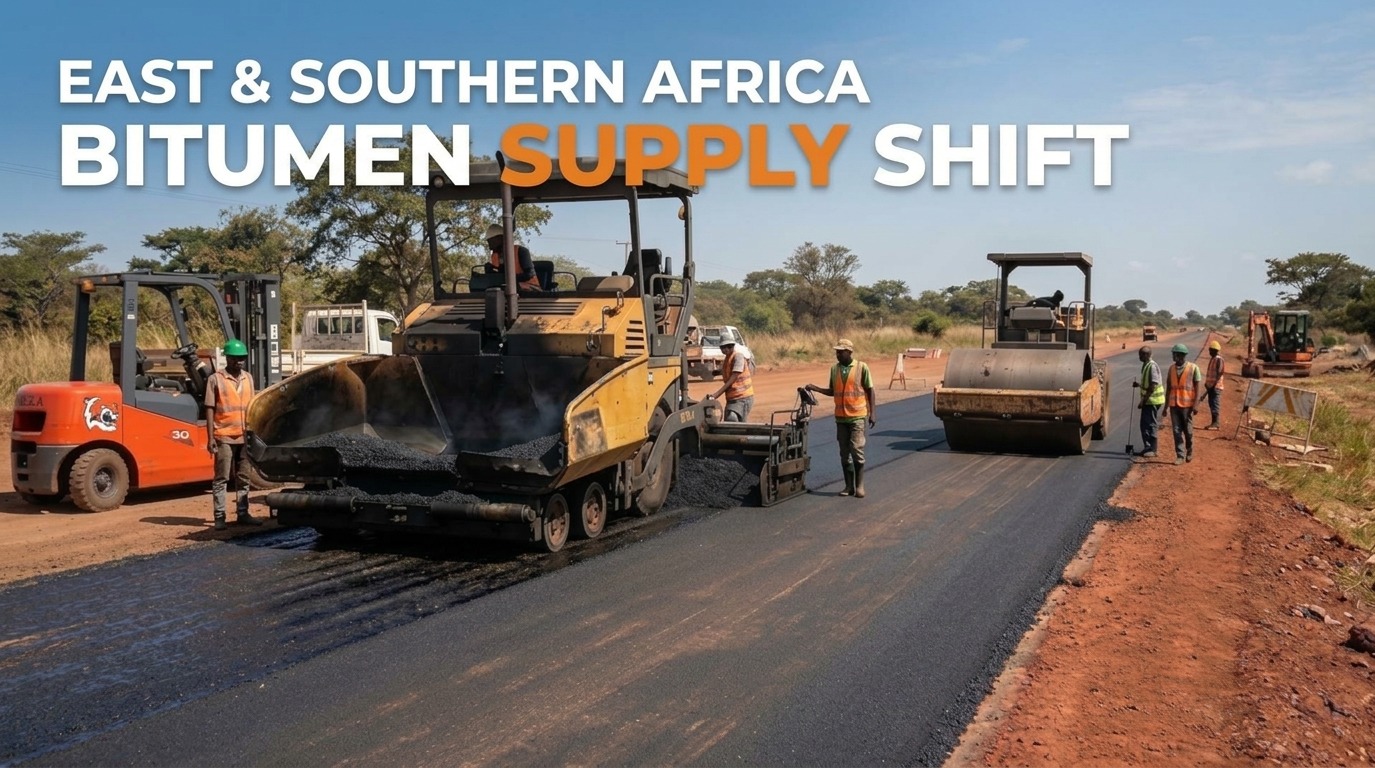
Kenya is leading the regional upturn. Paving has started in the Naivasha area as part of the Rironi–Naivasha–Mau Summit highway, a major national highway project.
Uganda, South Sudan and DR Congo
Large road projects are also under way in Uganda, with bitumen being trucked to several separate project locations. Uganda is landlocked and is mainly supplied through Kenya. Regular truck flows also move from Kenya into South Sudan and the Democratic Republic of Congo.
As a result, bitumen arriving at Mombasa increasingly serves a wider inland market, not only Kenyan projects.
How East African supply is changing
More bulk cargoes into Mombasa
A further bulk cargo of pen 50/70 from the eastern Mediterranean is due at Mombasa in late October, the second such delivery in recent months. Market participants say these incoming bulk volumes will be needed to help meet rising demand in Kenya and its neighbours.
Drum market steady but thin
Delivered prices for drummed bitumen into Mombasa and Dar es Salaam were unchanged week on week in mid-October. Container freight rates for drummed bitumen into East African ports were also unchanged, with few new freight quotes because container activity on these routes has been limited.
Stable quotes are helpful for budgeting, but buyers should confirm freight and container availability before committing to drummed volumes.
Southern Africa: paving season meets higher import costs
South Africa
South Africa is in its spring and summer paving season, so bitumen requirements are rising. Domestic truck prices increased again in mid-October, adding to earlier gains, as fewer import cargoes arrived and suppliers raised local prices.
The region’s import supply has shifted toward European sources. Higher freight on these longer routes has pushed up delivered cargo prices. Some cargoes also include harder grades, such as pen 10/20, for specific end-user requirements.
Market participants expect recent European cargoes, together with a further delivery due in the second half of October, to meet South African and wider regional needs into November.
Neighbouring markets
Bitumen prices have also risen in neighbouring markets, including Zambia, Mozambique, Botswana and Namibia.
What this means for buyers
- Budget for firm delivered costs. Longer supply routes and higher freight are now part of the regional cost base.
- Plan around the paving season. Demand is rising now in Kenya, Uganda and South Africa. Arranging volumes for the coming months early reduces the risk of shortfalls on site.
- Compare formats on landed cost. Bulk, drums, and bagged bitumen carry different freight, handling, and storage costs. Compare the total cost delivered to site, not the product price alone.
- Confirm logistics before you commit. Check vessel or container availability and port timing as early as possible, especially for drummed volumes.
- Specify grades clearly. Confirm the penetration grade your project needs, such as pen 50/70 or a harder grade, in your purchase contract.
- Allow buffer time for inland delivery. Projects in Uganda, South Sudan and DR Congo depend on onward trucking, so build extra time into schedules.
Outlook
East and Southern Africa are moving into a period of stronger demand while relying more on longer-haul import supply. If these conditions continue, buyers should expect delivered costs to stay firm and plan their purchases further ahead than usual.
Plan your East and Southern Africa supply with Tiger Bitumen
Tiger Bitumen is a brand of HY International Group. If you are planning bitumen purchases for projects in East or Southern Africa, contact the Tiger Bitumen team to discuss your grade, packaging and delivery requirements.
Contact the Tiger Bitumen team
This article reflects market conditions in mid-October 2026, which can change quickly. It is for general information only and is not legal, compliance or trading advice.