October 2026 | Tiger Bitumen, a brand of HY International Group
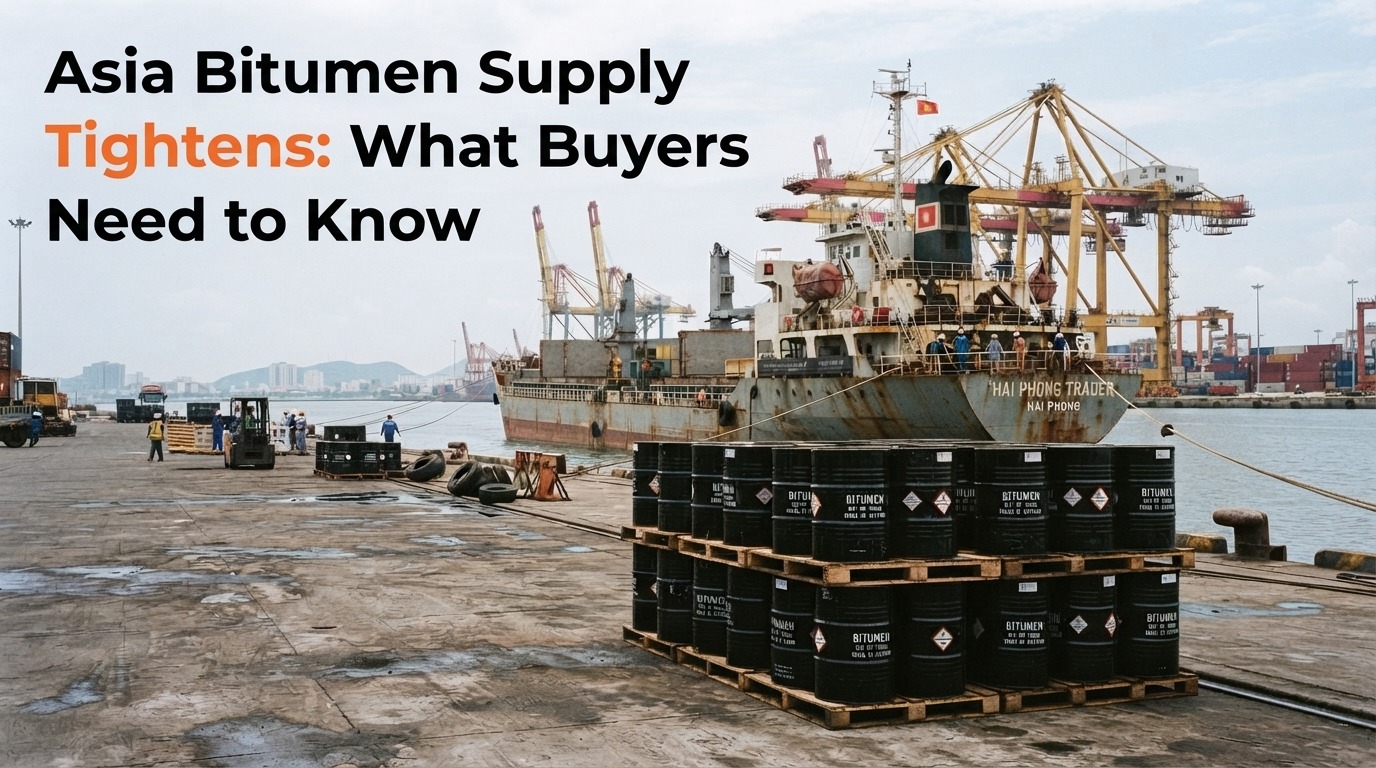
Asia bitumen supply remains tight heading into the final months of 2026. Output from Singapore, the region’s main export hub, is constrained, and spot cargo availability has been limited. At the same time, construction activity is picking up across much of Southeast Asia and Australasia.
Buyers are paying closer attention to where their next cargo will come from. Importers with urgent project needs are widening their search beyond Singapore, while others are holding back at current price levels. This article looks at what is behind the tightness, how buyers in key markets are responding, and what importers may want to consider when planning supply for the months ahead. For more regional updates, explore our bitumen market update articles.
Why Asia Bitumen Supply Is Tight
The main constraint is feedstock. Market participants report that refiners in Singapore have been unable to secure suitable crude to increase bitumen production. Bitumen comes from the heaviest part of the crude barrel, so producing it in volume depends on access to heavier crude grades. When those grades are hard to obtain, bitumen output falls.
The effect is visible across the regional market:
- Seaborne cargoes: Spot availability of Singapore-origin cargoes is limited, and few offers have emerged. Prices have moved higher, although trading has been thin and many buyers have kept their bids unchanged.
- Domestic and trucked supply: Availability of trucked bitumen in the region has also tightened. Some buyers have said they expect supply to become tighter in the coming months if current conditions continue.
Some market participants expect production to improve for December-loading cargoes, though possibly not to the levels seen earlier in the year. The near-term outlook therefore remains uncertain.
Other regional export sources are also limited. Export availability from Thailand and Taiwan has been restricted by lower output and firm domestic demand.
How Buyers Are Responding Across Asia-Pacific
Buyer behavior varies by market, depending on how urgent project needs are and how much flexibility budgets allow.
Vietnam: Peak Season Demand Meets Limited Offers
Vietnam is in its peak construction period. Contractors have resumed previously delayed projects, and market participants expect road damage from recent typhoons to support demand through the last quarter. Importers have sought seaborne cargoes from both Singapore and China.
There is, however, a gap between what sellers are asking and what buyers will pay. Importers with urgent requirements are prepared to pay more than those without specific project needs. Even so, recent Singapore-origin offers were above levels buyers considered workable. Participants note that budget constraints could become a bigger challenge if prices rise sharply.
Indonesia: Buyers Split Between Urgency and Caution
Indonesian buyers are divided. Importers with urgent requirements have turned to non-Singapore origins and secured some cargoes for November loading. Other buyers have stayed on the sidelines because their downstream customers cannot accept current seaborne price levels.
Consumption in Java has remained stable. Demand in other regions, particularly eastern Indonesia, has been slower, with market participants reporting that contractors there have delayed roadworks because of high costs and tight supply. Some buyers have said projects could be delayed or postponed if prices increase further. Firm offers for December-loading cargoes had not yet appeared.
Malaysia: Local Supply Favored
Malaysian demand is steady, supported by highway expansion and new projects. Domestic production has been largely stable, and many buyers have preferred to buy from local refiners because of competitive offers. Local availability is still being watched closely, as some interruption to domestic production has been reported.
Thailand: Demand Building as Weather Improves
Thai domestic demand has increased as drier weather supports road paving. Repairs are under way in areas where floodwaters have receded, and contractors are working towards year-end deadlines. Market participants expect demand to rise gradually, while limited production keeps export availability tight.
Australia and New Zealand: Season Gathering Pace
Demand in Australia and New Zealand has increased as dry weather supports road construction and paving. Market participants expect demand to keep rising through the construction season. With Singapore cargoes in limited supply, some buyers have sought cargoes from south China and Taiwan instead.
Where Alternative Supply Is Coming From
As Singapore availability tightens, other origins are playing a larger role in regional trade.
- China: Domestic demand has slowed with the onset of winter, particularly in the north. South China has offered export cargoes for November loading to Southeast Asian destinations.
- South Korea: With import demand from China weakening, export cargoes from South Korea are being offered to other destinations in the region.
- Malaysia and Taiwan: Some Indonesian buyers have looked to these origins, although Taiwan’s own export supply remains limited.
- Mediterranean: The wide price gap between Asian and Mediterranean bitumen continues to attract interest in shipping cargoes eastward.
For buyers, this means comparing a wider range of origins, specifications, voyage times and delivered costs than usual.
What to Watch in the Coming Weeks
- Singapore December output: Whether production improves for December loading will shape regional availability into the new year.
- Northern winter: Slower demand in north Asia may continue to make more export cargoes available to Southeast Asian and Australasian buyers.
- Southern demand: Vietnam, Thailand, Australia and New Zealand are in a seasonal upswing, which keeps attention on available cargoes.
- Project budgets: In price-sensitive markets such as Indonesia and Vietnam, budgets may limit how far buyers are prepared to go on price.
Practical Considerations for Bitumen Buyers in Asia-Pacific
In a tight market, how a purchase is planned can matter as much as the price. Buyers may want to consider the following:
- Plan further ahead. With spot availability limited and December offers slow to appear, securing volumes for peak project periods earlier can reduce exposure to last-minute supply gaps.
- Consider more than one origin. Relying on a single supply hub increases risk when that hub tightens. Qualifying alternative sources in advance gives buyers more flexibility.
- Confirm specifications early. When switching origins, check that the grade, such as penetration grade 60/70 or the relevant Australian Standard class, matches project and tender requirements before committing.
- Compare delivered cost, not just the cargo price. Freight, voyage time, packaging and discharge arrangements vary by origin and can change the total cost picture.
- Align purchasing with project budgets. Where contracts allow price adjustments, factor current market conditions into project planning to reduce the risk of delays later.
Conclusion
Asia bitumen supply remains a key concern for regional buyers, with Singapore output constrained at a time when construction demand is building across Southeast Asia and Australasia. Buyers are responding in different ways, from seeking new origins to deferring purchases, but the common thread is a greater focus on supply security.
Tiger Bitumen, a brand of HY International Group, follows Asia-Pacific market developments closely to support buyers planning in changing conditions. Importers and contractors in the Asia-Pacific region are welcome to contact our team to discuss their bitumen requirements.