October 2026 | Tiger Bitumen, a brand of HY International Group
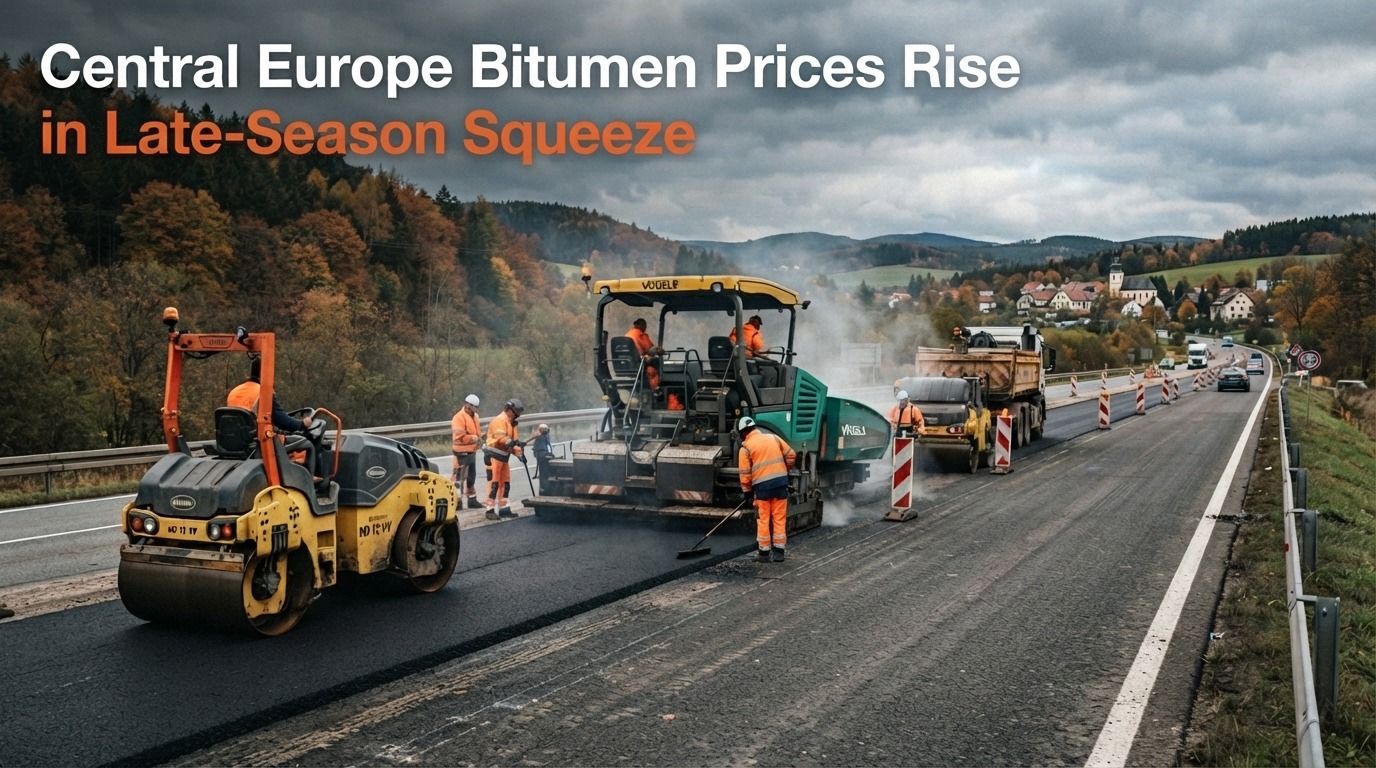
Central Europe bitumen prices rose sharply in the week ending 23 October 2026. Domestic truck prices moved higher in Germany, Poland and the Czech Republic, while prices also firmed in Hungary and Romania.
This marks a clear change from a month ago. In late September, our bitumen market update noted that availability was not an immediate concern across most of Europe and that prices had eased in southern Germany. It also highlighted the risk of tighter supply in October, particularly in Central Europe. That tightening has now arrived. This article explains what changed, how conditions differ by country, and what buyers may want to watch as the season ends.
Central Europe Bitumen Prices: What Changed?
Two developments have come together.
A late-season rush in demand. The German market, like much of Europe, was slow to recover after the July and August holiday period. Construction firms are now working to complete projects before winter. Market participants link recent price gains in Poland and the Czech Republic to a similar push by contractors there.
Reduced refinery output. Bitumen production in Poland and the Czech Republic has faced restrictions because of limited supplies of the sour crude grades that yield bitumen. In Germany, disrupted supplies of some bitumen-yielding crude grades and refiners’ preference for more valuable fuels, such as diesel, have also limited output.
When strong late-season demand meets lower output, domestic prices can respond quickly.
Country Picture
Germany: Largest Gains in the South
German domestic truck prices rose on average across the country, with the largest increases in southern Germany. A late-season buying spike has tightened a market already affected by lower bitumen output.
Conditions differ in northern Germany. Market participants say northern refineries have been running at maximum capacity, helping some buyers reduce their reliance on imports.
Poland and the Czech Republic: Limited Spot Availability
Domestic prices in both countries rose strongly, as did prices for truck deliveries from Poland and the Czech Republic into Germany. Market participants attribute these gains to restricted refinery output and the rush to finish projects before winter.
Spot availability remains limited. Suppliers have told customers that they are prioritising existing fixed-price contracts and will review orders above agreed volumes on a case-by-case basis.
Hungary and Romania: Firmer Prices
Domestic prices in Hungary and Romania also moved higher. Truck export prices from Poland to Romania rose as well, although Romanian market participants expect few buyers to accept those levels because truck transport costs over that distance are high.
Buying Interest in Neighboring Markets
Market participants in southern Germany reported increased buying interest in northern Italy, Slovenia and Croatia during the week. They linked this interest to lower bitumen supply elsewhere in the region, including reduced export supplies from Poland and the Czech Republic.
A Different Picture in the North
Not all of Europe is tightening. In Nordic markets, demand has fallen sharply as colder weather marks the start of the low season. This seasonal slowdown can influence regional demand and availability, as explained in our article on seasonal bitumen demand and supply. Suppliers in the Baltic region expect spot availability to increase in the coming weeks as demand in northwest Europe and Scandinavia declines. However, suppliers are also directing some Baltic volumes towards supply gaps in Central Europe.
In northwest Europe, buyers have shown limited interest in cargoes. November is expected to be the last month of seasonal activity in markets such as the Benelux, with work slowing from December until February or March.
Suppliers also appeared to be seeking opportunities to move North American bitumen to northwest Europe, although no details were confirmed. Market participants suggested that ample North American supply could encourage some European winter stock-building, but this remains uncertain.
Looking Ahead to 2027
According to a single source familiar with the plans, two major German refineries intend to carry out full maintenance turnarounds in the first half of 2027, halting crude processing during the work. These plans have not been publicly confirmed, and their scope and timing could change.
Buyers in Germany and neighbouring markets may want to watch for confirmation before factoring these plans into next year’s supply planning.
What to Watch in the Coming Weeks
- How long late-season demand lasts: Bitumen demand typically declines as winter sets in and road work slows.
- Refinery output in Poland and the Czech Republic: Any change in the availability of suitable crude would affect regional supply.
- Baltic and North American supply: Additional volumes could ease tightness, but timing and quantities remain unclear.
- 2027 maintenance plans: Confirmation or changes to these plans will matter for next season’s supply planning.
Practical Considerations for Buyers in Central Europe
- Check contract cover for the rest of the season. Suppliers are prioritising contract customers, so buyers relying on spot purchases may find availability limited.
- Compare delivered costs carefully. Truck transport over longer distances adds to the delivered cost, a point Romanian market participants have raised.
- Start 2027 planning early. Reviewing the balance between contract and spot volumes now may help buyers prepare, while treating the reported maintenance plans as unconfirmed.
- Confirm specifications when switching sources. Buyers considering different suppliers or regions should check grade and specification requirements before committing.
Conclusion
Central Europe bitumen prices have risen sharply as a late-season construction rush met reduced refinery output in Poland, the Czech Republic and Germany. The change from conditions a month ago is significant, although winter is approaching and northern markets are already easing. Central Europe’s supply outlook over the coming months will depend on refinery output, the timing of the seasonal slowdown, and whether market participants’ reports about 2027 maintenance plans are confirmed.
Tiger Bitumen, a brand of HY International Group, follows European bitumen market developments as part of its regular market coverage. Readers with questions about market conditions or their bitumen requirements are welcome to contact our team.