When comparing bitumen offers from different suppliers or origins, it is easy to focus primarily on the quoted product price. But for an international buyer, the number that actually matters is the landed cost the total cost of getting the bitumen product from the point of origin to the point of use, including everything in between.
Two offers with identical or nearly identical product prices can result in meaningfully different total costs once freight, insurance, routing, and handling are factored in. Understanding these components helps buyers make more accurate comparisons and plan more realistic delivery timelines.
What Makes Up Bitumen Landed Cost?
Bitumen landed cost is generally built from several distinct components on top of the base product price. These costs can vary depending on the origin, destination, shipping route, vessel availability, and local handling requirements.
Ocean freight. The cost of shipping bitumen by sea depends on distance, vessel size, vessel type, and prevailing freight market conditions on the relevant route. Bitumen shipments may require temperature-controlled or specialized tankage, which can influence transportation costs. Freight rates are not fixed; they fluctuate with vessel availability, fuel costs, and route-specific demand.
Insurance. Marine cargo insurance costs can vary depending on the route, the value of the cargo, and the level of risk associated with the specific voyage. Factors such as weather exposure, route congestion, and overall voyage conditions can also influence insurance considerations.
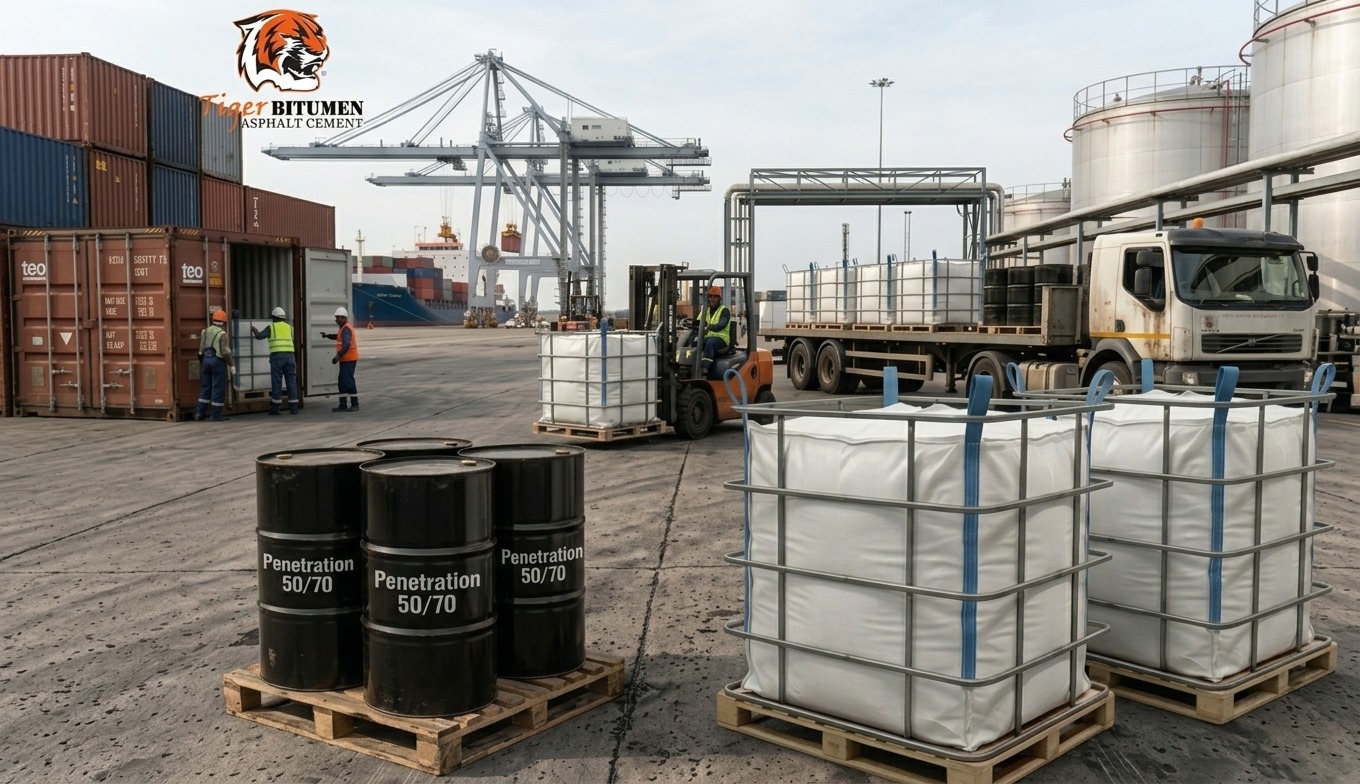
Port and handling charges. Loading and discharge operations, port fees, and any specialized handling required for bitumen, given its temperature-sensitive nature, all add to the total cost. These charges can vary significantly by port and country.
Inland transport. For buyers not located directly at a port, the cost of moving bitumen from the discharge terminal to its final destination by truck, rail, or barge is another important layer of total cost. This expense can be easy to underestimate if it is not planned and costed in advance.
Why Vessel Availability and Routing Matter
Freight is not simply a fixed add-on to the product price; it responds to its own supply and demand dynamics. When vessel availability on a given route is tight, whether due to seasonal demand elsewhere, maintenance schedules, or broader market conditions, freight rates on that route can rise independently of anything happening in the bitumen market itself.
Routing also matters beyond just distance. Some routes involve transiting specific waterways, straits, or chokepoints that can experience congestion, delays, or periods of heightened caution among vessel operators. When this happens, it can affect both the cost and reliability of transit times on that route, sometimes without any change to the underlying bitumen product price.
This is an important distinction for buyers to keep in mind: a stable or even falling product price does not guarantee a stable or falling bitumen landed cost, because freight and logistics conditions can move for entirely separate reasons.
Why Two Similar Offers Can Produce Different Landed Costs
Because of these variables, two suppliers quoting very similar base prices for the same grade of bitumen can end up delivering very different total costs and delivery experiences. The final outcome can depend on several factors:
- The specific origin and route used, and how exposed that route is to congestion or seasonal freight pressure.
- Whether the vessel and terminal arrangements are well matched to bitumen’s handling requirements, reducing the risk of delays or demurrage.
- How transit time and delivery reliability compare. A marginally higher product price paired with a more reliable, better-timed delivery can represent better overall value than a lower price with unpredictable timing.
- Whether inland transport from the discharge port to the final destination has been properly planned and costed rather than treated as an afterthought.
Practical Implications for Buyers
Always compare landed cost, not just quoted price. A lower FOB or ex-works figure is only meaningful once freight, insurance, handling, and inland transport are added. The real comparison is the delivered total.
Ask about routing, not just origin. Understanding which route and vessel arrangement will actually be used helps identify potential exposure to congestion, seasonal freight pressure, or longer transit times.
Build realistic buffers into delivery planning. Freight and logistics conditions can shift for reasons unrelated to the bitumen market itself. Building some flexibility into project timelines can therefore reduce the risk of delivery-related disruption to project schedules.
Treat reliability as part of the value equation. A marginally higher landed cost paired with dependable, well-planned logistics can be the better commercial outcome compared with a lower headline price and higher delivery risk.
Buyers comparing current bitumen prices should therefore evaluate the complete delivered cost rather than assuming that the lowest quoted product price will result in the lowest overall procurement cost.
A Tiger Bitumen Perspective
Because landed cost is shaped by far more than the quoted product price, buyers are generally better served by evaluating offers on a full landed-cost and reliability basis. This includes freight, insurance, routing, handling, and inland transport rather than comparing quoted prices in isolation.
A supplier that can speak clearly to these logistics components, not just the product price, gives buyers a more complete basis for procurement planning. Understanding the relationship between product pricing and logistics costs can also help buyers assess different supply options more realistically.
Conclusion
The price of bitumen itself is only one part of what an international buyer ultimately pays. Freight, insurance, routing, port handling, and inland transport all contribute to total bitumen landed cost, and each of these components can move independently of the underlying product price.
Buyers who evaluate offers on a full landed-cost basis and plan delivery timelines with realistic buffers for logistics variability are better positioned to manage both procurement costs and project schedule risk.
For current requirements, buyers can request a bitumen quote based on their required grade, quantity, destination, and preferred delivery terms.
Frequently Asked Questions
What is "landed cost" in bitumen procurement?
Landed cost is the total cost of bitumen delivered to its final destination, including the product price plus freight, insurance, port handling and inland transport.
Can freight costs change even if bitumen prices stay the same?
Yes. Freight rates respond to vessel availability, route conditions and shipping market dynamics, which can move independently of bitumen product prices.
Why might a slightly higher priced offer actually be better value?
If it comes with more reliable logistics, better matched vessel arrangements, or lower risk of delay, the total landed cost and project impact can be lower than a cheaper offer with less predictable delivery.