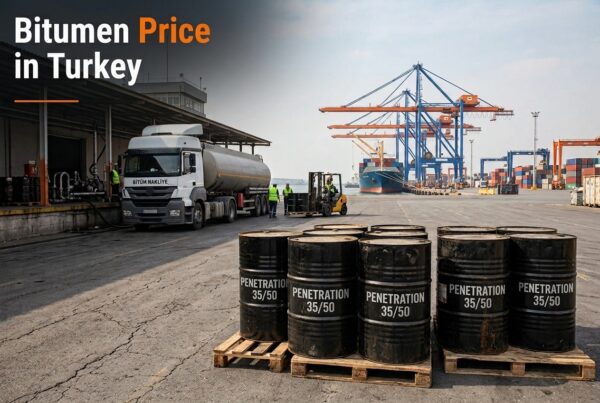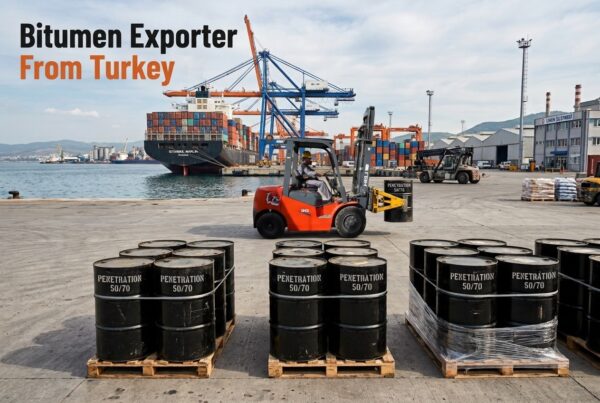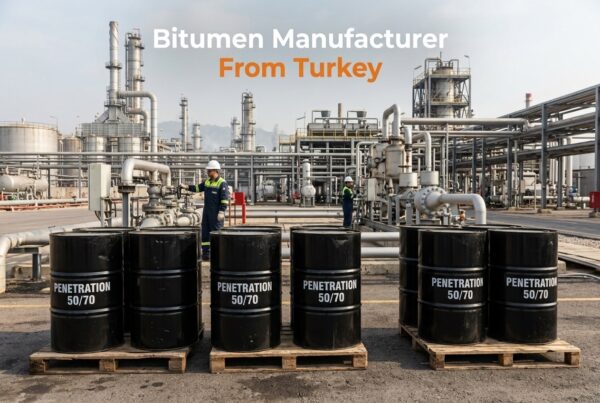
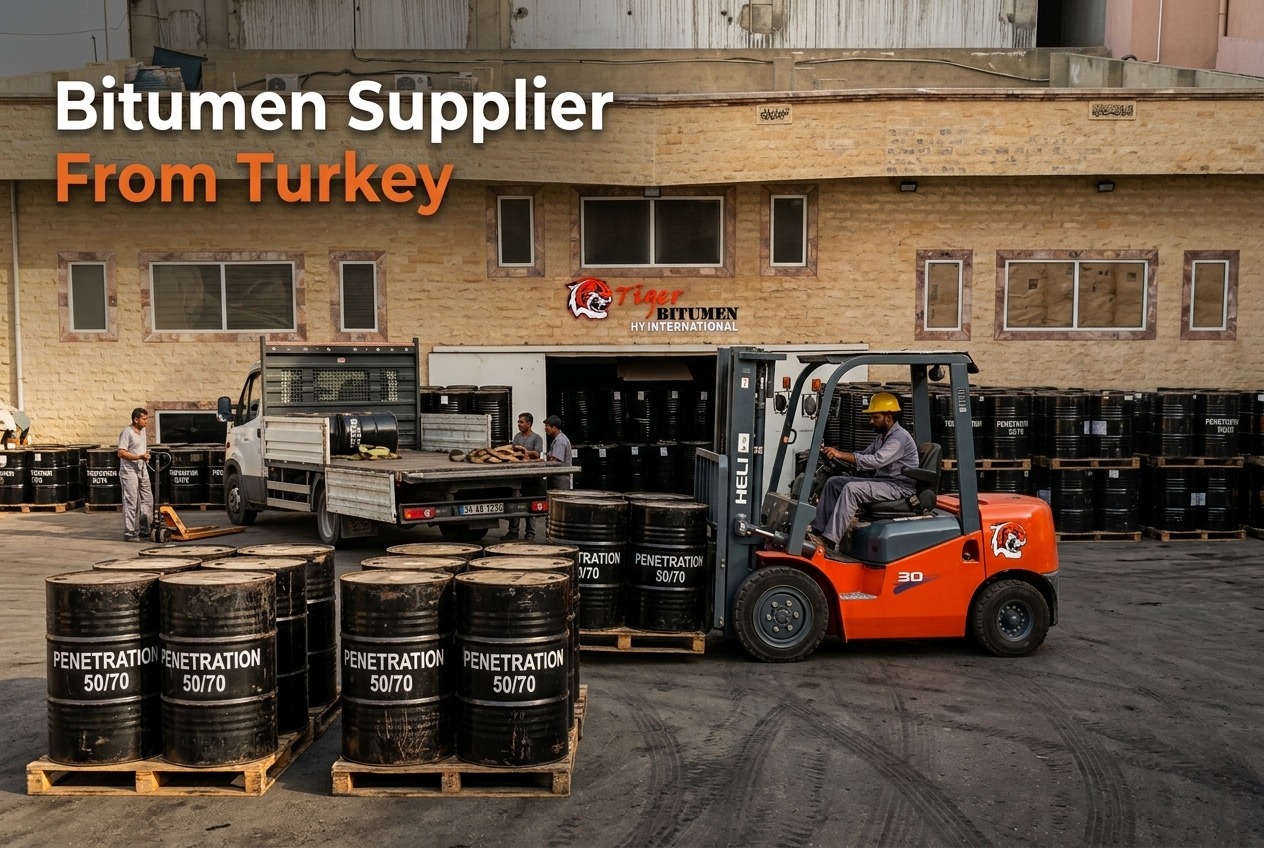
Finding a bitumen supplier from Turkey usually starts with a search result full of near identical trading company listings similar claims, similar photos, similar “premium quality” language, with little to actually differentiate one from another. Choosing well means looking past that and evaluating what actually determines whether a shipment arrives on time, meets specification, and clears customs without incident: product consistency, documented quality, appropriate packaging, and export experience that holds up under scrutiny.
Tiger Bitumen, part of HY International Group, works with international buyers evaluating Turkish sourcing as an alternative an international bitumen supply and export partner offering penetration, oxidized, cutback, and emulsion bitumen, shipped through an export oriented facility with access to Karachi Port and Port Qasim. This guide covers how Turkey’s supply ecosystem is actually structured, what to verify technically, and how to evaluate any supplier Turkish or otherwise before committing to an order.
Bitumen Supply from Turkey for International Buyers
Turkey’s position connecting Europe, the Middle East, the Mediterranean, North Africa, and Central Asia makes it a regular reference point for buyers building a regional sourcing strategy. That geographic connectivity is a genuine logistical factor proximity to several regional markets and established Mediterranean shipping routes separate from any claim about Turkey being the largest, cheapest, or leading global bitumen source, which it isn’t and shouldn’t be presented as.
Turkey also has real petroleum infrastructure and significant domestic construction and infrastructure demand, both of which support an active bitumen trade. But “Turkish supply” isn’t one uniform thing it spans several distinct types of commercial channel, and understanding which one you’re actually dealing with matters more than the country label itself.
Understanding the Turkish Bitumen Supply Ecosystem
Buyers researching Turkish bitumen supply typically encounter several different types of organization:
- Refineries Turkey’s domestic refining capacity produces bitumen at multiple refinery locations and supports both domestic supply and international export.
- Terminal based traders a separate trade lane moves bitumen produced outside Turkey (mainly in Iraq) through southeastern Turkish export terminals for onward international shipment, handled by international trading firms.
- Independent traders, blenders, and packers a large, fragmented layer of smaller companies visible on B2B marketplaces, offering bitumen in various grades and packaging formats at lower volume thresholds than the refinery or terminal channels.
- Distributors companies reselling product sourced from any of the above, sometimes across multiple origins.
- International supply partner’s suppliers based outside Turkey who offer an alternative sourcing channel for buyers comparing options rather than committing specifically to Turkish origin product.
Why this matters: a “Bitumen Supplier from Turkey” search result might be a refinery linked trading house, a terminal based trader handling non Turkish origin product, an independent packer, or a distributor several steps removed from the original source and each has different volume minimums, verification requirements, and reliability profiles. (For a deeper breakdown of how Turkey’s refinery tenders and export terminals specifically work, this is covered in more detail in our dedicated guide to Turkey’s bitumen export structure.)
Bitumen Grades Available from Turkish Suppliers
Penetration Bitumen
Used across road construction, asphalt production, and general pavement applications. Grades such as 30/40, 50/70, and 80/100 appear regularly in Turkish and Turkey linked trade listings, though not every supplier offers every grade availability depends on the specific supplier and their sourcing arrangement.
VG Bitumen
Viscosity Grade bitumen, relevant to asphalt and infrastructure applications where viscosity based classification is the specified requirement.
Oxidized Bitumen
Used for waterproofing, roofing, and selected industrial and protective applications, distinct from road paving penetration grades.
Cutback Bitumen
Used in selected pavement and construction applications requiring reduced viscosity, lower temperature handling.
Bitumen Emulsion
Relevant to road maintenance, surface treatments, and selected cold application work.
Polymer Modified Bitumen (PMB)
Considered for selected high performance road and infrastructure applications with more demanding requirements than standard grades.
The right grade depends on project specification, climate, application, and applicable standards not on whichever product a given supplier happens to have readily available.
Bitumen Quality and Technical Specifications
Before purchasing, buyers should verify the parameters relevant to their specific grade and application, which may include:
- Penetration the core classification value for penetration grade bitumen
- Softening point, particularly relevant for oxidized bitumen
- Viscosity, where applicable to the classification system used
- Ductility, where specified
- Flash point, where relevant to handling and safety
- Solubility, where specified as a purity indicator
- Specific gravity, where relevant to the application
- The applicable standard relevant EN or ASTM specification the product is tested against
- Certificate of Analysis (COA) for the specific batch
- Third party inspection, where the buyer requires additional independent verification
Consistent specifications matter because road, asphalt, roofing, waterproofing, and industrial applications all depend on the material behaving predictably a supplier who can’t produce a clear COA or explain which standard their product meets is a genuine red flag, not a minor administrative gap.
Bitumen Packaging for International Export
Common export packaging formats include:
- 185 kg new steel drums widely used, offering controlled handling and storage for buyers without bulk unloading infrastructure
- Jumbo bags suited to certain bulk handling setups, where appropriate for the specific product
- Bitutainers flexible bulk packaging for particular logistics arrangements
- Bulk vessel supply for larger orders where destination infrastructure supports bulk unloading
Packaging selection depends on product type, quantity, destination, shipping method, handling requirements, storage, and customer preference. Specific figures like drums per container or minimum order quantity vary by supplier, product density, and container specification these should be confirmed directly for your order rather than assumed from a generic reference.
Export Documentation and Inspection
Depending on destination and contractual requirements, buyers may need or request:
- Commercial Invoice
- Packing List
- Certificate of Origin, where applicable
- Certificate of Analysis
- SGS Quality Inspection, where applicable
- SGS Quantity Inspection, where applicable
- Shipping documentation
- Export documentation supporting customs clearance
Not every document is mandatory for every shipment requirement vary by destination, product classification, and agreed terms. Accurate, complete documentation is one of the most practical ways to avoid customs delays, and a supplier’s willingness to provide clear documentation upfront is itself a useful signal of reliability.
Shipping and Logistics for Bitumen from Turkey
Practical logistics considerations include:
- Destination port and route
- Shipping method containerized or bulk vessel
- Packaging, matched to the shipping method
- Loading schedule, coordinated with vessel or container availability
- Freight arrangements, based on the agreed Incoterm
- Export documentation, prepared ahead of shipment
- Delivery planning, aligned with the buyer’s timeline
- Storage and handling at the receiving end
Specific transit times, freight rates, and port charges vary by shipping line, season, and market conditions, and should be confirmed as part of a specific quotation rather than assumed generally.
Choosing the Right Bitumen Supplier from Turkey
Rather than simply “choosing a reliable supplier,” evaluate specific, checkable factors:
- Product specification does the supplier provide clear, verifiable technical data?
- Grade availability can they confirm exactly what they can supply, not just a general product list?
- Quality consistency do they discuss batch to batch consistency, or only a single sample?
- Certificate of Analysis is one provided per shipment as standard practice?
- Inspection options can they support SGS or other third party inspection if requested?
- Packaging quality is packaging described specifically, or only in general terms?
- Export documentation do they explain what’s included and what’s destination dependent?
- Logistics capability do they manage shipment planning proactively?
- Commercial terms are pricing and terms explained clearly, without vague or shifting language?
- Communication are responses specific and technically informed, or generic?
- Technical support can they discuss grade selection for your specific application?
- Ability to handle repeat orders relevant if you’re planning ongoing rather than one off procurement
A supplier who answers these questions specifically and in writing is a meaningfully different proposition from one who responds only with general marketing language.
Factors That Affect Bitumen Procurement Pricing
Quotations vary based on:
- Product grade and type
- Quantity
- Packaging
- Loading arrangements
- Origin and destination
- Freight costs
- Incoterm (FOB, CFR, or CIF)
- Inspection requirements
- Payment terms
- Market conditions
- Shipment timing
Buyers should compare quotations on a like for like basis the same grade, packaging, Incoterm, and inspection terms since quotes that look cheaper on the surface sometimes exclude costs that appear later. Current bitumen prices fluctuate with petroleum market conditions and aren’t something to estimate generally; a specific quotation is needed for an accurate figure.
What Buyers Should Provide When Requesting a Bitumen Quotation
To get an accurate quotation, provide:
- Required bitumen product
- Required grade
- Quantity
- Preferred packaging
- Destination and delivery location or port
- Required delivery schedule
- Preferred Incoterm
- Technical specification
- Inspection requirements
- Documentation requirements
Providing these details upfront helps a supplier prepare a genuinely accurate quotation rather than a generic estimate that shifts once real order details are confirmed.
Why Choose Tiger Bitumen as an International Supply Partner
Tiger Bitumen, operated by HY International Group, offers buyers evaluating Turkish sourcing an international point of comparison, built around:
- Multiple bitumen grades, including penetration, oxidized, cutback, and emulsion products
- Export ready packaging, including 185 kg new steel drums where suited to the order
- Quality focused sourcing, with SGS inspection where applicable to the shipment
- Professional export documentation prepared for customs clearance
- Shipment coordination from an export oriented facility with access to Karachi Port and Port Qasim
- Technical guidance for grade and product selection
- FOB, CFR, and CIF options, where applicable
- Competitive international quotations based on your specific requirements
- Dedicated customer support through enquiry, quotation, and shipment
Tiger Bitumen is not a Turkish manufacturer and does not operate refineries or production facilities in Turkey. It’s an international supply channel for buyers who are comparing Turkish bitumen suppliers, looking for an alternative to Turkish exporters, or evaluating international sourcing options more broadly.
How to Source Bitumen for Your Project?
Step 1: Define the Product Requirement
Identify product type, grade, application, and technical specification.
Step 2: Confirm Quantity and Packaging
Specify required quantity and preferred packaging format.
Step 3: Confirm Destination and Shipping Terms
Provide destination port/location and preferred Incoterm.
Step 4: Review Supplier Documentation
Review technical documentation, quality information, inspection options, and commercial terms.
Step 5: Compare the Quotation
Compare product specification, price basis, packaging, freight, Incoterm, documentation, and delivery planning across suppliers on a like for like basis.
Step 6: Finalize the Order
Confirm commercial and technical requirements.
Step 7: Shipment Coordination
The supplier prepares the shipment and coordinates applicable export and logistics arrangements.
Partner with a Reliable Bitumen Supplier from Turkey
Evaluating a bitumen supplier from Turkey or comparing Turkish sourcing against international alternatives comes down to specifics: verified product quality, clear grade documentation, appropriate packaging, complete export paperwork, dependable inspection options, and logistics coordination that doesn’t leave gaps. Tiger Bitumen offers international buyers a professional, export focused option worth including in that comparison, backed by an established international supply operation.
Contact Tiger Bitumen
To move forward, provide Tiger Bitumen with:
- Required grade
- Quantity
- Packaging preference
- Destination
- Delivery schedule
- Preferred Incoterm
Tiger Bitumen’s export team can then confirm technical fit and prepare a quotation. Contact Tiger Bitumen to discuss your requirements.