Buyers looking to buy bitumen from Turkey are usually past the research stage and into active procurement, comparing product options, checking packaging formats, and trying to understand how a quotation actually gets built before committing to an order. Turkey’s position connecting Europe, the Middle East, Central Asia, and North Africa makes it a regular stop in that comparison process, but the purchase itself depends on the same fundamentals as any international bitumen order: matching the right product to the project, confirming specifications in writing, and working with a supplier whose documentation and logistics hold up under scrutiny.
Tiger Bitumen, part of HY International Group, supports buyers evaluating Turkey sourcing as an international bitumen supply and export partner, offering a full range of penetration, oxidized, cutback, and emulsion bitumen products, shipped through an export-oriented facility with access to Karachi Port and Port Qasim. This guide walks through what’s available, how pricing and packaging work, and the actual step-by-step process for placing an order.
Why Buy Bitumen from Turkey?
Turkey’s geographic position linking European, Middle Eastern, Central Asian, and North African markets, with direct Mediterranean trade access, makes it a natural point of comparison for buyers building a regional sourcing strategy. That connectivity is a practical logistics consideration: shorter shipping routes to several regional markets and proximity to established Mediterranean and Black Sea trade lanes.
That said, geography alone doesn’t determine supplier quality. Buyers evaluating Turkey as a sourcing option are still making the same core decision they’d make anywhere else, comparing specific suppliers on product consistency, documentation, and export reliability, not choosing a country as a blanket guarantee of value.
What Bitumen Products Can You Buy from Turkey?
International buyers researching Turkey bitumen supply typically encounter a range of product categories, each suited to different applications.
Penetration Bitumen
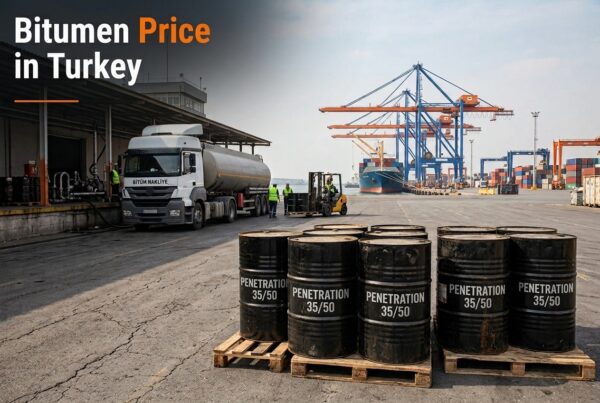
The standard bitumen product used across road construction and asphalt production, classified by needle penetration depth. Bitumen 35/50 is a harder grade generally associated with warmer climates and heavier traffic loading, while Bitumen 50/70 is one of the most commonly referenced grades in the region, used across general road construction. Availability of specific grades varies by supplier and should be confirmed directly.
Oxidized Bitumen
Produced by air-blowing penetration bitumen to raise its softening point, oxidized bitumen is used for waterproofing, roofing, insulation, and selected industrial protective applications where standard penetration grade isn’t suitable.
Cutback Bitumen
Penetration bitumen blended with a volatile solvent to reduce viscosity, allowing lower temperature application. Selection depends on the correct curing type Rapid, Medium, or Slow Curing matched to the project’s application and required working time.
Bitumen Emulsion
Bitumen dispersed in water, enabling application at low temperatures. Relevant to road maintenance, surface treatments, cold mix production, and other applications where reduced heating requirements are an advantage.
VG Bitumen
Viscosity Grade bitumen, classified by absolute viscosity rather than penetration depth, used in road and infrastructure projects where viscosity characteristics are the specified selection criterion.
Polymer Modified Bitumen (PMB)
Bitumen modified with polymers to improve performance characteristics such as elasticity and temperature resistance, considered for applications with more demanding performance requirements than standard grades can meet.
Not every product or grade suits every project; the right choice depends on application, climate, traffic conditions, engineering specifications, temperature requirements, construction method, and applicable standards. Buyers should confirm current product availability directly with any supplier rather than assuming a full catalog is stocked.
How to Choose the Right Bitumen Grade?
Grade and product selection should factor in:
- Project type: road construction, waterproofing, industrial coating, or another application
- End application and required performance
- Climate and expected temperature range at the project location
- Traffic loading, for paving applications
- Pavement or system requirements specified by the project design
- Product compatibility with other materials in the system
- Applicable specifications and standards local, regional, or international
- Import regulations at the destination, which may affect which products or documentation are required
This is a technical decision best worked through directly with a supplier who can discuss your specific application, rather than defaulting to whichever product is quoted fastest.
What to Confirm Before Buying Bitumen from Turkey
Before placing an order, buyers should confirm the following with any supplier:
| Category | Why It Matters | |
| Product type and grade | Ensures the correct material for the intended application | |
| Quantity | Confirms order matches project requirements without shortfall or costly surplus | |
| Technical specification | Verifies the product meets documented performance requirements | |
| Certificate of Analysis | Provides batch-specific quality verification | |
| Quality inspection / SGS inspection where applicable | Adds independent verification before shipment | |
| Packaging | Affects handling, storage, and unloading at destination | |
| Loading method | Determines dispatch timeline and logistics coordination | |
| Shipping destination | Confirms route, transit time, and applicable import requirements | |
| Incoterm (FOB, CFR, CIF, etc.) | Defines which party is responsible for freight, insurance, and risk at each stage | |
| Export documentation | Required for customs clearance at destination | |
| Delivery schedule | Aligns supply with project timelines | |
| Payment terms | Confirms commercial arrangement before commitment | |
| Supplier communication | Indicates reliability during and after the transaction | |
| Technical support availability | Useful for grade selection and post-delivery questions | |
Bitumen Packaging for International Export
Packaging choice affects handling, storage, and unloading at the destination, and typically includes:
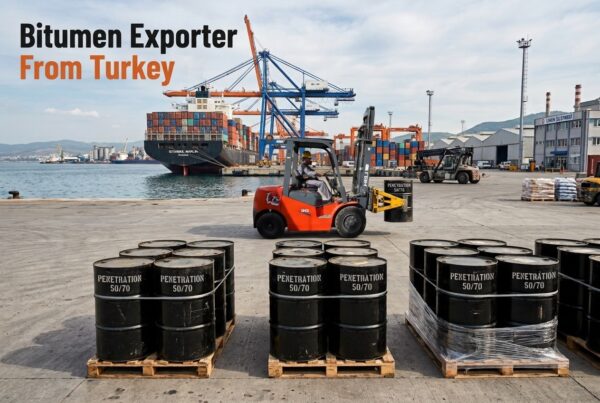
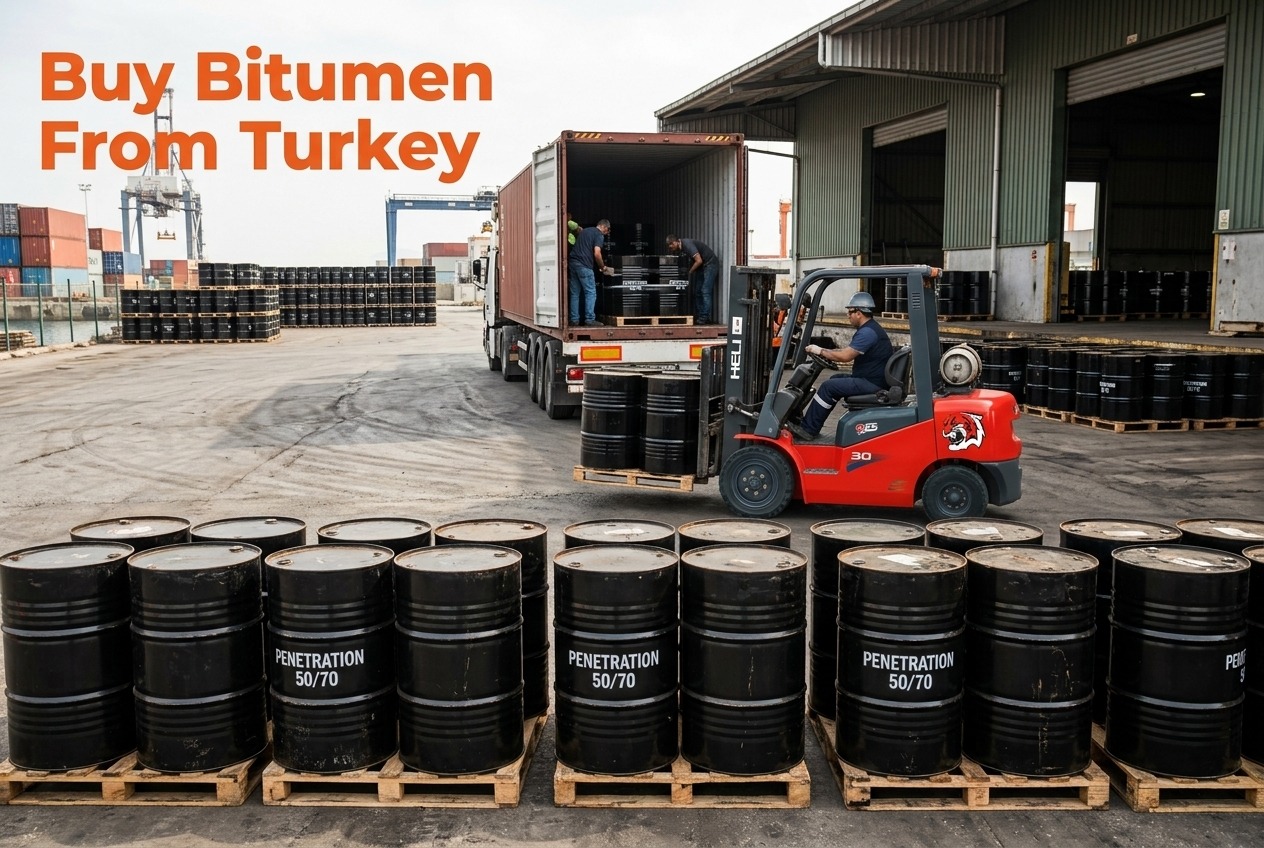
- 185 kg new steel drums are one of the most common export packaging formats for bitumen, offering controlled handling, straightforward storage, and professional labeling suited to international transport. This format is particularly relevant for buyers without bulk unloading infrastructure at their destination.
- Jumbo bags are used in certain bulk handling setups, where suitable for the specific product.
- Bitutainers: flexible bulk packaging suited to particular logistics arrangements.
- Bulk vessel supply for larger orders where destination infrastructure supports bulk unloading and storage.
The right packaging depends on the specific product, order quantity, destination handling capability, shipping method, and the buyer’s own requirements not every format suits every order, so this should be confirmed directly with the supplier for the product being ordered.
Bitumen Export Documentation and Quality Checks
Depending on the destination and agreed trade terms, buyers may request or require:
- Commercial invoice
- Packing list
- Certificate of Analysis (COA)
- Certificate of Origin, where applicable
- Quality documentation matching the confirmed specification
- SGS inspection report, where applicable to the order
- Shipping documents (e.g., Bill of Lading)
- Product technical specifications
- Packaging details
Not every document is mandatory for every country, and shipment requirements vary by destination, product classification, and the agreed Incoterm. Buyers should confirm exactly which documents apply to their specific order and destination before finalizing terms.
How Bitumen Pricing Works
An international bitumen quotation is built from several variables, not a single fixed number:
- Product grade: different products and grades carry different base costs
- Quantity: larger orders can affect per-unit pricing and shipping economics
- Packaging: drums, jumbo bags, and bulk shipment carry different packaging and handling costs
- Origin and supply route affect freight distance and transit time
- Destination determines shipping route, port handling, and applicable import costs
- Freight costs, which fluctuate with fuel prices and shipping market conditions
- Incoterms, which determine which costs are included in the quoted price
- Inspection requirements, if third-party inspection is requested
- Shipping schedule and vessel/space availability
- Market conditions, since bitumen pricing tracks broader petroleum product markets
The Incoterm selected significantly changes what’s included in a quoted price:
| Incoterm | Seller Responsibility | Buyer Responsibility |
| FOB (Free On Board) | Delivers goods loaded onto the vessel at the port of origin | Arranges and pays for freight, insurance, and import clearance from that point onward |
| CFR (Cost and Freight) | Covers goods and freight to the destination port | Arranges insurance and handles import clearance |
| CIF (Cost, Insurance and Freight) | Covers goods, freight, and insurance to the destination port | Handles import clearance and destination handling |
Current bitumen prices fluctuate with petroleum market conditions and aren’t something that can be quoted generally any buyer serious about pricing should request a specific quotation based on their exact product, quantity, packaging, and destination requirements.
How to Buy Bitumen from Turkey?
A structured purchase process typically follows these steps:
Step 1: Submit Your Requirement
Provide the product/grade, quantity, packaging preference, destination, and required delivery timeline.
Step 2: Confirm Technical Requirements
Work with the supplier to confirm product specification, grade, intended application, quality requirements, and packaging format.
Step 3: Receive a Quotation
A proper quotation should clarify the product, quantity, packaging, price basis (Incoterm), destination, estimated lead time, and payment terms.
Step 4: Confirm the Order
Buyer and supplier finalize all commercial and technical details before proceeding.
Step 5: Documentation and Inspection
Required documentation and any agreed quality inspection (including SGS inspection where applicable) are arranged ahead of shipment.
Step 6: Shipment
Packaging, loading, and international shipment are coordinated according to the confirmed terms.
Step 7: Delivery
The buyer receives the shipment according to the agreed shipping terms and schedule, with export documentation supporting customs clearance at destination.
How to Evaluate a Bitumen Supplier?
Before committing to a supplier, review:
- Product quality and consistency across shipments
- Technical documentation: Does the supplier provide clear specifications and COAs?
- Export experience: How established is their international shipping track record?
- Is packaging quality appropriate and professionally prepared?
- Inspection availability: Can they support SGS or other third-party inspection?
- Communication: Are responses clear, timely, and technically informed?
- Logistics coordination: Do they manage shipment planning proactively or leave it to the buyer?
- Commercial transparency: Are pricing and terms clearly explained, without vague or shifting commitments?
- Ability to meet quantity requirements: realistic capacity for the order size in question
- Ability to support repeat orders relevant for buyers planning ongoing supply rather than a one off purchase
Why Choose Tiger Bitumen When Buying Bitumen from Turkey?
Tiger Bitumen, operated by HY International Group, offers international buyers:
- A comprehensive bitumen product portfolio, including penetration, oxidized, cutback, and emulsion grades
- Quality inspection, including SGS inspection where applicable to the shipment
- International export expertise, drawing on roughly two decades of asphalt, tar, bitumen, and cement export activity
- Flexible packaging, including 185 kg new steel drums where that format suits the order
- Professional export documentation prepared for customs clearance
- Reliable shipment coordination from an export-oriented facility with access to Karachi Port and Port Qasim
- FOB, CFR, and CIF supply options, where applicable to the order
- Technical support for product and grade selection
- Competitive international quotations based on your specific requirements
- Responsive customer service throughout the enquiry, quotation, and shipment process
Tiger Bitumen is not a Turkey manufacturer and does not operate refineries or production facilities in Turkey. It supplies its bitumen product range as an international export partner a relevant point of comparison for buyers evaluating Turkey sourcing options alongside other established international supply channels.
Partner with a Trusted Bitumen Supplier
Buying bitumen internationally, whether through Turkey sourcing channels or comparing them against other regions, comes down to more than the quoted price. Correct product selection, clear written specifications, consistent quality control, appropriate packaging, complete documentation, and reliable logistics all determine whether a shipment actually meets project requirements once it arrives. Tiger Bitumen offers international buyers a professional, export-focused option worth including in that evaluation.
Contact Tiger Bitumen
To move forward with a purchase, provide Tiger Bitumen with:
- Required product and grade
- Quantity
- Packaging preference
- Destination
- Delivery timeline
From there, Tiger Bitumen’s export team can confirm technical requirements and prepare a formal quotation. Contact Tiger Bitumen to request a quotation and start the procurement process.