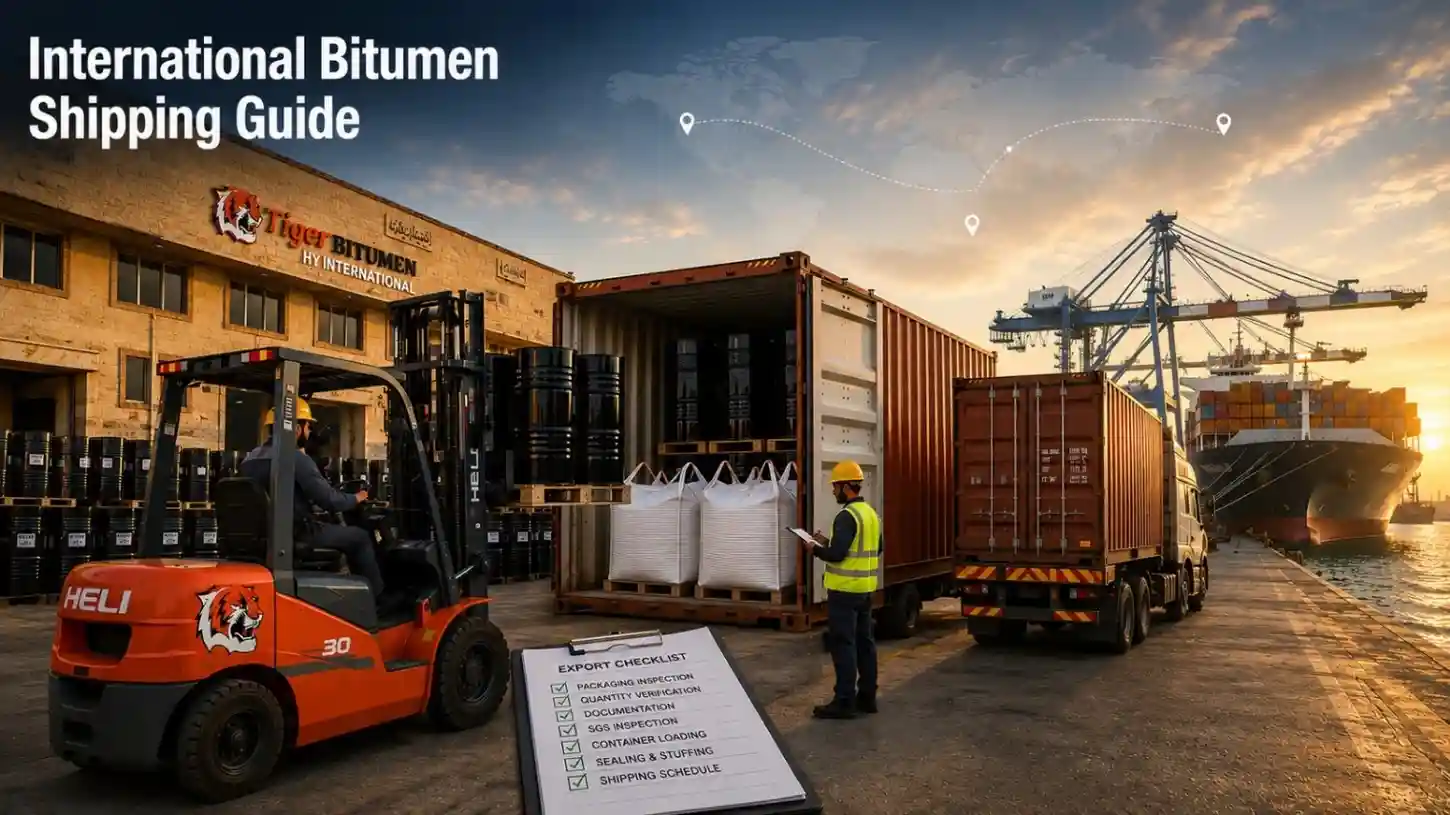
This International Bitumen Shipping Guide explains how transporting bitumen across international markets requires careful planning, reliable logistics, and close coordination between suppliers, freight partners, and buyers. Beyond selecting the right product, successful procurement depends on choosing appropriate packaging, understanding shipping terms, preparing accurate export documentation, and ensuring timely delivery.
For international buyers, understanding how the shipping process works helps reduce procurement risks, avoid unnecessary delays, and improve supply chain efficiency.
This guide explains the key stages of international bitumen shipping and what buyers should consider before placing an export order.
Why Shipping Matters
A high-quality bitumen product must arrive in the same condition in which it left the supplier’s facility.
Reliable shipping helps ensure:
- Product integrity
- On-time deliveries
- Lower transportation risks
- Efficient customs clearance
- Better project planning
- Reduced operational costs
Choosing an experienced exporter with organized logistics support is essential for maintaining a dependable supply chain.
Industry Insight from Tiger Bitumen
The success of an export shipment depends on preparation long before the container reaches the port. Accurate documentation, suitable packaging, and proper shipment planning help prevent delays and unexpected costs.
Step 1 – Selecting the Right Packaging
The shipping process begins with choosing suitable export packaging.
Common options include:
- New Steel Drums
- Jumbo Bags
- Bitutainers
- Bulk Vessel Supply
The ideal packaging depends on:
- Shipment volume
- Destination country
- Available unloading facilities
- Storage requirements
Selecting the correct packaging improves transportation efficiency and helps protect the product throughout the journey.
Related Reading
Bitumen Packaging Guide for International Buyers
Step 2 – Choosing the Appropriate Incoterm
International trade uses standard commercial terms to define responsibilities between buyers and sellers.
The most common options include:
- FOB (Free on Board) – The supplier delivers the goods on board the vessel, while the buyer arranges ocean freight and insurance.
- CFR (Cost and Freight) – The supplier arranges ocean freight to the destination port, while the buyer manages insurance.
- CIF (Cost, Insurance and Freight) – The supplier provides freight and marine insurance, offering a more complete shipping solution.
Selecting the right Incoterm depends on the buyer’s logistics strategy and procurement preferences.
Step 3 – Export Documentation
Accurate documentation plays a critical role in international shipping.
Typical export documents include:
- Commercial Invoice
- Packing List
- Bill of Lading
- Certificate of Origin
- Certificate of Analysis (COA)
- SGS Inspection Report (if required)
Complete and accurate documentation helps simplify customs clearance and reduces the risk of shipment delays.
Step 4 – Loading and Port Operations
Once packaging and documentation are complete, the shipment is prepared for loading.
During this stage:
- Products are inspected.
- Containers are loaded securely.
- Packaging is verified.
- Cargo is transported to the port.
- Shipping schedules are confirmed.
Professional loading procedures help minimize handling damage and ensure safe transportation.
Step 5 – Ocean Freight
After departure, the shipment is transported to the destination port.
Transit time depends on several factors, including:
- Shipping route
- Destination country
- Vessel schedule
- Weather conditions
- Port operations
Regular communication between the exporter and buyer helps keep the procurement process on track.
Step 6 – Customs Clearance and Delivery
Once the shipment arrives, it passes through customs before final delivery.
Buyers should:
- Verify shipment documents
- Inspect packaging
- Confirm quantities
- Arrange local transportation
- Prepare unloading facilities
Planning these steps in advance helps avoid delays and supports efficient project scheduling.
How Tiger Bitumen Supports International Buyers
International shipping involves much more than moving products from one country to another.
Tiger Bitumen supports buyers by providing:
- Export logistics coordination
- Flexible packaging options
- Technical product guidance
- SGS inspection support
- Professional export documentation
- Reliable shipment planning
- Dedicated customer service
Our objective is to help international buyers receive premium-quality bitumen through a smooth and efficient export process.
Common Shipping Challenges
Some challenges may arise during international transportation, including:
- Port congestion
- Documentation errors
- Freight schedule changes
- Customs delays
- Packaging damage
- Weather-related disruptions
Working with an experienced exporter helps minimize these risks through careful planning and proactive communication.
Final Thoughts
International bitumen shipping is a coordinated process involving packaging, documentation, freight planning, customs procedures, and reliable logistics. Understanding each stage allows international buyers to improve procurement efficiency while reducing transportation risks.
Partnering with experienced exporters such as Tiger Bitumen provides buyers with dependable logistics support, professional documentation, flexible shipping options, and premium-quality bitumen delivered with confidence.
About Tiger Bitumen
Tiger Bitumen supplies premium-quality bitumen products to international buyers through organised export logistics, secure packaging, SGS inspection support, and flexible shipping solutions. Our experienced export team works closely with customers to ensure every shipment is prepared according to international standards and delivered efficiently to destinations worldwide.