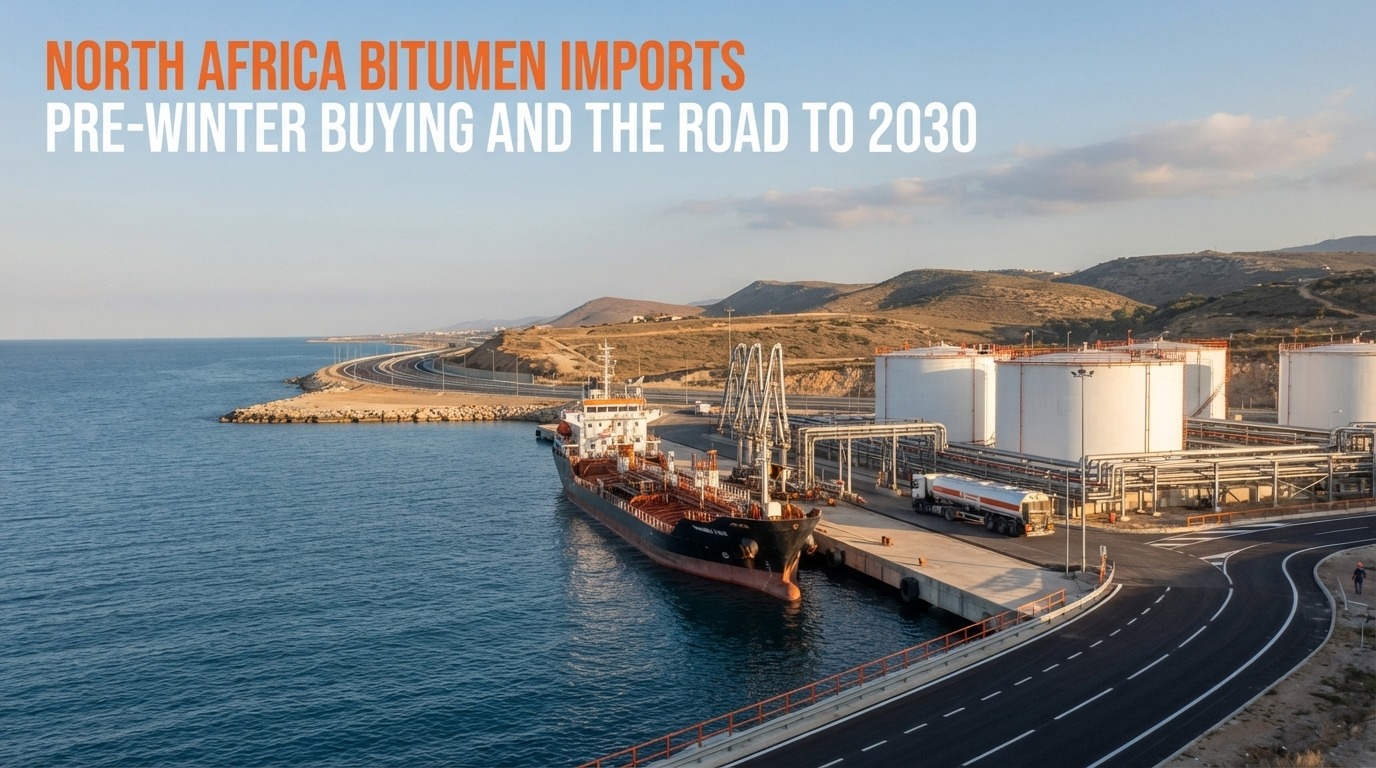
Morocco and Algeria bitumen imports are in a busy late-season phase. Buyers in both countries are still looking to bring in several cargoes before winter weather sharply reduces road construction activity and bitumen requirements. Their demand is giving welcome support to the wider Mediterranean bitumen market at a time when regional consumption is slowing elsewhere.
Behind this short-term buying sits a longer-term story. In Morocco, expectations of rising bitumen consumption have been linked since 2024 to highway projects planned ahead of the 2030 FIFA World Cup, which the country will co-host with Spain and Portugal. Recent market feedback, however, suggests that 2026 has been a more difficult year than hoped.
This article looks at the current state of the Morocco and Algeria bitumen import markets, how supply conditions in the Mediterranean are affecting buyers, and what importers and suppliers should consider heading into winter and 2027. For a broader overview of regional sourcing developments, see our earlier analysis of North Africa bitumen imports and Mediterranean supply conditions.
Pre-Winter Buying Supports Morocco and Algeria Bitumen Imports
Buyers Moving Before the Winter Slowdown
Algerian and Moroccan buyers are looking to secure a number of cargoes before winter weather heavily erodes construction activity and bitumen demand. Importers are taking advantage of the remaining weeks of paving activity before conditions turn.
This buying is one of the main sources of support for the Mediterranean bitumen market this month, as regional road paving and bitumen demand fall seasonally elsewhere. The timing of these purchases reflects the importance of seasonal demand patterns when planning bitumen procurement.
Suppliers Keen to Secure Cargo Sales
The timing suits sellers. Mediterranean suppliers are trying to encourage cargo buying before the winter slowdown, and regional cargo prices have edged lower against fuel oil as a result. For North African importers, this creates a more competitive supply environment for late-season purchases.
Algeria Bitumen Imports: Late-Season Cargoes Arriving
Algeria remains an active import market. Importers continue to bring in cargoes from Mediterranean supply sources, and further deliveries are expected before winter.
Delivered cargo prices into Algeria edged slightly higher this week, even as Mediterranean export prices eased. Freight on the main Mediterranean routes to Algeria was stable.
Morocco Bitumen Imports: Price-Sensitive Buying
Active but Cautious Demand
Moroccan buyers are also seeking cargoes before winter, but they are price-sensitive. Moroccan buying interest has reportedly been indicated at relatively competitive delivered levels, although no deals at those levels have yet been confirmed.
Morocco continues to draw supply from Mediterranean and wider European sources. Freight on the main routes to Morocco was stable this week.
A More Difficult 2026
A Moroccan importer has said that the country’s total bitumen consumption and imports for 2026 are likely to be somewhat lower than last year. Two factors are behind this assessment:
- A weak first quarter. Persistent rainfall in early 2026 held back construction activity.
- Higher prices later in the year. Rising bitumen prices weighed on demand after the first quarter.
This shows how weather and price conditions can slow consumption in the short term, even in a market with significant longer-term infrastructure plans.
The Road to 2030: Morocco’s Longer-Term Bitumen Demand
Since 2024, market participants have expected highway projects in the run-up to the 2030 World Cup to support rising Moroccan bitumen consumption year on year.
This is a longer-term demand expectation, not a guarantee of growth every year. The likely shortfall in 2026 compared with last year shows that weather, prices and project timing can all affect annual consumption. For importers and suppliers, the 2030 infrastructure programme is best treated as a source of longer-term support for Moroccan demand, with year-to-year conditions assessed separately.
Mediterranean Supply Conditions for North African Buyers
North African importers rely on Mediterranean and European supply, so conditions across the region matter directly:
- Seasonal softening. Falling road paving activity in southern Europe has pushed Italian and Spanish truck prices lower and nudged Mediterranean cargo prices down against fuel oil. Our European bitumen market update discusses the seasonal price changes and potential December buying opportunities.
- Uneven availability. Italian cargo supply remains limited, so availability varies between supply points.
- Additional regional supply. Larger cargoes arriving from the Americas are set to add to Mediterranean supply. These movements form part of the wider global bitumen trade flows and long-haul cargo economics.
- Uncertain term negotiations. The uncertain market and price outlook is making it harder for buyers and sellers to conclude Mediterranean term deals for 2027, and many have not yet been agreed. Buyers can review the differences between bitumen term contracts and spot purchases when assessing their procurement strategy.
Elsewhere in North Africa, import activity remains subdued, which leaves Morocco and Algeria as the region’s most active bitumen import markets.
What This Means for Importers and Suppliers
The points below are our assessment, based on the conditions described above.
For Importers
- Use the remaining pre-winter window carefully. Suppliers are keen to sell before winter, but buyers should match purchases to the work that can realistically be completed before activity slows.
- Compare delivered costs, not just export prices. Delivered prices into Algeria edged up this week while Mediterranean export prices eased, so freight and delivery terms matter.
- Plan early for 2027. With many Mediterranean term deals still open, importers who understand their 2027 requirements will be better placed to negotiate.
For Suppliers
- Pricing expectations matter. Moroccan buyers’ price sensitivity suggests competitive pricing will be important to win late-season business.
- The longer-term case remains. Morocco’s 2030-related infrastructure plans continue to support the longer-term outlook, even if annual demand varies.
How Tiger Bitumen Views the North African Market
Morocco and Algeria are important destinations for Mediterranean bitumen, and their buying patterns follow both seasonal and longer-term trends. Tiger Bitumen, a brand of HY International Group, follows developments in North African bitumen imports closely. This helps customers plan purchases around construction timelines, delivered costs and changing supply conditions.
Conclusion
Morocco and Algeria bitumen imports remain active as buyers in both countries move to secure cargoes before winter slows construction. Their demand is supporting the Mediterranean bitumen market at a seasonally quiet time, while suppliers are keen to complete late-season sales.
Over the longer term, Morocco’s road programme ahead of the 2030 World Cup continues to underpin expectations of rising consumption, although 2026 has shown that weather and prices can interrupt that path in any given year. For importers and suppliers, careful timing, attention to delivered costs and early planning for 2027 will be key.
Frequently Asked Questions
Why are Moroccan and Algerian buyers importing bitumen now?
Buyers want to secure cargoes before winter weather sharply reduces construction activity and bitumen requirements, so they are bringing in several cargoes while paving is still possible.
How is the 2030 World Cup linked to bitumen demand in Morocco?
Since 2024, market participants have expected highway projects ahead of the 2030 World Cup, co-hosted by Morocco, Spain and Portugal, to support rising bitumen consumption in Morocco. This is a longer-term expectation rather than guaranteed growth every year.
Is Moroccan bitumen demand rising in 2026?
A Moroccan importer expects 2026 consumption and imports to be somewhat lower than last year, after a rainy first quarter and higher prices later in the year.
Where do Morocco and Algeria source their bitumen imports?
Both countries draw supply from Mediterranean and wider European sources.
How are Mediterranean supply conditions affecting North African buyers?
Seasonal softening in southern Europe has nudged Mediterranean cargo prices lower against fuel oil, and suppliers are keen to sell before winter. Availability still varies between supply points, and many 2027 term deals remain open.