When an importer receives several bitumen offers, the FOB price is usually the first number compared. It is easy to find, easy to rank, and easy to quote in an internal approval. It is also only one part of the bitumen delivered cost that the buyer will eventually pay.
For a contractor, distributor, or procurement team, the cost that matters is the delivered cost: what it takes to get a specification-compliant cargo into the destination tank on the required date. Freight, route conditions, vessel availability, and delivery terms all sit between the FOB price and that figure. In some market conditions, they can matter more than the difference between two suppliers’ FOB offers.
This article explains why, using current market conditions as illustrations. Sections describing what the market showed during the reporting week are marked as market observations. The remaining sections provide general procurement guidance.
What FOB Means and What It Leaves Out
General explanation.
FOB (Free on Board) means the seller’s price covers the product until it is loaded on board the vessel at the named port of shipment. After loading, the buyer generally takes responsibility for the main freight and other costs under the agreed terms.
That is why FOB prices work well as a benchmark for comparing origins at the loading end, but can be misleading as a stand-alone measure of bitumen delivered cost.
What CFR and CIF Add to Bitumen Delivered Cost
General explanation.
CFR (Cost and Freight) includes the product and sea freight to the named destination port. CIF (Cost, Insurance and Freight) also includes marine insurance arranged by the seller. Under both terms, however, buyers still need to understand the agreed destination, discharge arrangements, timing, and other applicable costs.
Moving from FOB to a delivered basis makes freight more visible, but it does not automatically make every offer comparable. Two CFR offers can differ in destination port, laycan, discharge terms, demurrage provisions, and the risks allocated to each party. Buyers should therefore read the terms behind the headline number rather than comparing the number alone.
Why Freight Can Change the Supplier Comparison
A supplier with a lower FOB price but a longer or less predictable route may cost more on a delivered basis than a supplier with a slightly higher FOB price and lower or more predictable logistics costs. The reverse can also be true. The comparison only becomes meaningful once freight and other relevant costs are added on a like-for-like basis.
Four factors commonly influence the difference:
- Distance and route. Shorter routes generally carry lower freight, although vessel availability, congestion, demand, and route conditions can change the final rate.
- Bunker costs. Marine fuel costs can influence freight rates and may move independently of the underlying bitumen price.
- Vessel size and cargo parcel. Smaller parcels and specialised vessels can result in a higher freight cost per tonne.
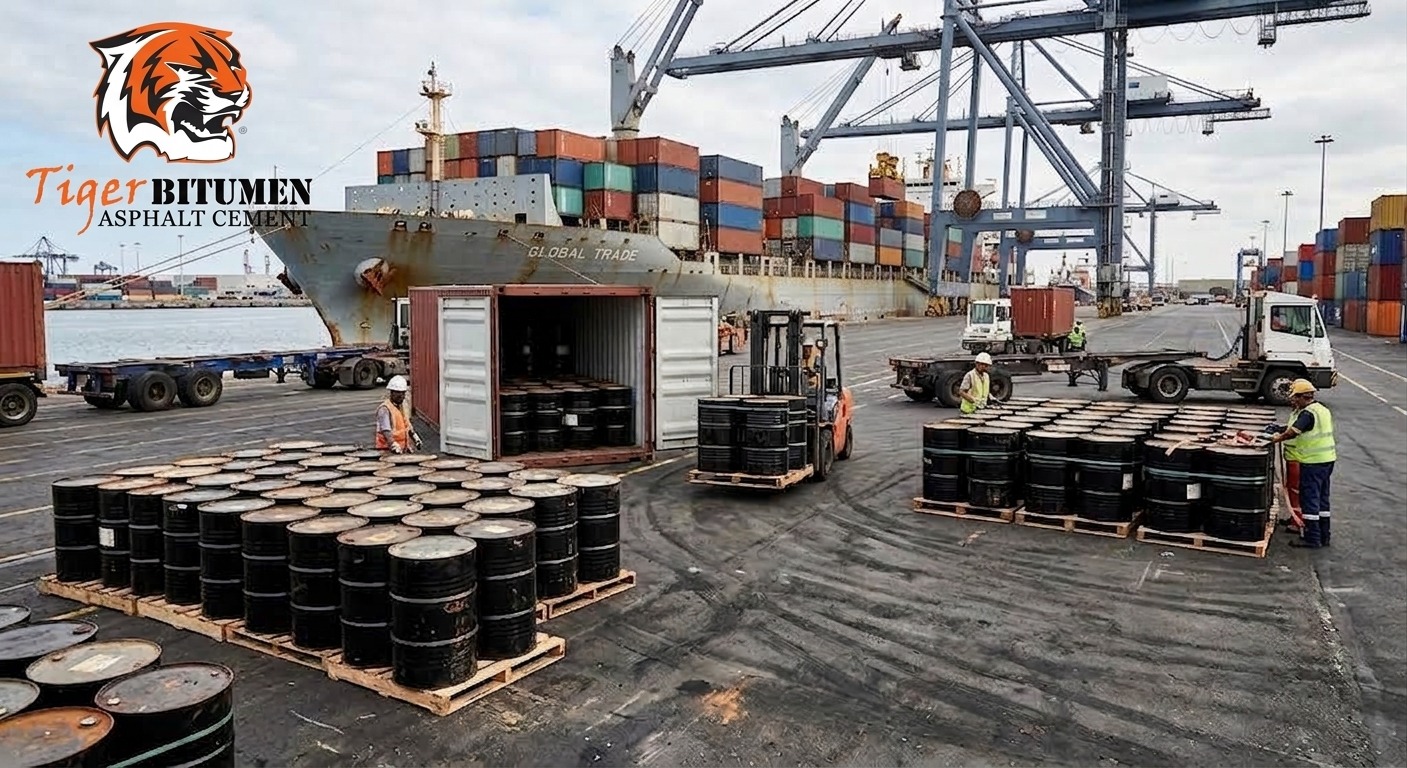
- Packaging. Bulk and drummed cargoes use different logistics models. Bulk cargo is commonly quoted on a per-tonne basis, while drummed bitumen may move in containers with freight quoted per container.
How Vessel Availability and Route Conditions Affect Bitumen Delivered Cost
Freight is not only a quoted rate. It also depends on whether a suitable vessel or container is available when the buyer needs it and what happens if loading or discharge is delayed.
During periods of tight supply, market participants may quote cargoes with demurrage exposure. Demurrage is a cost that can arise when a vessel remains at the loading or discharge point beyond the agreed laytime. Buyers should therefore treat potential demurrage as part of the logistics risk when evaluating a cargo.
Route conditions matter in a similar way. When a route becomes harder or more expensive to operate, costs and delays can rise even if the underlying product price does not change. This is one of the clearest ways an FOB comparison can mislead a buyer.
Gulf-Origin Cargoes: Low FOB, Different Economics
Market observation. During the reporting week, market commentary continued to highlight the importance of shipping availability, freight, and execution conditions for Middle East Gulf-origin bitumen. Some September market reports also described elevated logistical and compliance considerations for Gulf-origin cargoes.
The broader procurement lesson is that a low FOB offer does not automatically represent a low delivered cost. Freight, vessel availability, insurance, compliance requirements, and loading timelines can materially affect the economics of a shipment.
Procurement takeaway. A low FOB offer is a reason to investigate further, not a reason to conclude that the cargo is cheap. For routes affected by conflict, sanctions, compliance restrictions, or limited vessel supply, buyers should ask about vessel availability, insurance, compliance requirements, and realistic loading timelines before treating the FOB price as a meaningful comparison.
Asia-Pacific: When Product Prices Move, and Freight Does Not
Market observation. September market commentary indicated continued tightness in parts of the Asia-Pacific bitumen market, particularly around Singapore supply and regional shipping availability. Some market reports also highlighted the importance of comparing origin, freight, delivery terms, and execution rather than relying on FOB price alone.
Delivered-basis comparisons still matter when buyers compare cargoes from different origins. For example, an importer comparing a Singapore-origin FOB indication with an alternative origin on a delivered basis needs to add the relevant freight and logistics costs before comparing the offers.
Procurement takeaway. Stable freight does not mean freight can be ignored. When product prices are volatile, a relatively stable freight cost still needs to be added consistently. The delivery mode also matters: trucked, domestic, containerised, and seaborne supply can each have a different cost structure.
Europe and the Mediterranean: Why Delivered Cost Can Diverge From FOB
Market observation. European and Mediterranean bitumen markets can show different relationships between FOB values, freight, premiums, and delivered prices. Changes in bunker costs, regional demand, route activity, and import requirements can affect the delivered economics of a cargo independently of the FOB product price.
This means a buyer should not assume that a change in freight will move delivered cost by the same amount as the change in the product price. The two components can move in different directions.
Procurement takeaway. Freight should be assessed route by route rather than assumed from a general regional market trend. Softer freight on one route does not guarantee a lower delivered cost if the product price or premium is rising, and the reverse can also be true.
A Simple Framework for Comparing Bitumen Delivered Cost
A delivered-cost comparison does not need to be complicated. It needs to be consistent. For each supply option, buyers can build up the same list of components:
- Product price and basis. Confirm the basis (FOB, CFR, CIF, or delivered), the grade, specification, and loading window.
- Freight. Include the rate for the specific route and cargo size, and note any exposure to bunker-cost changes.
- Insurance and route-related costs. Ask what applies, particularly where the route is affected by conflict, sanctions, or additional compliance requirements.
- Time-related costs. Include demurrage terms, likely delays, and the cost of holding additional stock.
- Discharge and handling. Include port charges, terminal access, storage, and any inland delivery costs.
- Specification fit. A cargo that must be re-sourced or rejected can cost more than any freight saving. Buyers should confirm the required grade and technical specification before comparing offers. See the bitumen grades and specifications information for additional context.
For a broader view of the costs that can affect a shipment after the headline product price, buyers can also review the bitumen landed cost guidance.
Comparing two hypothetical offers this way makes the point clear. Supplier A may have a lower FOB price but a longer route, higher freight, and less certain loading. Supplier B may have a higher FOB price, a shorter route, and firmer timing. Once every relevant component is included, the relationship between the two offers can change. The framework gives the buyer the evidence needed to see why.
What International Buyers Should Check Before Ordering
Before committing to a cargo, it helps to confirm several points directly with the supplier:
- The terms behind the price. Which Incoterm applies, at which port, and who bears the relevant costs and risks at each stage?
- Route and vessel availability. Is a suitable vessel or container available, and what happens if the route or schedule changes?
- Compliance and documentation. Are there sanctions, origin, banking, insurance, or documentation considerations for the cargo and destination?
- Demurrage and laytime. What are the agreed terms if loading or discharge is delayed?
- Destination readiness. Can the receiving terminal or depot handle the cargo when it arrives?
- Packaging. Bulk, drums, and other formats each have different freight and handling costs. The appropriate option depends on the destination market and receiving facilities.
For buyers comparing packaging and logistics requirements, the bitumen packaging guide provides additional information on packaging considerations.
These are general procurement considerations. They are not trading or investment advice, and they do not guarantee a particular cost outcome.
Tiger Bitumen Perspective
Tiger Bitumen is an international bitumen supplier and exporter. Buyers often compare offers on more than the headline product price, including grade, specification, origin, freight, and delivery requirements. Tiger Bitumen discusses these factors with importers, distributors, contractors, and other commercial buyers based on their specific requirements and current market conditions.
Buyers who want to discuss a specific grade, destination, or delivery requirement can request a bitumen quote with their required specifications and shipment details.
This article is general commentary and does not constitute a price or availability offer.
Related Bitumen Market Insights
For broader market context, readers can also review the Tiger Bitumen website and related market analysis covering regional supply, pricing, availability, and sourcing conditions.