October 2026 | Tiger Bitumen, a brand of HY International Group
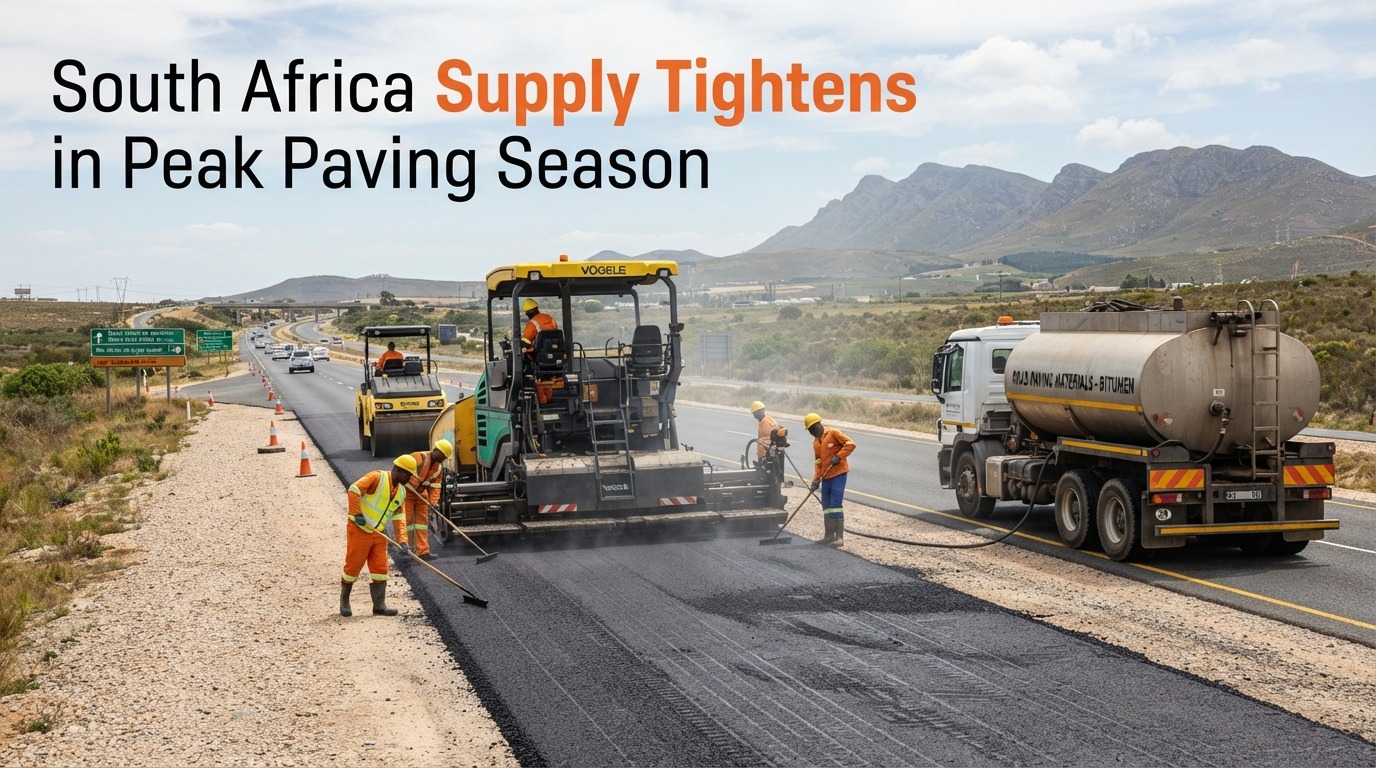
South Africa bitumen supply has tightened in recent weeks. Cargo flows into South African import terminals have slowed, and supply into the region has fallen sharply since early September. At the same time, dry and warm weather has brought the market into its peak activity season. With fewer cargoes arriving as demand rises, domestic truck availability has tightened and truck prices have moved higher.
For contractors, road authorities and importers, the timing matters. The weeks when surfacing work is busiest are also the weeks when supply is harder to secure. This article looks at what is behind the current tightness, how costs are building up, and what buyers may want to consider as the season continues.
Why South Africa Bitumen Supply Has Tightened
Imported cargoes are an important part of South Africa’s bitumen supply. When fewer cargoes arrive, local availability tightens.
Since early September, the range of supply sources reaching South African terminals has narrowed. Market participants report that recent cargoes have come from Europe, and they see no early signs of that pattern changing. Import vessel activity at South African ports was limited during the most recent week.
Market participants also report that the slower cargo flow has tightened regional supply as well as domestic supply.
Peak Season Demand Adds Pressure
The supply slowdown has coincided with rising demand. Dry and warm conditions are encouraging construction work to push ahead, and the market is in its peak activity season.
Views on how much further demand will rise are mixed. One market participant suggested bitumen demand may already have peaked for the current period. Others expect truck prices to keep rising over the next few weeks, which could slow the pace at which project activity and bitumen requirements increase.
What Is Driving South African Bitumen Prices Higher?
Domestic truck prices in South Africa have extended recent gains. Several cost factors are working together:
- Higher import cargo costs: International crude oil and fuel oil prices have moved higher, and bitumen cargo values have followed. Higher cargo prices feed into the cost of imported bitumen.
- Higher tanker freight: Freight rates for bitumen tankers delivering to South Africa have risen, reflecting higher marine fuel costs.
- Tighter local availability: With fewer cargoes arriving during peak demand, available truck volumes are under pressure, supporting domestic prices.
Prices have also been rising more broadly across sub-Saharan Africa, supported by the same firm crude and fuel oil values. In South Africa, the combination of slower cargo flows and seasonal demand has added further support.
Where Future Supply May Come From
The outlook for additional cargoes is uncertain. Market participants expect export availability from Spain to increase from early November as Spanish domestic demand eases. They also say rising west and southern African demand could draw interest in those export flows. More broadly, sub-Saharan Africa is seen as a healthier outlet for Mediterranean surplus during its active season.
Whether this results in more frequent arrivals in South Africa is not yet clear. It will depend on cargo pricing, freight costs and vessel availability in the coming weeks.
What to Watch in the Coming Weeks
- Import arrivals: The pace of cargo deliveries into South African terminals will be the main factor for domestic availability during the rest of the season.
- Crude and fuel oil prices: These continue to set the direction of import cargo costs.
- Freight costs: Higher marine fuel prices have pushed up tanker freight, and any further change will affect delivered costs.
- Demand response: If truck prices continue to rise, the pace of project activity may slow, as some market participants have suggested.
Practical Considerations for Buyers in South Africa
For contractors and importers working through the peak season, planning can help reduce exposure to supply gaps and price swings. Buyers may want to consider the following:
- Secure volumes ahead of key project phases. With cargo flows slower, confirming supply for surfacing programmes earlier can reduce the risk of delays.
- Look at the full landed cost. Cargo price, freight, terminal handling and inland transport all contribute to the final cost. A change in any one of them can shift the total.
- Consider supply diversification. Relying on a narrow set of supply sources increases risk when arrivals slow. Assessing alternative sources and supply formats in advance gives buyers more flexibility.
- Confirm specifications early. Check that any new source meets the grade and specification requirements of the project and applicable local standards before committing.
- Build price movements into project budgets. Where contracts allow, account for current cost trends to avoid pressure on project budgets later in the season.
Conclusion
South Africa bitumen supply is under pressure from slower cargo flows at the height of the paving season. Firmer crude and fuel oil values and higher freight costs are adding to the cost of imported product, and truck availability has tightened. Market participants are divided on how far demand will rise from here, but supply planning has become a more important part of project delivery.
Tiger Bitumen, a brand of HY International Group, follows southern African market conditions closely to support buyers planning in a changing market. For more updates on Southern African market conditions, buyers can explore our regional articles. Contractors and importers in South Africa and the wider region are welcome to contact our team to discuss their bitumen requirements.