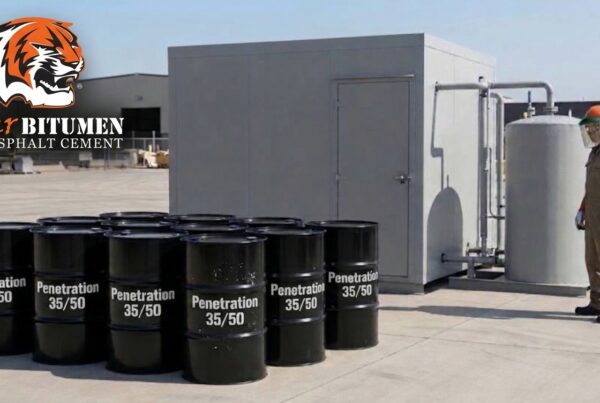
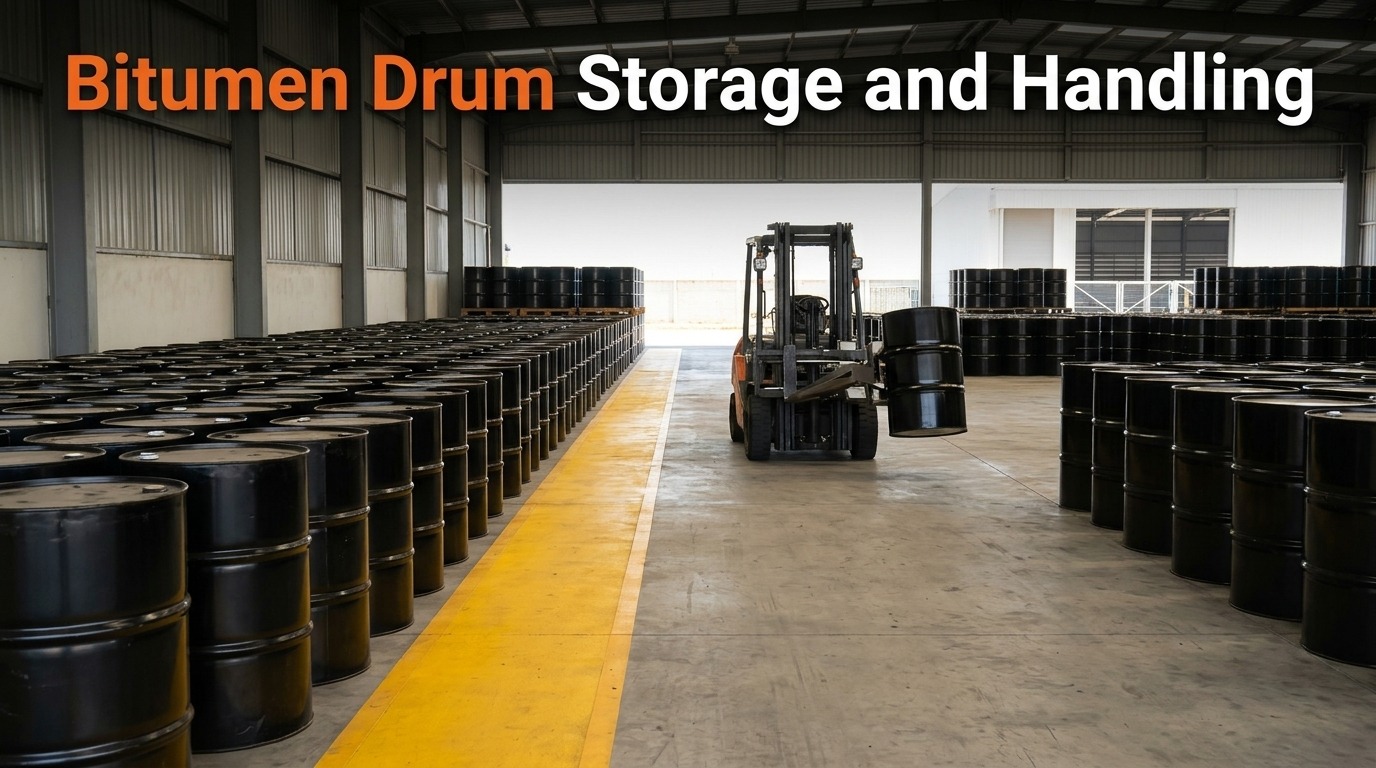
When a container of drummed bitumen reaches its destination, bitumen drum storage begins at the receiving site. The buyer must check the delivery, unload the drums safely, and store them correctly so the packaging remains sound until the bitumen is ready for use.
This guide covers the complete process, from opening the container doors to managing empty drums after use. It provides general guidance for buyers and site operators. However, it does not replace a site risk assessment, the product safety data sheet (SDS), or local regulations. Always follow the relevant safety requirements and the instructions provided by your equipment manufacturer and supplier.
Receiving Drummed Bitumen: What to Check on Arrival
Start your bitumen drum storage process by checking the delivery before moving the drums into the storage area. Problems are easier to record and resolve while the container, cargo, and shipping documents are still together. As our bitumen shelf life and storage guide explains, buyers should inspect packaging on arrival and identify any damage before placing products into storage.
Check the Container and Seal
- Compare the container number and seal number with the bill of lading and packing list. These references connect the arriving container with the records prepared at the loading point.
- Check whether the seal remains intact before cutting it.
- Inspect the container exterior for visible damage that may indicate problems during transportation.
Check the Drums Against the Shipping Documents
- Drum count: Compare the number of drums received with the quantity shown on the packing list.
- Markings: Check the grade, net weight, and any agreed buyer markings against the shipping documents. Our guide to bitumen drum specifications explains the information that drum markings usually display.
- Batch references: Record any batch or lot references and match them with the relevant test documents, where provided.
For a more detailed explanation of export packaging and documentation, buyers can also review the Bitumen Drums quality and documentation guide.
Inspect the Condition of the Drums
Next, examine the drums for dents, deformation, damaged seams, missing or damaged closures, bitumen on the outside surface, rust, and flaking paint. These checks help identify packaging problems before the drums enter storage. Our guide to inspecting bitumen drums before shipment explains similar checks at the export point.
Record Damage Before Signing the Delivery Documents
If you find damage, a shortage or a seal discrepancy, take photographs and record the condition on the delivery documents before signing, where possible. Then notify the parties named in your contract and insurance terms without delay. Since notice periods and reporting procedures depend on those terms, check the requirements before the shipment arrives.
Unloading and Handling Bitumen Drums Safely
Filled bitumen drums are heavy, so the receiving team must plan unloading carefully. Tiger Bitumen publishes a net fill of 180 ± 3 kg for its 180 kg new steel drum, with an empty drum weight of 9.3 ± 0.2 kg. Its 150 kg new steel drum has a net fill of 150 ± 3 kg and an empty drum weight of 8.3 ± 0.2 kg.
Based on these nominal figures, a filled drum weighs approximately 189 kg in the 180 kg size and 158 kg in the 150 kg size. These figures are calculated estimates, not separately published gross weights. Actual weights can vary within the stated tolerances.
Plan Container Unpacking Before Opening the Doors
Before unloading, establish a clear unpacking plan. Safe Work NSW guidance for unpacking shipping containers warns that cargo can shift during transit and press against the container doors. As a result, the load may move uncontrollably when workers open the doors.
Never assume that the drums remain secure simply because the container was loaded correctly at origin. Instead, assess the load before unloading and plan the removal sequence. This helps prevent the remaining drums from becoming unstable as the team removes the first rows.
For additional information about export loading arrangements, see the Bitumen Drums container loading guide.
Use Mechanical Aids to Move Filled Drums
WorkSafe Victoria’s guidance on handling 205-litre drums identifies drum weight and position as important manual handling risks. It recommends mechanical aids such as drum lifters, drum trucks and suitable forklift attachments rather than relying on manual handling.
This guidance covers 205-litre drums in general; it is not a bitumen-specific handling standard. Nevertheless, its mechanical-handling principles are relevant when planning the movement of heavy bitumen drums. Our bitumen storage and handling guide also recommends using forklifts correctly, avoiding impacts and keeping drums on stable surfaces.
Separate Pedestrians and Vehicles
During unloading, keep people away from moving vehicles and suspended loads. The UK Health and Safety Executive’s warehousing guide, HSG76, recommends separating pedestrians and vehicles wherever reasonably practicable. It also advises vehicle operators to avoid moving when pedestrians are close and warns workers never to walk beneath a raised load.
Therefore, mark pedestrian walkways, establish vehicle routes and restrict access to the unloading area while equipment is operating.
Bitumen Drum Storage Conditions
Suitable bitumen drum storage conditions help protect the packaging and reduce the risk of product contamination. In particular, buyers should keep drums in a clean, dry and organized area. Tiger Bitumen’s shelf life and storage guidance also recommends protecting packaged bitumen from rainwater and standing water.
Choose a Suitable Storage Area
- Ground: Use a stable, level surface that can support the weight of the stored drums. HSG76 advises that floors should withstand their intended loads and remain free from holes, slopes, and uneven surfaces.
- Drainage: Choose an area where water cannot collect around the drums.
- Separation: Check the product SDS for incompatible materials. Tiger Bitumen’s MSDS advises storing the product away from strong oxidising agents and combustible materials.
- Access: Maintain clear routes for forklifts and pedestrians. Mark storage areas and walkways so workers can identify them easily.
Protect Drums from Weather and Contamination
Keep drums closed and protect them from rainwater, standing water, and other sources of contamination. Tiger Bitumen’s storage guidance identifies moisture, dirt, dust and unsuitable handling conditions as factors that can affect product quality.
In addition, inspect the external drum condition regularly. Rust, damaged paint, and impact marks may indicate poor handling or unsuitable storage conditions. By protecting the packaging, site operators can reduce the risk of damage before the bitumen reaches the point of use.
Keep Drums Upright and Labels Legible
Place drums on stable surfaces and keep them upright where the drum design and supplier instructions require it. Also, make sure product markings remain visible and readable throughout storage.
Tiger Bitumen’s MSDS advises against storing the product in open or unlabelled containers. Therefore, do not remove or obscure the identification markings needed to distinguish grades and batches.
Stacking and Site Organisation for Bitumen Drum Storage
There is no single safe stacking height that applies to every bitumen drum. The permitted arrangement depends on the drum design, surface condition, handling equipment and site risk assessment. Before stacking, confirm with your supplier that the drums are designed for the proposed arrangement. Also, follow the applicable handling and storage instructions.
However, several general principles can help site operators organize storage more safely:
- Prioritise stability: Build any permitted stack on a sound, level base. Unstable stacks of filled drums can collapse and create serious hazards.
- Maintain access: Leave enough room for forklifts and workers to reach each storage row safely. HSG76 recommends clearly marking storage areas, aisles and gangways.
- Keep walkways clear: Do not place drums or other goods in pedestrian routes. HSG76 advises keeping floors and traffic routes free from obstructions.
- Organise stock rotation: Arrange drums so workers can access older stock first. Our bitumen shelf life guide recommends appropriate stock rotation and regular packaging inspections.
- Separate grades and batches: Keep different grades and batches apart, with clear identification. This helps prevent operators from sending the wrong material to the asphalt plant or other application.
Inspect Bitumen Drums During Storage
Bitumen drum storage requires regular inspections, not just a check on the day of delivery. Our shelf life and storage guide recommends inspecting packaging regularly. It also identifies long-term storage without inspection as a common mistake.
During each inspection, check for the following problems:
- Leaks: Look for bitumen around closures, seams, and the bottom of the drum.
- Dents and deformation: Check the drum body and ends for visible damage.
- Corrosion: Look for rust and flaking paint, which may indicate poor handling or storage.
- Closures: Check for missing, loose, or damaged closures.
- Markings: Make sure product labels and identification details remain legible.
Set damaged drums aside for assessment and prevent further handling until the responsible site personnel decides how to manage them. If bitumen escapes, follow the product SDS and the site’s spill response procedure. Tiger Bitumen’s MSDS advises preventing spills from entering storm sewers, drains, and soil. It also recommends collecting the material for disposal at an appropriate facility and reporting spills to the relevant authorities where required.
Empty Bitumen Drum Management
An emptied drum may still contain bitumen residue. Therefore, do not treat it as an ordinary empty container. Tiger Bitumen’s guidance notes that some product can remain after decanting. In addition, a third-party bitumen safety data sheet warns that containers may remain hazardous because of product residue and advises against puncturing or burning them.
For safer empty drum management, site operators should:
- Keep empty drums in a designated area, separate from full stock.
- Arrange for the drums to be collected, reused, or disposed of correctly.
- Follow local regulations for containers that still contain product residue.
- Consult the relevant authority or a licensed waste contractor when disposal requirements are unclear.
Requirements differ between countries and locations. Consequently, buyers should confirm the applicable rules before arranging the removal of empty drums.
Common Bitumen Drum Storage and Handling Mistakes
Several avoidable mistakes can damage packaging, create safety risks and complicate site operations. The following list highlights common problems that buyers and site operators should prevent:
- Accepting a delivery without checking the seal, drum count, and packaging condition.
- Opening container doors without considering the possibility of shifted cargo.
- Moving heavy drums manually when suitable mechanical aids are available.
- Storing drums on soft, uneven or waterlogged ground.
- Leaving drums exposed to rainwater or standing water.
- Stacking drums without confirming that the packaging and site conditions allow it.
- Storing drums near incompatible materials, oxidising agents or combustible substances.
- Mixing different grades or batches without clear identification.
- Ignoring stock rotation and leaving older drums inaccessible.
- Overlooking damaged closures, corrosion or small leaks.
- Treating empty drums as safe when they may still contain bitumen residue.
By addressing these issues early, site operators can improve handling practices, protect the packaged product and reduce unnecessary losses during storage.
About Tiger Bitumen
Tiger Bitumen, a brand of HY International Group, supplies bitumen in new steel drums for international export, alongside other packaging options. Buyers can review drum sizes, packing specifications, and available packaging details on our Bitumen Drum Packing page.
For additional information about product safety, buyers can consult our MSDS for penetration grade bitumen. For further information about drum packaging, handling, and export preparation, visit BitumenDrums.com.
Frequently Asked Questions
How should bitumen drums be stored?
In a clean, dry area on a stable, level surface, protected from rainwater and standing water, upright where applicable, and away from strong oxidizing agents and combustible material. Keep markings legible and rotate stock.
Can bitumen drums be stored outdoors?
There is no blanket rule. Whatever the location, the drums need protection from rainwater and standing water, a stable surface and regular inspection. Decide on the storage area in your site risk assessment.
How high can bitumen drums be stacked?
There is no universal figure. It depends on the drum design, the ground, the handling equipment and the site’s risk assessment. Confirm with your supplier whether the drums are designed for stacking.
How long can drummed bitumen be stored?
There is no single shelf-life period for every bitumen product. See our guide to bitumen shelf life and storage conditions.
What should I do if drums arrive damaged?
Photograph the damage and, where possible, record the condition on the delivery documents before signing. Set damaged drums aside and notify the parties named in your contract and insurance terms promptly.