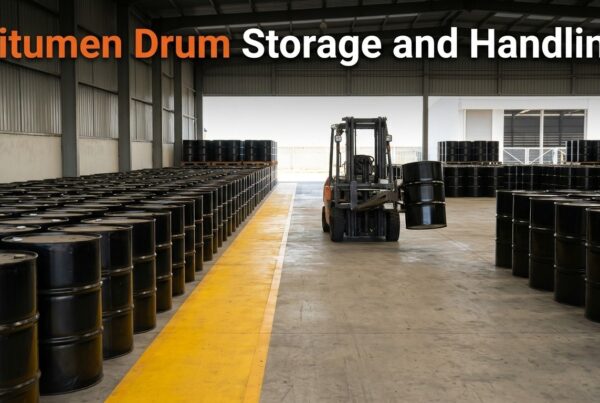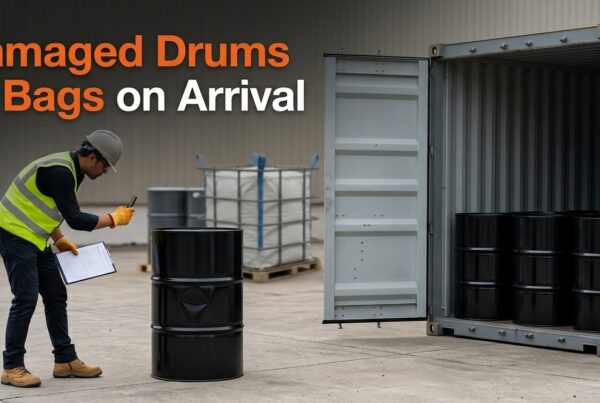
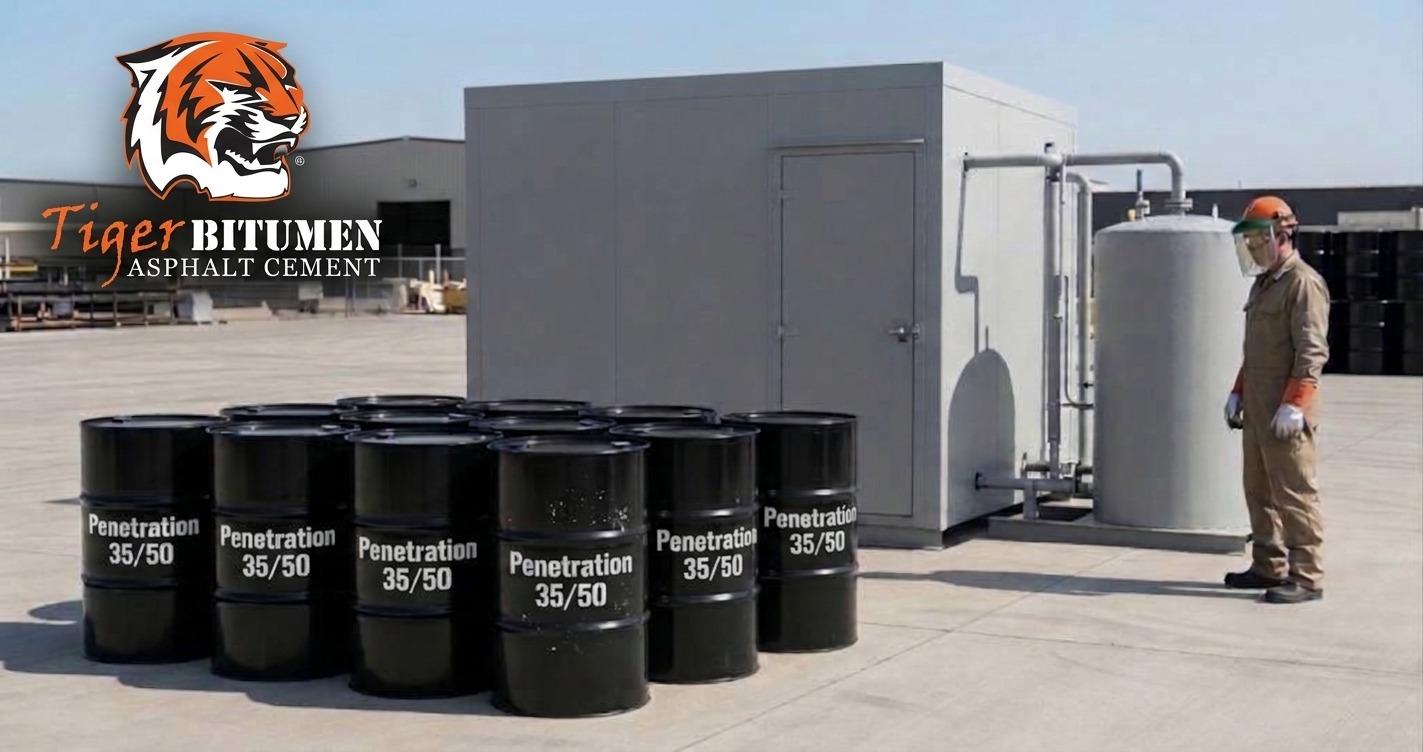
Bitumen drum decanting starts with bitumen arriving at the destination as a solid inside steel drums. Before a buyer can use it in an asphalt plant, waterproofing line or sprayer, the product must be heated until it flows and can move out of the drum. This process is known as decanting. It normally takes place at the buyer’s site rather than the supplier’s facility.
This guide explains what decanting involves, how drum-melting equipment works, the main hazards of heating bitumen and what buyers should plan before choosing drummed supply. However, this article is not an operating procedure. Only trained personnel should carry out decanting with purpose-built equipment. They must also follow a site-specific risk assessment, the equipment manufacturer’s instructions and the product Safety Data Sheet (SDS).
What Bitumen Drum Decanting Means
Drum bitumen manufacturers fill the product hot into steel drums. The bitumen then cools and solidifies after workers seal the drums. This process makes drums practical for long-distance transport and for sites without heated storage tanks. However, it also means that buyers cannot simply pour the product out when it reaches the destination.
Bitumen drum decanting, also known as drum melting, involves heating the solid product until it flows. Suitable equipment then collects the melted bitumen and transfers it into a heated tank or directly to the process. As our comparison of drum, bulk and jumbo bag bitumen explains, buyers must heat drum-packed bitumen out of its container before use.
What Drum-Melting and Decanting Equipment Does
The following description provides general industry information based on equipment manufacturers’ published descriptions. It does not describe Tiger Bitumen’s equipment or operations. Although designs vary between manufacturers, most units use a similar basic arrangement:
- An enclosed, insulated heating chamber holds the drums during the heating process.
- Indirect heat comes from sources such as thermal oil coils or hot air.
- Mechanical loading equipment, such as a hoist, rails or hydraulic pusher, helps operators avoid lifting heavy drums by hand.
- A lower collection section receives the melted bitumen and may keep it hot.
- A pump transfers the collected bitumen to a storage tank or production plant.
However, equipment capacity, heating methods, drum positioning and opening arrangements differ between designs. Buyers must obtain those details from the manufacturer’s instructions for the specific unit. A general article cannot replace the operating guidance supplied with the equipment.
The drum closure also matters. For example, equipment may handle a drum with a small opening in a fixed top differently from a drum with a removable lid. Our guide to bitumen drum specifications explains drum closures and the details buyers should confirm before ordering.
Why Controlled Heating Is Necessary
Bitumen needs enough heat to flow, but operators should avoid heating it beyond the temperature required for the specific product and process. Both sides of this balance matter.
- Too little heat: Insufficient heating reduces pumpability and makes unloading difficult. As a result, the site may experience delays.
- Too much heat: Excessive heating accelerates ageing and oxidation, which can affect binder quality. It can also increase fumes and fire risks. Therefore, Sabita advises operators to carry out bitumen operations “at as low a temperature as possible”.
- Local hot spots: Sabita includes decanting among the operations where operators must avoid excessive local heating. Purpose-built units therefore use controlled, indirect heating methods.
The appropriate maximum temperature depends on the bitumen grade and the supplier’s technical recommendations. Eurobitume publishes proposed maximum safe handling temperatures that it describes as consistent with the Energy Institute’s Bitumen Safety Code. Buyers and site operators should consult those references alongside the product SDS. Never use a working temperature taken from a general article, including this one.
The Main Hazards of Heating Bitumen
Industry organisations document the hazards of hot bitumen in detail. The following risks deserve particular attention when planning a drum-decanting operation.
Burns
Hot bitumen sticks to skin and can cause serious burns. Therefore, workers need access to suitable first-aid facilities and clear emergency procedures. Eurobitume recommends a suitably specified safety shower at every site that handles hot bitumen. It also stresses the importance of prompt treatment.
Eurobitume’s Bitumen Burns Card instructs first aiders to cool a burn with water and not to remove the bitumen at the worksite. Keep the card available on site and follow its first-aid guidance.
Water Contact and Boil-Over
Water and hot bitumen create a serious boil-over hazard. When water contacts hot bitumen, it turns rapidly into steam and expands violently. Nynas explains that 10 litres of water can expand into 20,000 litres of steam within a few seconds.
Similarly, Sabita warns that even small amounts of water heated with bitumen can create foam that expands quickly and overflows. For this reason, site operators must plan to keep water out of decanting equipment, receiving tanks and transfer lines. They should also store drums in clean, dry conditions.
Hydrogen Sulphide (H2S)
Tiger Bitumen’s Material Safety Data Sheet for penetration grade bitumen states that trace amounts of hydrogen sulphide may be present. In addition, Eurobitume notes that hot bitumen can release H2S at different stages of the supply chain.
Sabita describes H2S as a chemical asphyxiant and warns that workers must not rely on its smell as an early warning. Therefore, site operators should base controls on a local, site-specific risk assessment, as Eurobitume recommends.
Fumes, Overheating and Fire
Heating bitumen releases fumes. Where ventilation is restricted, Sabita recommends effective local exhaust ventilation. Furthermore, bitumen normally operates above its flash point during handling, so controlling the maximum temperature helps manage both product quality and fire risk.
Sabita also warns that burning bitumen becomes a mobile liquid that can spread fire. Consequently, site planning must address ignition sources, fire protection, ventilation and emergency response before workers begin decanting.
Manual Handling
A filled bitumen drum is heavy and requires suitable handling equipment. For example, Tiger Bitumen publishes a net fill of 180 ± 3 kg for its 180 kg new steel drum, while the empty drum weighs 9.3 ± 0.2 kg. Adding the nominal figures gives an estimated gross weight of approximately 189.3 kg (180 + 9.3 kg). This is a calculated estimate, not a separately published gross-weight figure from Tiger Bitumen.
WorkSafe Victoria identifies drum weight and position as major manual-handling risks. It also ranks mechanical aids, such as forklift attachments and drum lifters, above manual handling methods. Therefore, site operators should assess the lifting and movement arrangements before drums arrive.
What to Consider Before Choosing Drummed Bitumen
Decanting capacity should form part of the purchasing decision, not an afterthought. Before ordering drums, buyers and site operators should confirm that their facilities can handle the product safely and efficiently.
- Suitable equipment: Does the site have suitable drum-melting or decanting equipment? If not, is there a confirmed plan to buy or hire it? Also, confirm compatibility with the drum size and closure being ordered.
- Daily capacity: Can the equipment keep pace with daily bitumen consumption? Ask the manufacturer for the rated output when processing your specific drum type.
- Time and fuel: Include the time and fuel required for decanting in the project plan. Otherwise, heating may delay the supply of usable bitumen to the plant.
- Trained operators: Sabita states that all personnel who handle bituminous binders need safe-handling training. Operators must also understand the specific decanting unit they use.
- Risk assessment: Assess burns, water contact, H2S, fumes, fire and drum handling before heating the first drum.
- Product SDS: Obtain the SDS for the exact product and review its handling, storage, protective equipment, firefighting and first-aid sections before delivery. Tiger Bitumen publishes an SDS for penetration grade bitumen.
- Protective equipment and first aid: Our bitumen storage and handling guide covers heat-resistant gloves, safety helmets, eye protection, protective clothing and safety footwear. Sabita also specifies a face shield and goggles as minimum protection. In addition, provide a suitable safety shower and keep the Burns Card available.
- Receiving tank: Decide where the decanted bitumen will go. Confirm that the receiving tank is heated, dry and ready to accept the product.
If the site cannot answer these questions, buyers should review the packaging choice before placing an order. Our comparison of drum, bulk and jumbo bag bitumen explains where each format may suit a project.
Product Residue and Practical Planning
Decanting equipment does not always remove every bit of bitumen from a drum. Some product may remain after the process. The amount depends on the equipment, bitumen grade and site practices, so buyers should not rely on a general residue figure.
- Usable quantity: Discuss possible residue with your team and supplier before calculating the usable quantity. If necessary, allow for it when deciding how many drums to order.
- Empty drums: An emptied drum can still contain bitumen residue. Suppliers’ safety data sheets warn that empty containers may remain hazardous because they retain product. Therefore, workers must not puncture or burn them. Plan to collect, reuse or dispose of empty drums correctly and follow local regulations.
Where to Find Reliable Guidance
Before starting a decanting operation, consult the relevant technical and safety documents. In particular, use the guidance that applies to the exact product and equipment at your site.
- The equipment manufacturer’s operating and maintenance instructions.
- The SDS for the exact bitumen product supplied.
- Eurobitume’s health and safety publications, including the Bitumen Burns Card and proposed maximum handling temperatures.
- The Energy Institute’s Model Code of Safe Practice Part 11: Bitumen Safety Code.
- Sabita Manual 8, Guidelines for the safe and responsible handling of bituminous products.
- Your local occupational health and safety regulator.
For additional information about drum packaging and export handling, buyers can also review the BitumenDrums.com drum packaging guide, container loading information and quality and documentation guidance.
About Tiger Bitumen
Tiger Bitumen, a brand of HY International Group, supplies bitumen in new steel drums for export, alongside other packaging options. Buyers can review drum sizes and packing details on the Tiger Bitumen drum packing page. For product safety information, consult the MSDS for penetration grade bitumen.
Frequently Asked Questions
What is bitumen drum decanting?
It is the process of heating solid bitumen inside steel drums until it flows, then collecting it and transferring it to a heated tank or directly to the process.
What does a bitumen drum decanter do?
In general terms, it heats drums in an enclosed, insulated chamber, usually with indirect heat, collects the melted bitumen and pumps it onward. Designs differ between manufacturers, so follow the manufacturer’s instructions for the specific unit.
What temperature should drummed bitumen be decanted at?
It depends on the grade. Use the supplier’s technical recommendations, the product SDS and recognized references such as Eurobitume’s proposed maximum handling temperatures. Industry guidance stresses controlling the maximum temperature and avoiding local overheating.
Does all the bitumen come out of the drum?
Not always. Some product may remain after bitumen drum decanting. Allow for it in planning, and treat empty drums as still containing bitumen.