
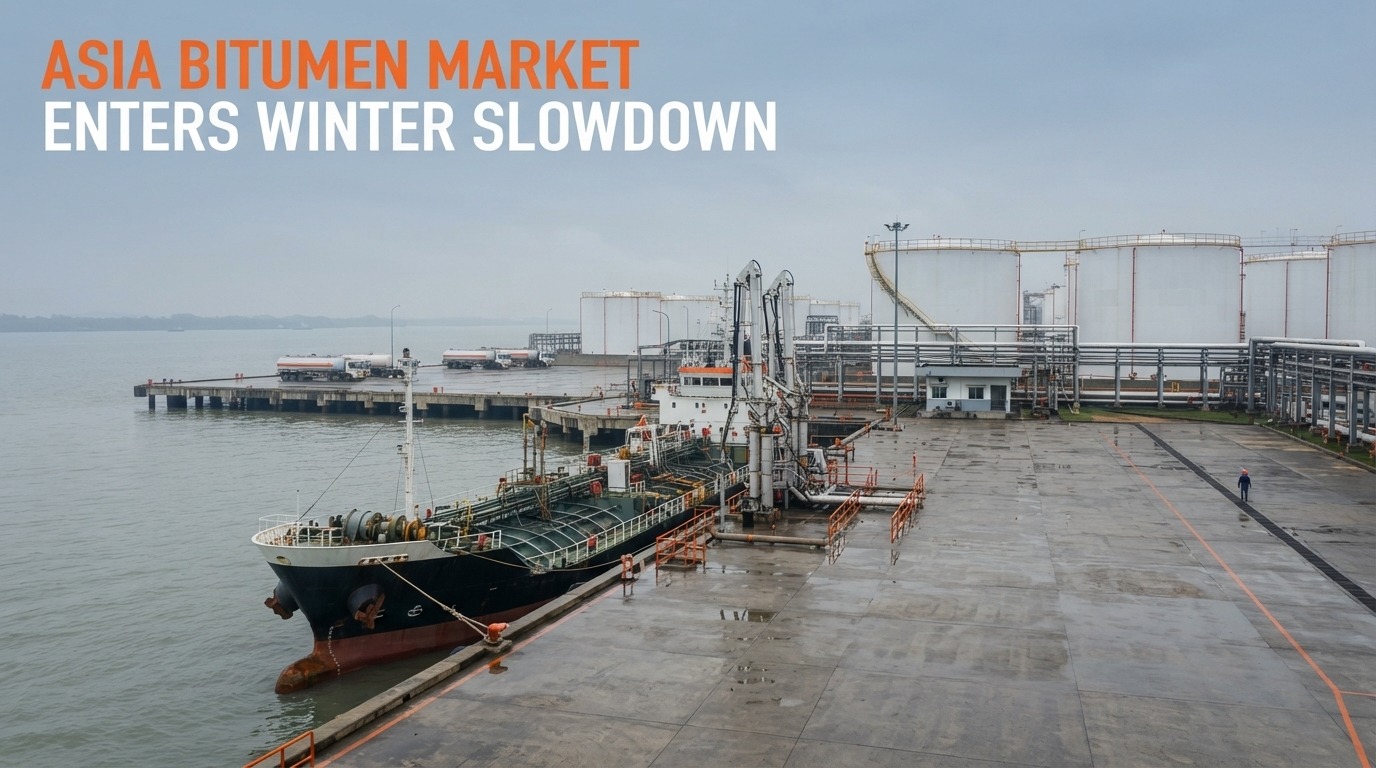
The Asia bitumen market is heading into its seasonal slowdown with more supply than buyers need. As December approaches, many importers across Southeast Asia have already covered their requirements, and winter weather is limiting road paving in key consumer regions. Buying interest is subdued across much of the region.
Prices at major Asian export points have moved lower, pressured by slower demand and weakness in crude and fuel oil markets. Some market participants expect December-loading supply to outpace demand, especially as the regional winter slowdown takes hold.
This article looks at what is driving the current imbalance, how conditions differ from market to market, and what importers, distributors and suppliers should watch as they plan purchases for December and early 2027.
Why the Asia Bitumen Market Is Slowing
Importers Have Already Covered December Requirements
The clearest reason for weak buying interest is that many importers have already secured the volumes they need.
- Vietnam. Most importers have procured enough bitumen for December. Some arranged December supply through term contracts, and others bought from south China or other alternative origins.
- Indonesia. Most importers secured enough volumes in October and November and are not actively seeking additional spot cargoes.
- Buyers of South Korean cargoes outside China. Import demand has been muted because most of these buyers already have enough cargoes for December, or have specific requirements that do not match South Korean cargo specifications.
With requirements largely covered, only small pockets of spot demand remain. These come mainly from buyers with specific grade or delivery needs.
Winter Weather and Seasonal Construction Patterns
Weather is also weighing on Asia bitumen demand:
- East China. Winter conditions have hindered road paving in this key consumer region, weakening demand for December import cargoes.
- Northern Vietnam. Heavy rain has slowed paving work, adding to a broader slowdown in demand even though the country is in its peak construction period.
- Malaysia. Demand is moderate, and some projects have been slow to restart after the recent festive holidays. School holidays in December typically lead to the closure of some highways to heavy vehicles and trucks, which slows road paving.
- Indonesia. Consumption in Java is stable, but demand in other parts of the country, especially the eastern islands, remains slow because of limited ongoing roadworks. Importers also expect consumption to ease as contractors complete roadworks ahead of year-end deadlines.
A Cautious Price Outlook
Buyers across the region are cautious. Indonesian importers are wary of buying too many December cargoes because of a bearish price outlook. In Vietnam, demand has slowed because domestic values are considered unviable, and contractors expect domestic prices to fall in the near term because broader energy markets are weak.
When buyers expect lower prices ahead, they tend to purchase only what they need immediately. That restraint is adding to the softness in December buying. Recent Asia-Pacific bitumen price movements provide further context on the weaker demand and changing price environment.
Why Bitumen Supply Is Running Ahead of Demand in Asia
Ample December Availability
Traders report ample availability of December-loading cargoes from Singapore. Sellers have lowered their offers through the week, but firm bids and concluded deals have been limited.
Rising Domestic Supply in China
In China, slower demand and intensifying competition among sellers have pushed domestic prices lower. Supply in Shandong province has risen as several refiners maintain stable production. Extra supply from Shandong and south China has also weighed on prices in east China, where limited roadworks are keeping consumption weak.
With domestic offers more competitive than seaborne cargoes, demand for imports into east China has been muted.
Steady Domestic Supply in Malaysia
Malaysian supply from domestic refineries is expected to remain steady, and overall supply levels are high even though one key refiner has temporarily halted production and sales. Most Malaysian buyers are importing seaborne cargoes into Malaysian terminals or buying from domestic refineries, and they are not actively seeking Singapore-origin cargoes.
Competition Between Asian Bitumen Supply Origins
A notable feature of the current December bitumen market is the shift in buyer preference between origins.
Singapore-origin cargoes have become less competitive. Many ongoing and new projects in Vietnam have already approved Chinese or Malaysian-origin bitumen, so importers no longer need Singapore cargoes specifically. Importers expect demand for Singapore cargoes to stay low in the coming months, particularly if Singapore prices remain relatively elevated.
Elsewhere in the region:
- South Korea. Winter conditions in east China have weakened import demand for December cargoes, and Chinese domestic offers are more competitive than seaborne supply.
- South China. Weak demand from Southeast Asian importers has pushed export prices lower, with bids scarce.
- Taiwan. Fixed-price selling interest for December-loading cargoes has met no bids from Southeast Asia.
For buyers, this competition means more choice of origin. For suppliers, Vietnam’s experience shows that project approvals can matter as much as product availability. The changing balance between origins is also part of the wider global bitumen trade flows shaping international sourcing decisions.
Not Every Asian Bitumen Market Is Oversupplied
The broader picture points to surplus, but some markets remain tight:
- Thailand. Some December spot volumes have emerged, but overall supply is limited because most producers are prioritising term contracts and domestic requirements. A few importers in south China and Australia with specific requirements are still seeking Thai cargoes, while domestic consumption is stable and downstream buyers are reducing inventories ahead of year-end.
- Taiwan. Regional production is limited, and another key refinery is unlikely to have enough seaborne volumes to offer on the spot market.
- South China importers with specific needs. Some still need cargoes from Singapore and Thailand for December, but firm bids are limited by scarce supply.
- Specific requirements in Southeast Asia. Some buyers with particular grade or project needs have been willing to pay more than general market levels.
These pockets show that Asian bitumen prices and availability can vary significantly by grade, origin and destination, even in a weak overall market. For a broader review of regional supply conditions and alternative origins, see our Southeast Asia bitumen market outlook for Q4 2026.
Implications for Importers, Distributors and Suppliers
The points below are our assessment, based on the market conditions described above.
For Importers and Distributors
- Less competition for additional cargoes. Supply is ample, and many importers have already covered December. Buyers still seeking cargoes are therefore likely to face less competition than earlier in the season.
- Avoid overbuying. Indonesian importers are cautious about taking too many December cargoes because they expect slower year-end consumption. Other buyers face the same balance.
- Watch inventory timing. In Thailand, downstream buyers are drawing down stocks to avoid holding inventory into year-end. Distributors elsewhere may face similar decisions.
- Treat contract commitments carefully. In east China, some buyers have tried to delay or withdraw from agreed purchases after steep falls in domestic prices. This shows the risk of committing to volumes in a falling market.
For Suppliers
- Pressure on pricing. Sellers have lowered offers with few firm bids or deals emerging. In our view, this means delivered pricing needs to stay realistic while buying interest is weak.
- Project approvals matter. In Vietnam, project approval of alternative origins has reduced the need for Singapore-origin cargoes. Whether an origin is approved can decide whether a supplier is considered.
- Specific requirements remain an opening. Buyers with particular grade or delivery needs are still active and have been willing to pay more.
What Buyers Should Monitor for December and Early-2027 Procurement
The following are factors to watch, not a market forecast:
- Crude and fuel oil prices. Weakness in these markets has helped push bitumen prices lower, and their direction will continue to influence regional pricing.
- China’s winter storage contracts. Many Chinese buyers are waiting for sellers to release winter storage contracts, which are typically priced more competitively than spot offers.
- Singapore’s relative pricing. Importers have said demand for Singapore cargoes will depend on whether its prices stay elevated against alternative origins.
- Thai supply availability. Thai producers are prioritising term and domestic customers, which limits spot volumes for regional buyers.
- Year-end construction schedules. Year-end roadwork deadlines in Indonesia, school holiday road closures in Malaysia and winter conditions in China will all affect consumption through the turn of the year.
How Tiger Bitumen Views the Current Asia Bitumen Market
For buyers planning purchases during a seasonal slowdown, timing, grade suitability and delivered cost are especially important. Tiger Bitumen, a brand of HY International Group, follows developments across the Asia bitumen market closely to help customers judge when and where to source supply, and to match purchases to their project requirements rather than short-term market sentiment.
Conclusion
The Asia bitumen market is entering its winter slowdown with supply running ahead of demand. Many importers have already covered December needs, winter weather and rain are limiting road paving, and buyers are cautious about the price outlook. On the supply side, ample December availability, rising domestic production in China and steady supply in Malaysia are adding to the imbalance.
Not every market is oversupplied, however. Limited supply in Thailand, limited production in Taiwan and buyers with specific requirements show that conditions vary across the region. For importers, distributors and suppliers, close attention to pricing trends, seasonal schedules and origin competitiveness will be key to sound decisions in December and into early 2027.
Frequently Asked Questions
Why is Asia bitumen demand slowing in December?
Many importers have already secured their December requirements, and winter weather, rain and year-end construction schedules are limiting road paving in several markets. Buyers are also cautious because of a bearish price outlook.
Why is there more bitumen supply in Asia than demand?
Ample December-loading availability, rising domestic supply in China and steady domestic supply in Malaysia are adding to available volumes at a time when buying interest is weak.
Are Asian bitumen prices falling?
Prices at several major Asian export points moved lower this week, pressured by slower demand and weaker crude and fuel oil markets.
Is every Asian bitumen market oversupplied?
No. Supply remains limited in Thailand, where producers are prioritising term and domestic customers, and regional production in Taiwan is limited.
What should bitumen buyers monitor in Asia?
Buyers should watch crude and fuel oil prices, the release of winter storage contracts in China, Singapore’s pricing against alternative origins, Thai supply availability and year-end construction schedules across the region.