Bitumen Market Updates November 2026 | Tiger Bitumen, a brand of HY International Group
After several months of steady gains, Asia-Pacific bitumen prices have started to ease. Singapore-origin cargo prices dipped in late October for the first time since July and slipped again in early November, while South Korean export prices fell further. The decline has been slow, however, and supply remains tight.
The contrast with other regions is now striking. In early November, a sharp fall in crude and fuel oil pulled European, Mediterranean and African cargo prices down heavily. Asian prices barely followed. This article explains why, which markets are softening, and what importers should consider for December and early 2027.
Key Points
- Singapore-origin prices continue to ease slowly, while South Korean export prices have fallen further.
- The easing is demand-led: comfortable stocks, stretched budgets and more choice of origin have reduced buying urgency.
- Asian prices are moving largely independently of fuel oil, so the gap with Mediterranean prices has widened considerably.
- Singapore refiners are no longer expected to raise output in December, and one may produce even less.
- Supply remains constrained in several producing countries, limiting how far prices fall.
From Tight Supply to Cautious Buying
For much of the second half of 2026, the Asia-Pacific bitumen market was defined by limited supply. Singapore refiners have struggled to obtain enough of the bitumen-rich crude grades they traditionally process, and Singapore’s bitumen exports fell sharply in the third quarter compared with a year earlier. We covered those conditions in our Southeast Asia bitumen market outlook for Q4 2026 and our report on tight Singapore bitumen supply.
What has changed is demand. Buyers have adjusted to high prices, and sellers can no longer rely on them accepting each new increase.
Why Asia-Pacific Bitumen Prices Have Eased
1. Importers Hold Enough Stock
Many Southeast Asian importers have already secured November volumes and are not seeking Singapore-origin cargoes for December. Some also consider the term cargoes due for December sufficient, reducing the need for spot purchases.
2. Budgets and Contractors Are Pushing Back
High prices continue to delay projects. In Indonesia, many projects have been postponed because domestic prices are unviable, and in Vietnam demand has slowed despite the peak construction period. In Australia, a lack of funding and high prices have led contractors to delay some work.
3. Buyers Have More Choice of Origin
Malaysian and south Chinese cargoes are drawing buyers away from Singapore. In Vietnam, many ongoing and new projects have already approved Chinese or Malaysian-origin bitumen, so importers no longer need Singapore cargoes specifically. In Australia, cheaper long-haul cargoes from Europe and the US are reducing interest in spot Singapore supply.
4. Winter and Holidays Are Slowing Demand
In China, winter weather and heavy rain have reduced construction in the east and north, and domestic prices have fallen. This has weakened import bids, which matters for South Korean exporters that rely heavily on Chinese buyers. In Malaysia, demand slowed around the Deepavali holiday, while rain has disrupted work in northern Vietnam and Thailand.
Asian Prices Are Moving Independently of Fuel Oil
Bitumen prices in Asia normally track regional fuel oil closely. Recently they have not. In late October, Asian bitumen eased while fuel oil rose. In early November, fuel oil fell sharply while Singapore bitumen slipped only slightly and continued to trade well above its value as a fuel oil blending component.
Asian prices are being set by regional supply and demand, not by feedstock costs. That has two consequences:
- A wider gap with the Mediterranean. With European and Mediterranean prices falling heavily, the price difference between Asia and the Mediterranean has widened considerably, attracting more long-haul cargoes into Asia-Pacific.
- Limited relief from cheaper fuel oil. Asian buyers should not expect the early-November fuel oil slump to feed through as it would in formula-based markets. Our guide to fuel oil-linked bitumen price formulas explains how those markets differ.
Market-by-Market Overview
- Vietnam: Most importers covered November needs and are not seeking Singapore cargoes for December. Some hold term contracts for December loading or have bought south Chinese cargoes. Heavy rain in the north is slowing paving.
- Indonesia: Consumption is subdued and many projects are postponed. Only importers with immediate needs are buying, many preferring Malaysian cargoes.
- Malaysia: Demand is moderate. A major domestic refiner has temporarily halted production, tightening local supply, but importers are not seeking Singapore cargoes at current prices and expect regional prices to dip in December.
- Thailand: Domestic demand is stable to lower as rain disrupts post-flood road repairs. Refiners are prioritizing domestic and term customers, keeping export supply tight.
- China: Winter and buyer resistance have pushed domestic prices and futures lower, and refiners in the east and south have cut offers.
- South Korea: Export prices fell, and refiners are offering further December-loading cargoes as Chinese demand weakens.
- Taiwan: Production remains constrained, and firm domestic demand means refiners have volumes only for term commitments.
- Australia: Funding constraints and high prices are delaying projects, and Singapore offers are seen as too high.
- New Zealand: Demand is rising as dry spring weather supports paving.
What Is Still Supporting Prices
- Singapore output is not recovering. Refiners are no longer expected to raise production in December, and spot availability of Singapore-origin cargoes is likely to stay limited, although overall regional supply is described as sufficient.
- Other producers are tight. Thai, Taiwanese and Malaysian supply is restricted by refiner priorities, constrained production and a temporary refinery halt.
- Sellers are holding firm. A few small December parcels traded below sellers’ asking levels, but most offers remain above what buyers will accept.
Is This a Turning Point?
The easing remains gradual. The earlier expectation that more Singapore supply in December would accelerate it has faded. Instead, weak buying is pulling prices lower while limited supply holds them up.
Over the coming months, Chinese winter, holiday periods and monsoon rain in parts of Southeast Asia will weigh on demand, while New Zealand’s season and year-end project deadlines will keep some buying active. New road budgets in early 2027 could bring importers back together, which could firm prices again if supply has not improved.
What This Means for Buyers and Procurement Planning
- Stay selective, but stagger purchases. Buyers have negotiating room for December and early 2027, but a demand-led easing can reverse if importers return together.
- Compare origins on a delivered basis. Malaysia, south China, South Korea and long-haul cargoes from Europe and the US are all competing. Our guide to bitumen freight and delivered cost explains why FOB prices alone can mislead.
- Approve alternative origins early. Vietnamese projects show that approving more than one origin in specifications gives importers flexibility when one source is tight.
- Match the format to the volume. Buyers with smaller requirements can consider drummed or jumbo bag supply shipped in containers. See our comparison of drum, bulk and jumbo bag bitumen.
- Check specifications when switching origins. Buyers in Australia and New Zealand should confirm that new sources meet local standards; our Australia and New Zealand bitumen imports guide covers the key points.
What to Watch
- Singapore refinery output in December and early 2027.
- Chinese winter demand and its effect on South Korean export offers.
- 2027 road budgets in Indonesia, Vietnam and Malaysia.
Conclusion
Asia-Pacific bitumen prices continue to ease, but slowly. Buyers have more influence, but limited Singapore output and tight supply elsewhere are preventing a sharper fall. Unlike Europe and Africa, Asia gained little from the early-November fuel oil slump, leaving regional prices well above Mediterranean levels. For importers, the opportunity is to buy selectively while recognizing that supply, not cost, is setting the floor.
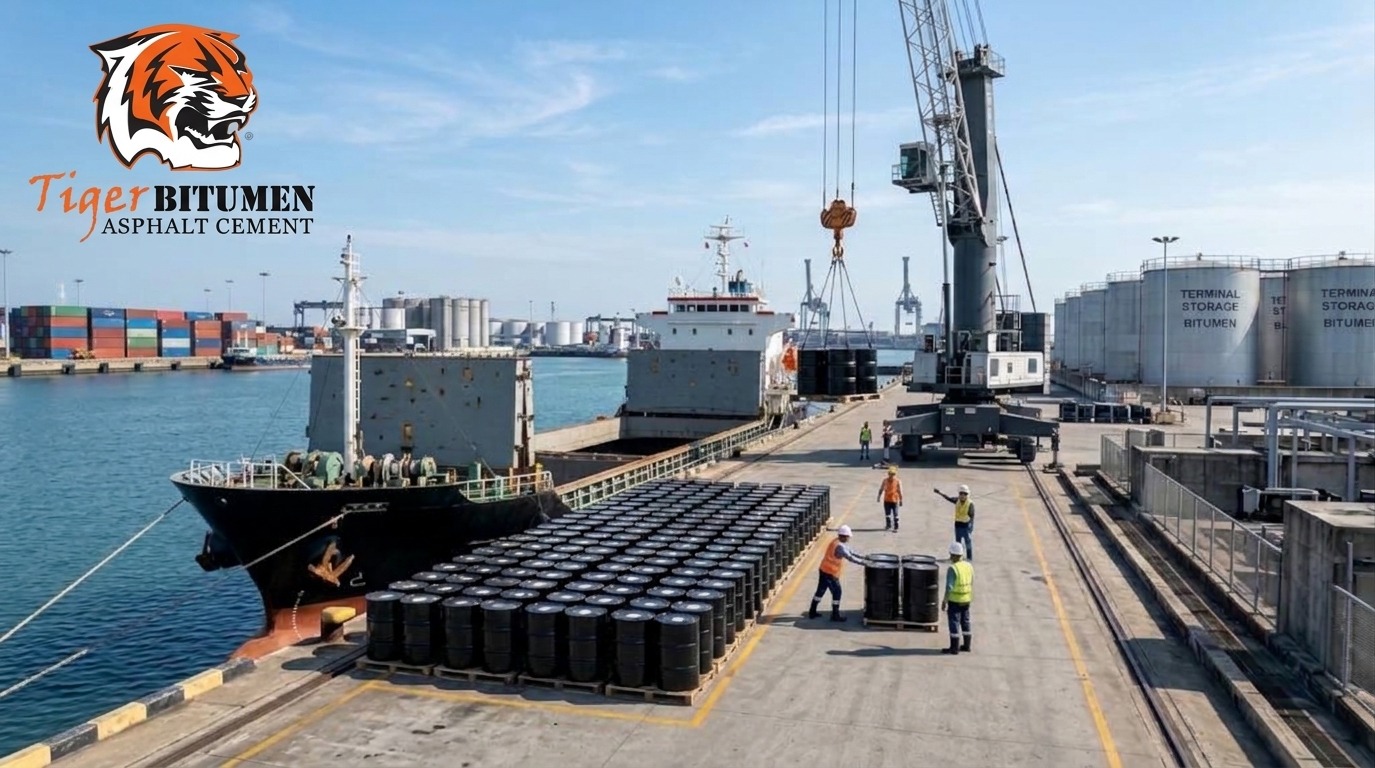
At Tiger Bitumen, a brand of HY International Group, we supply a range of bitumen products in new steel drums and jumbo bags, shipped in containers to ports across Asia-Pacific and worldwide. Buyers planning December and early 2027 requirements are welcome to request a quotation.
For the wider global picture, read our bitumen market update for 6 November 2026.
Frequently Asked Questions
Why are Asia-Pacific bitumen prices falling?
Prices have eased mainly because demand has softened. Many importers hold comfortable stocks, contractors and governments are under budget pressure, and buyers have more alternative supply origins. Slowing winter demand in China has also weighed on South Korean export prices.
Are Singapore bitumen prices going down?
Singapore-origin cargo prices dipped slightly in late October, the first decline since July. Some market participants expect more Singapore supply in December, but this has not been confirmed, and supply in the wider region remains constrained.
Is now a good time to buy bitumen in Asia?
Buyers currently have more negotiating room than earlier in the year. However, because the easing is driven by demand rather than lower costs, prices could firm again. Many buyers may find it sensible to stagger purchases and compare several origins on a delivered basis.
Will Asia-Pacific bitumen prices keep falling?
That depends on whether Singapore output recovers, how fast importers use up their stocks, and whether new road budgets increase demand in early 2027. Firm fuel oil prices and continued supply constraints are likely to limit the scale of any decline.
Where else can Asia-Pacific buyers source bitumen?
Buyers have been looking at Malaysia, south China and South Korea within the region, and at Europe and the Americas for long-haul supply. Drummed and jumbo bag bitumen shipped in containers can also suit buyers with smaller requirements.