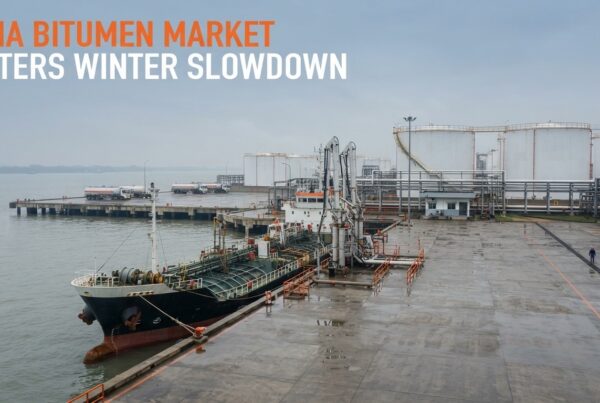

European bitumen prices are moving lower as the region heads into winter. Truck prices have fallen in several countries, most sharply across central Europe, as demand fades and weaker crude and fuel oil prices weigh on negotiations between buyers and sellers. Cold, wet weather is slowing road paving, supply in several markets is plentiful, and many buyers are holding back.
Market participants also expect the trend to carry into December. In markets where bitumen is priced monthly against fuel oil, both suppliers and buyers expect lower December prices. This has created an unusual dynamic: weak demand for the rest of November, followed by an expected pick-up in buying if lower December prices take effect.
This article explains what is driving the current slide in European bitumen prices, how conditions differ across the region, and what importers and distributors should consider as they plan purchases for December and early 2027. For a recent regional snapshot, see our European bitumen market update from November.
Why European Bitumen Prices Are Falling
Weaker crude and fuel oil prices
Crude oil and high-sulphur fuel oil (HSFO) prices have fallen since the start of November, and these declines are feeding through to bitumen truck prices. In many European markets, bitumen pricing is closely linked to fuel oil, so lower HSFO values have weighed on negotiations between buyers and sellers. Buyers can learn more about how fuel oil-linked bitumen price formulas work and why benchmark movements affect monthly prices.
Waterborne prices have moved in the same direction. Cargo prices at northwest European and Baltic export points have weakened further against fuel oil. Buyers comparing international supply options should also consider long-haul bitumen cargo economics, including freight, voyage time and delivered cost.
Seasonal demand is fading
Europe’s road construction season is winding down. Colder and wetter pre-winter conditions are reducing activity and demand across northwest and northern Europe, and adverse weather is also affecting central and southeast European markets. Our Q4 2026 seasonal bitumen demand guide explains how construction seasons and weather affect purchasing requirements across different regions.
Plentiful supply in several markets
In some markets, supply is running ahead of shrinking demand. Supply in Germany is relatively plentiful against fading late-season demand. In the Czech Republic, bitumen has become more readily available, and greater supply combined with slowing demand has put strong pressure on domestic prices. In Romania, a recent run of import cargoes into Black Sea terminals has added to the weight on prices.
How Conditions Differ Across the Europe Bitumen Market
Central Europe: the steepest declines
Central Europe has seen the sharpest falls in truck prices. Poland, the Czech Republic and Hungary recorded some of the largest regional declines, with cold, wet weather slowing paving work. Domestic prices fell in Poland as demand slowed across the country and in surrounding markets. Czech prices came under even greater pressure from rising availability.
Romanian domestic prices fell sharply because of weak demand, poor weather and recent import cargo arrivals. Demand in the wider Balkan region remains weak because of adverse weather.
Germany: plentiful supply and cheaper imports
Truck prices continued to fall across Germany, with plentiful supply adding to downward pressure. Some of the domestic price falls were linked to cheaper imports from neighbouring supply sources. Wet, cold late-autumn weather has reduced construction activity in many parts of the country. Some market participants hope that forecasts for drier weather, and a push to finish work before year-end, will support activity in the coming weeks.
Northwest Europe: formula pricing sets the timetable
In the UK, France and the Benelux markets, monthly pricing is common, so the timing of price changes is especially important.
- UK. Truck prices have held steady after November agreements were set at substantially higher levels than October. Delivered cargo prices have fallen, however, reflecting heavy declines in crude, fuel oil and bitumen cargo prices this month. Market participants expect these declines to show up as sharp falls in monthly truck prices for December supplies.
- France. Demand has been slow because of wet weather and high prices. November prices rose sharply under formula-related adjustments that followed strong October gains in HSFO. Market participants now expect November’s retreat in HSFO to bring significantly lower truck prices for December.
- Benelux. Prices have held steady, but persistent rain dramatically slowed activity and demand in the third week of November after a fairly busy first half of the month. Suppliers are concerned that weak demand in road paving and roofing could continue into winter.
Nordics and Baltics: the season is closing
Activity and demand across much of the Nordic and Baltic region have either halted or are slowing quickly. Truck prices in the Baltic region have fallen, and discussions on 2027 term supply are still under way.
Southern Europe: seasonal slowdown in the Mediterranean
- Italy. Domestic truck prices have fallen as lower HSFO values and slowing seasonal demand weigh on the market, although Italian cargo supply remains limited.
- Spain. Domestic truck prices are lower. Recent buyer indications for November supply have come in below the levels sellers first indicated. Under formula-linked supply deals, market participants expect much lower December values because of this month’s fall in HSFO.
Across the Mediterranean, seasonal falls in road paving have also nudged regional cargo prices lower against fuel oil, as suppliers try to encourage buying before the winter slowdown.
Why December Could Open a Buying Window
Monthly pricing creates a timing effect
December is attracting attention mainly because of the way monthly formula pricing works. In markets such as the UK, France and Spain, monthly prices follow fuel oil movements from the previous month. Fuel oil rose in October and fell back in November, so November prices were set at higher levels, and market participants expect December prices to be significantly lower.
Buyers are waiting
Buyers who expect lower prices have little reason to buy now. In the Benelux, low demand is expected for the rest of November as buyers look to take advantage of lower December values. In France, the last week of November is likely to see weak demand. If lower prices take effect from 1 December as expected, they are likely to encourage a flurry of truck buying lasting at least until mid-December.
The window may be short
Any December opportunity sits within a narrowing seasonal window:
- In the Benelux, some regional roofing producers plan to close their plants early for the holidays, with the resulting cuts in bitumen demand starting in the second half of December.
- In the UK, suppliers are looking to sell off stocks before the winter recess, when construction activity slows sharply and many mixed asphalt plants undergo maintenance.
In our assessment, these factors suggest that any December buying opportunity is likely to be concentrated in the first half of the month. This is a potential opportunity, not a price forecast. Actual December prices will depend on fuel oil and crude movements and on each supplier’s pricing formula.
Factors Buyers Should Consider for December and Early-2027 Purchases
The following are factors to monitor, not predictions:
- Fuel oil and crude price direction. These drive formula-linked bitumen prices, so any change in direction would affect pricing in later months.
- Your supplier’s pricing mechanism. Whether contracts use monthly formulas, weekly negotiation or spot pricing determines how quickly market moves reach your purchase price.
- Weather and project timing. Drier weather could support a late push to finish work before year-end, as some participants in Germany hope. Continued rain or cold would keep demand subdued.
- Storage and winter plans. With roofing plant closures and asphalt plant maintenance approaching, buyers should match purchases to their actual winter requirements and storage capacity.
- Regional supply availability. Availability differs across Europe. Supply is plentiful in several central European markets, while Italian cargo supply remains limited.
- 2027 term contract negotiations. Discussions on 2027 supply are continuing in the Nordic, Baltic and Mediterranean markets. The uncertain market and price outlook is making it harder to conclude deals, and many agreements have not yet been struck. Buyers can review the differences between bitumen term contracts and spot purchases when assessing their procurement strategy.
What This Means for Importers, Distributors and Suppliers
The points below are our assessment, based on the conditions described above.
- For importers and distributors. Formula-priced markets may offer better-priced supply in early December. Purchases still need to be weighed against falling winter demand and limited time before the construction recess.
- For suppliers. With demand fading and supply plentiful in several markets, many suppliers are focused on selling stocks before the winter break. Competitive pricing and flexible timing matter more than usual.
- For term buyers. Uncertainty over the price outlook is slowing 2027 negotiations. Buyers who understand how their contract formula responds to fuel oil movements will be better placed to judge offers.
How Tiger Bitumen Views the European Market
Seasonal turning points like this one reward careful planning. Tiger Bitumen, a brand of HY International Group, follows conditions across the Europe bitumen market closely, including pricing trends, supply availability and seasonal demand. This helps customers time purchases to their real project and storage needs rather than short-term market sentiment.
Conclusion
European bitumen prices are sliding into winter as weaker crude and fuel oil prices, cold and wet weather and plentiful supply in several markets combine with the end of the construction season. Central Europe has seen the steepest falls. In northwest Europe and Spain, market participants expect monthly formula pricing to bring lower December prices.
That timing effect could create a potential December buying window, most likely concentrated in the first half of the month before roofing plant closures, asphalt plant maintenance and the winter recess reduce demand. Lower December prices are not guaranteed, however, and buyers should base their decisions on fuel oil trends, their own pricing formulas and their real winter requirements. For wider international context, read our November bitumen market update.
Frequently Asked Questions
Why are European bitumen prices falling?
Prices are falling because crude and fuel oil prices have declined, seasonal demand is fading as winter approaches, and supply is plentiful in several markets. Cold, wet weather has also slowed road paving across much of the region.
Why could December bring lower bitumen prices in Europe?
In markets with monthly formula pricing, such as the UK, France and Spain, monthly prices follow the previous month’s fuel oil movements. Fuel oil fell in November after rising in October, so market participants expect lower December prices in these markets.
Is a December price fall guaranteed?
No. December prices depend on fuel oil and crude market movements and on each supplier’s pricing formula. Current expectations reflect November’s fuel oil retreat, not a guaranteed outcome.
Which European markets have seen the biggest price falls?
Central Europe has seen the sharpest declines, with some of the largest falls in Poland, the Czech Republic and Hungary. Romanian prices also fell sharply, and German prices have continued to decline.
What should buyers consider before purchasing bitumen in December?
Buyers should consider fuel oil trends, their supplier’s pricing mechanism, weather and project timing, storage needs, regional supply availability and the status of 2027 term negotiations.