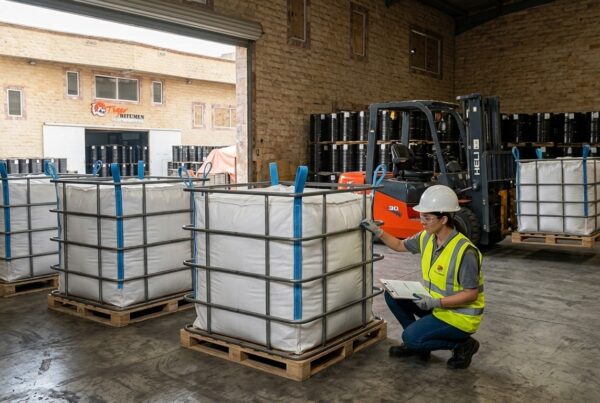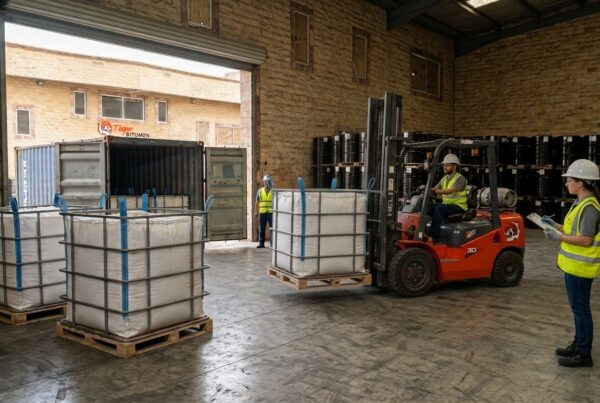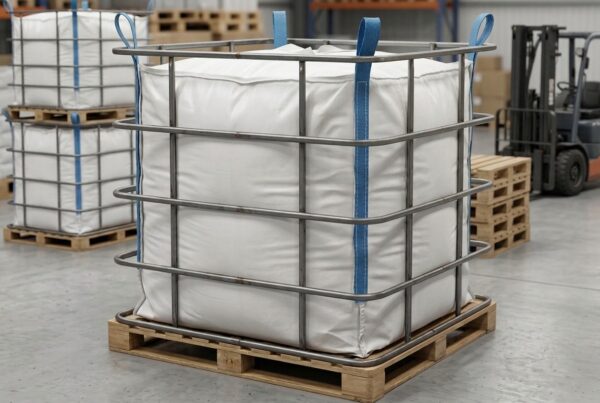
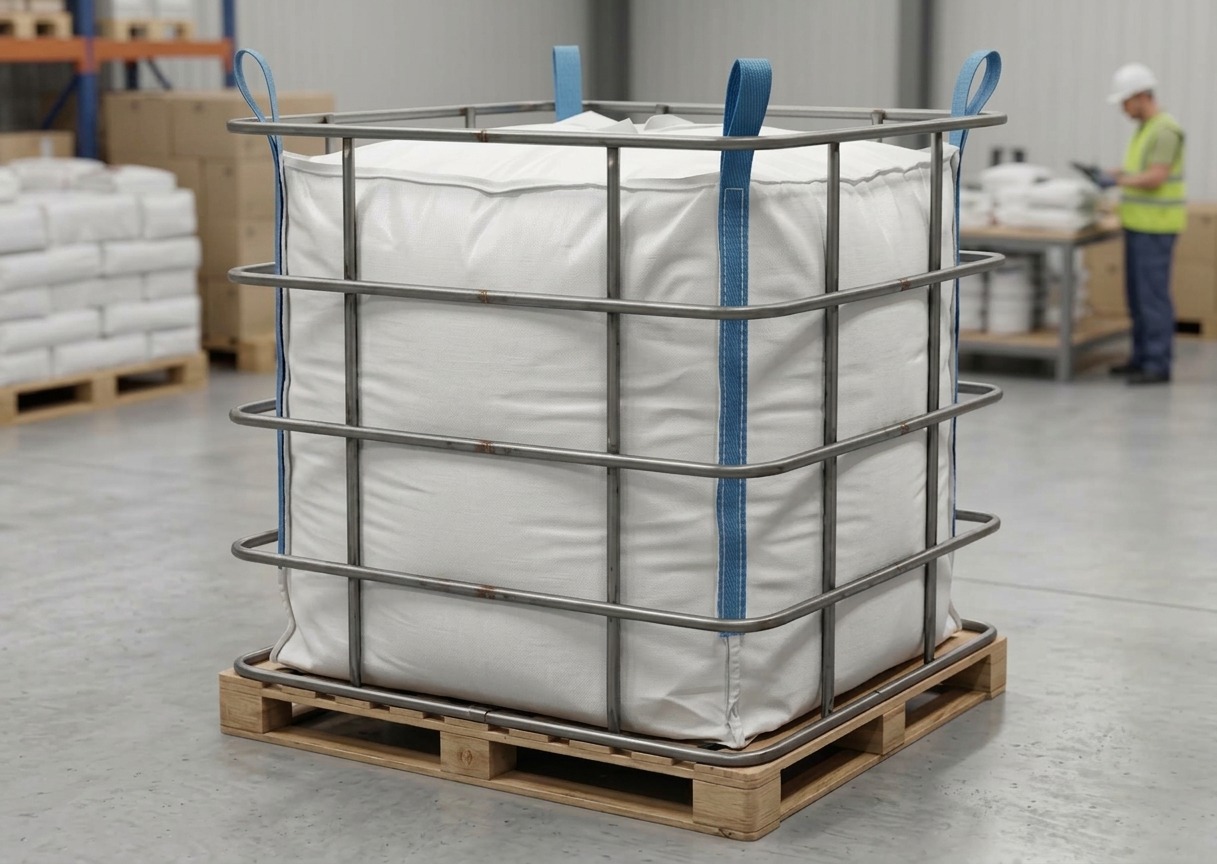
The confirmed Tiger Bitumen bagged format uses two components: a woven polypropylene bag and a steel cage. Both components work together to safely move a full 1,000 kg load of bitumen through export handling.
This article explains bitumen bag construction, including what each component is, what job it performs, and how the two work together as a single handling unit. It does not cover the full packaging specification. For that, see 1 MT Bitumen Bags: Packaging, Handling & Export Specifications. For general format terminology, see Bitumen Jumbo Bags: What They Are, How They’re Built, and How They’re Shipped.
The focus here is simple: how is the unit built, and why is it built this way?
What Is a Bitumen Bag Made Of?
The confirmed bitumen bag construction has exactly two components:
- A woven polypropylene (PP) bag — the inner containment layer
- A steel cage — the outer structural support
Every confirmed Bitumen Bags unit is a 1 Metric Ton (1,000 kg) package built from these two elements together. Neither component is supplied or handled independently. The packaging system is the bag-in-cage combination as a whole.
The PP Woven Bag: Material and Function
The bag is made from woven polypropylene (PP) fabric. Its function is straightforward: it contains the bitumen and forms the direct barrier between the product and the outside environment.
Woven PP fabric is a common material for bulk packaging across many industries. It is a well-established material for this type of application. Tiger Bitumen has publicly confirmed the material type, while further details such as fabric weight, weave density, or coating have not been published.
If your project requires those specifications, confirm them directly with the export or technical team rather than relying on unverified figures.
The Steel Cage: Purpose and Structural Support
The steel cage houses the PP bag and provides structural support for handling and transport of the full 1,000 kg load. This is its confirmed function in the packaging system.
In practical terms, the cage provides structural support that the flexible bag fabric is not intended to provide by itself. It helps support and distribute the weight of the one-tonne load during lifting, movement, and stacking.
Where cage dimensions or material grade are not publicly specified, buyers should raise those requirements directly with the technical team. This article does not speculate on figures that have not been confirmed.
How Does the Cage Support the Full 1,000 kg Load?
The relationship between the two components is important. The PP bag contains the bitumen, while the steel cage provides the structural support needed to handle the packaged load as a unit.
The cage makes the contained load liftable, stackable, and transportable as a rigid unit. Without the cage, a flexible bag carrying 1,000 kg of bitumen would depend much more directly on its own fabric and stitching during lifting and movement.
With the cage in place, each component has a defined role. The cage provides structural support during handling, while the PP bag remains focused on containment. This division of function is a key part of the confirmed bitumen bag construction.
Bag and Cage as a Single Handling Unit
Because of this construction, the bag-in-cage unit can typically be handled using forklifts or cranes, depending on the equipment and site procedures.
This matters in practical export handling:
- No standalone flexible-bag lifting approach is assumed. The unit is handled as a combined bag-and-cage package.
- The structural support remains part of the unit during warehouse, yard, container-loading, and destination handling.
- Equipment planning can account for a one-tonne rigid unit, subject to the site’s equipment capacity and handling procedures.
Pallets are used during loading as part of export preparation. The bag-in-cage units sit on those pallets as a combined structural package rather than as loose flexible bags.
Why the Steel Cage Matters for Transport and Handling
Bitumen is a dense, semi-solid material. It differs from many free-flowing granular products commonly packed in flexible bulk bags. A full 1,000 kg unit therefore needs structural support beyond the woven fabric containment layer during repeated handling.
The steel cage provides that support during loading at the packing facility, movement through the export yard, container loading, and unloading at the destination.
This allows the same combined unit to move through different stages of the supply chain without relying on the PP fabric alone for structural support.
PP Bag vs Steel Cage: Function at a Glance
| Component | Confirmed role | |
| PP woven bag | Contains the bitumen; forms the direct barrier between product and environment | |
| Steel cage | Houses the PP bag; provides structural support for handling and transport of the full 1,000kg load | |
| Together | Form a single unit typically handled with forklifts or cranes, and placed on pallets during loading | |
Practical Bitumen Bag Construction Considerations for International Buyers
A few points are worth keeping in mind when specifying or planning for this format:
- The two components are not separable in ordering. Buyers specify the grade and quantity of bitumen in this packaging format rather than choosing the bag and cage independently.
- Published construction detail is limited to the two confirmed elements. Cage dimensions, material grade, bag liner specification, fabric weight, and stitching details are not part of the general published specification.
- Engineering-level detail should be requested directly. If your project requires a written specification sheet, request it against your RFQ instead of relying on unconfirmed figures.
- Handling equipment planning should account for a one-tonne rigid unit. This is consistent with the confirmed structural role of the cage, while actual equipment suitability depends on your facility and procedures.
What to Confirm Before Ordering?
If your order depends on specific bitumen bag construction details, raise these points with the export or technical team before finalising:
- Cage dimensions or material grade, if relevant to your receiving equipment or engineering sign-off
- Bag liner specification, if your project or customs process requires it
- Construction documentation needed for import or handling-equipment compatibility checks
- Whether your facility’s forklift or crane capacity suits a one-tonne rigid palletised load
Conclusion
Bitumen bag construction is simple in concept but purposeful in design: a woven PP bag contains the product, while a steel cage provides structural support for moving a full 1,000 kg load.
Understanding this division of function explains how the format is handled and helps international buyers ask the right technical questions before finalising an order.
For the full technical specification or construction details specific to your project, visit Technical or go directly to Request a Quote with your requirements.
FAQs
What are bitumen bags made of?
Two confirmed components: a woven polypropylene (PP) bag, and a steel cage that houses it.
What does the steel cage actually do?
It provides structural support for handling and transport of the full 1,000 kg load, allowing the unit to be lifted, moved, and stacked as a rigid package.
Is the PP bag load bearing on its own?
The bag’s confirmed role is containing the bitumen. The steel cage is what provides structural support for handling the full load the two work together rather than the bag bearing that weight independently.
Can the bag be supplied without the cage?
The confirmed Bitumen Bags format is the PP woven bag housed in a steel cage as a single unit. It isn’t supplied as a standalone flexible bag.
What are the cage's dimensions or material specification?
These aren’t published in general materials. Confirm with the technical or export team if your project requires this detail.
Does the construction affect how the bag is handled?
Yes because of the steel cage, the unit is typically handled using forklifts or cranes, consistent with standard equipment for a one-tonne rigid load.