Bitumen bag export involves more than confirming a grade and quantity. International buyers also need to coordinate with the supplier’s export team, freight forwarder, shipping line, port authorities, customs broker, and receiving facility. Each party plays a role in moving the shipment from the packing floor to the buyer’s site. Clear communication helps prevent avoidable delays and disputes.
This guide follows the bitumen bag export process from the international buyer’s side. It explains what to clarify before shipment, how to coordinate with the parties involved, and what to confirm when the cargo arrives. It does not repeat the warehouse-level packing and loading process covered in How Bitumen Bags Are Packed, Palletised & Loaded for Export. Instead, it focuses on the buyer’s coordination responsibilities throughout the shipping journey.
What Buyers Should Clarify Before Bitumen Bag Export
Before booking an international shipment, buyers should settle several basic points. These details help the supplier and freight forwarder build an accurate shipping plan.
- Grade and bagged format availability confirmed directly with the supplier rather than assumed from general product listings
- Total quantity and the number of 1 MT bag units that quantity represents
- Incoterm such as FOB, CFR, or CIF, which determines freight responsibilities and the point where cargo responsibility transfers
- Destination port and whether your business already works with a customs broker or receiving agent there
- Target delivery window checked against your project or production schedule
Confirming these points early gives the freight forwarder and supplier’s export team a stable basis for planning. It also reduces the need to change the shipment plan later.
How Bagged Bitumen Is Prepared for Export Handling
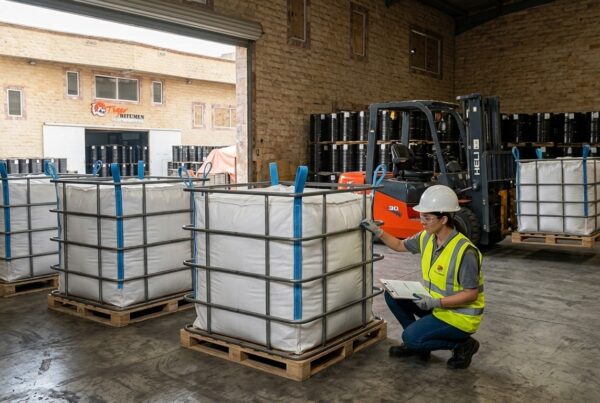
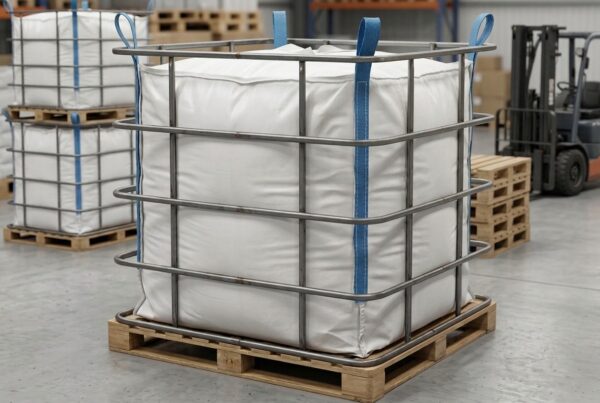
The confirmed 1 Metric Ton (1,000 kg) PP woven bag in steel cage forms the standard bagged format. The supplier prepares, palletises, and loads these units as part of the export process. Buyers do not manage this stage directly, but they should understand the basic sequence.
For additional background on bitumen packaging, see Bitumen Packaging Guide. For the specific construction of the bag and steel cage, see Bitumen Bag Construction: PP Woven Bags & Steel Cage Explained.
For the detailed mechanics of packing, palletising, and container loading, see How Bitumen Bags Are Packed, Palletised & Loaded for Export. That process remains the supplier’s responsibility. The buyer should instead track the shipment schedule and confirm that the agreed preparation matches the order.
The Role of Palletisation in Bitumen Bag Shipping
Palletisation affects how the shipment moves through loading, transport, and receiving. It also affects the equipment required at the destination.
A palletised shipment requires a receiving facility that can handle rigid one-tonne units safely. Buyers should check their available equipment before the shipment leaves the supplier’s facility.
How Forklifts and Cranes May Be Used During Handling
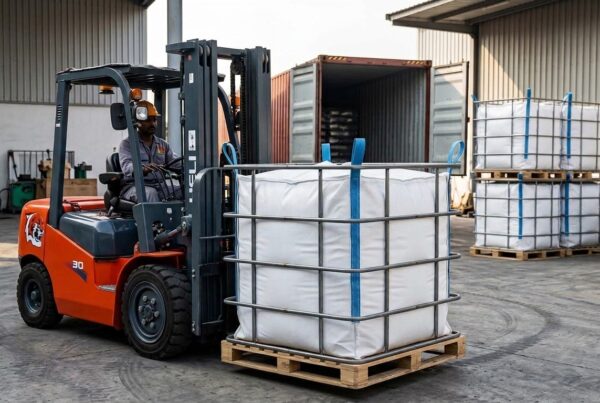
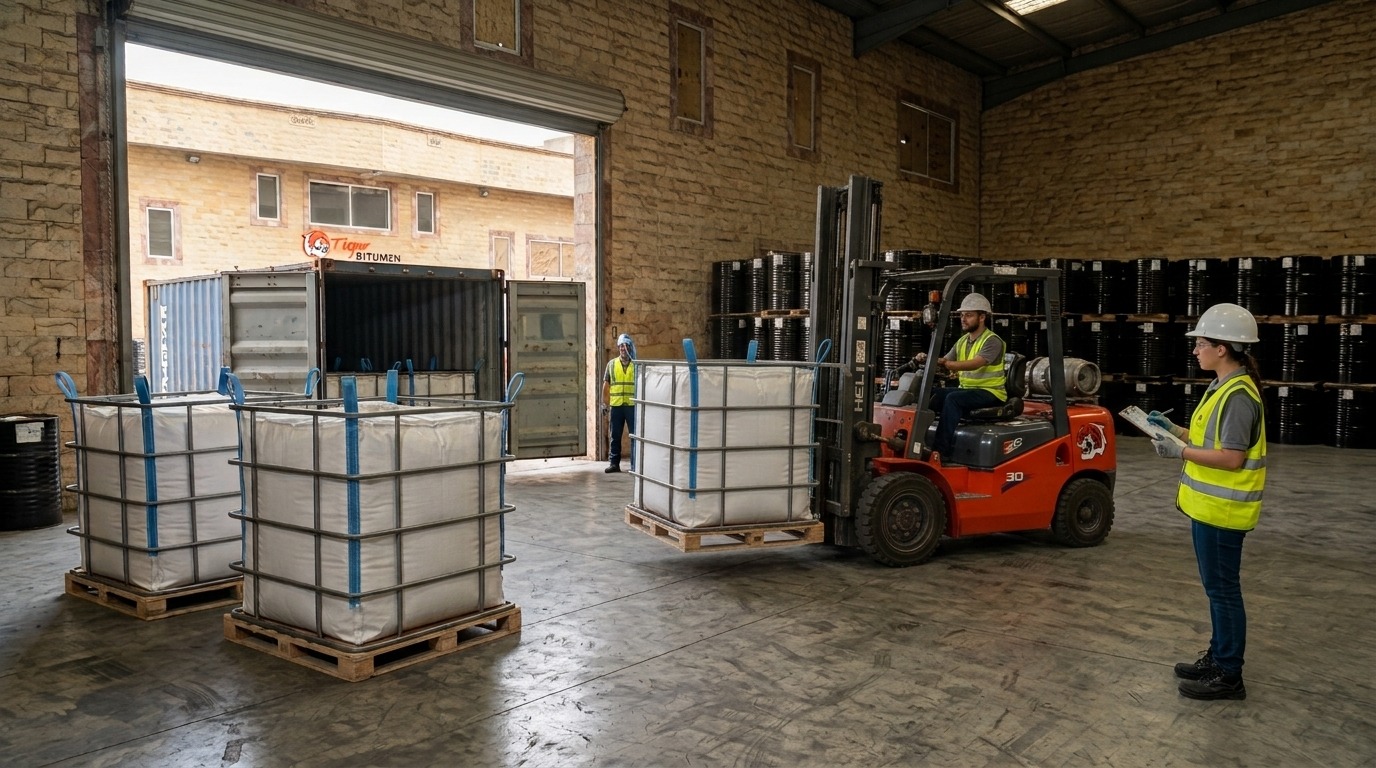
The steel cage provides structural support for the full load. Suppliers, port operators, and receiving facilities may therefore use forklifts or cranes to handle the units.
For more detail on the 1 MT format, packaging, handling, and export requirements, see 1 MT Bitumen Bags: Packaging, Handling & Export Specifications.
For an international buyer, the practical requirement is clear. The receiving facility should have equipment suitable for a one-tonne palletised load. Confirming this before shipment helps prevent unloading problems after arrival.
Coordination Between Supplier, Freight Forwarder, Carrier and Importer
An international bitumen bag shipment typically involves four main parties. Each party has a specific role in the export and delivery process.
| Party | Typical role |
| Supplier (export team) | Confirms grade, quantity, packaging, and prepares the shipment for export |
| Freight forwarder | Arranges booking, coordinates documentation, manages the shipping schedule |
| Carrier (shipping line) | Physically transports the cargo from origin to destination port |
| Importer (buyer) | Confirms receiving capability, manages customs clearance at destination, coordinates final delivery |
Clear communication between these parties keeps the shipment aligned. Timelines, documentation, and changes to the shipping plan deserve particular attention.
The buyer often connects the freight forwarder with the supplier’s export team. If the receiving schedule changes or a customs broker appointment moves, inform both parties promptly. Early updates can help prevent last-minute complications.
Shipping Documentation for International Bitumen Bag Export
A bitumen bag export shipment typically travels with a standard set of documents. These may include a Commercial Invoice, Packing List, Bill of Lading, Certificate of Origin, and Certificate of Analysis. An SGS inspection report may also apply where required.
Buyers should confirm whether this document set meets their import requirements. Destination countries can have different customs rules. Requirements may also vary according to the product and shipment method.
For buyers who need to understand inspection and quality documentation in more detail, How SGS Inspection Ensures Bitumen Quality provides additional context.
Instead of assuming that the standard export documents will meet every requirement, confirm the specific document set with your customs broker or import team. Then check those requirements against the documents the supplier will provide.
Port, Customs and Destination Country Requirements
Import requirements can include permits, inspections, duties, and additional documentation. These requirements depend on the destination country’s regulations.
Your local customs broker or import compliance team should confirm the requirements for your shipment. They can also advise you about applicable customs procedures and documentation.
Buyers should also ask the supplier whether they can provide any additional documents required by the destination country. This approach helps avoid assumptions about local import rules.
Transport Planning and Delivery Coordination
Bagged bitumen ships via containerized sea freight. Transit time can vary by shipping route, destination country, vessel schedule, weather, and port conditions. Buyers should therefore avoid treating one transit time as a fixed figure for every shipment.
When planning around a shipment:
- Build an appropriate buffer into your project or production schedule instead of planning around the earliest possible arrival date
- Ask your freight forwarder how port congestion or seasonal conditions could affect the realistic timeline
- Keep your receiving team informed as the shipping schedule changes
- Ensure unloading resources remain available around the expected arrival window
Receiving Bagged Bitumen at the Destination
Once the shipment reaches the destination port and clears customs, the receiving process begins. The receiving team should verify the quantity against the Packing List and Bill of Lading.
The team should also inspect the condition of the bags and steel cages. The delivered grade should match the Certificate of Analysis supplied with the shipment.
After receiving the cargo, proper storage and handling remain important. Buyers can review Bitumen Storage and Handling Best Practices for additional guidance on storage and handling considerations.
If the shipment includes independent inspection documentation, such as an SGS report, the receiving team should reconcile that documentation with the cargo received. Recording discrepancies promptly gives the buyer a clearer basis for follow-up.
What Importers Should Confirm With Their Local Receiving Facility
Before the shipment arrives, buyers should confirm the following points with the facility that will physically receive the cargo:
- Forklift or crane capability suited to one-tonne palletised loads
- Storage space and suitable conditions ready for the shipment
- Staff availability aligned with the expected arrival window
- The person responsible for receiving inspection and the documents they need
- Local customs clearance arrangements and the party managing that process
A receiving facility that lacks the required equipment, space, or staff can delay delivery. Buyers can reduce this risk by completing these checks before the shipment arrives.
Common Communication Points to Agree Before Bitumen Bag Export
Before the shipment departs, confirm the following points in writing:
- Final confirmed grade, quantity, and packaging format
- Incoterm and the party responsible for freight arrangement
- Documentation set that the supplier will provide
- Target shipment date and estimated arrival date
- Point of contact at the supplier, freight forwarder, and customs broker where applicable
Documenting these details before shipment reduces the chance of misunderstandings during transit. It also gives each party a clear reference if the shipping plan changes.
International Buyer Checklist for Bitumen Bag Shipping
- Grade and bagged format availability confirmed directly with the supplier
- Quantity and Incoterm agreed
- Destination port and customs broker relationship confirmed
- Destination documentation requirements checked against the supplier’s standard export set
- Freight forwarder briefed on shipment details and receiving site capability
- Receiving facility confirmed as ready with suitable equipment, storage, and staffing
- Realistic delivery timeline agreed with an appropriate schedule buffer
- Points of contact established with the supplier, freight forwarder, and customs broker
Conclusion
A successful bitumen bag export shipment depends on coordination between the supplier, freight forwarder, carrier, and importer. Each party needs clear information about the shipment and its responsibilities.
Before the shipment departs, confirm the grade, quantity, packaging format, documentation, Incoterm, destination requirements, and receiving arrangements. During transit, keep the relevant parties informed about schedule changes.
For buyers comparing bagged and alternative packaging formats, Bitumen Bags vs Drums: Packaging & Handling Differences provides additional information on packaging and handling considerations.
To discuss export and shipping arrangements for your specific order, visit Bitumen Bags or go directly to Request a Quote with your grade, quantity, and destination.
FAQs
What Incoterms are available for bagged bitumen shipments?
FOB, CFR, or CIF, depending on your preferred logistics arrangement confirm which applies to your specific order with the supplier.
Who is responsible for customs clearance at the destination?
Generally the importer, though this can depend on the Incoterm agreed and the arrangement with your freight forwarder or customs broker. Confirm this directly for your specific shipment.
What documentation should I expect with an international bagged bitumen shipment?
Typically a Commercial Invoice, Packing List, Bill of Lading, Certificate of Origin, and Certificate of Analysis, with an SGS inspection report where required but confirm this against your destination’s specific import requirements rather than assuming it’s sufficient.
How long does international shipping take for bagged bitumen?
There’s no fixed transit time it depends on shipping route, destination country, vessel schedule, weather, and port conditions.
What should my receiving facility have ready before the shipment arrives?
Forklift or crane capability suited to one tonne palletised loads, adequate storage space and conditions, and staff scheduled to manage receiving inspection when the shipment lands.
Who coordinates between the supplier and my local logistics team?
As the buyer, you’re typically the coordination point between your own freight forwarder or customs broker and the supplier’s export team keeping both informed of any changes helps the shipment run smoothly.