When comparing bitumen bags vs drums, buyers need to look beyond the basic product. Both formats move bitumen without bulk tanker infrastructure. However, they use different packaging and handling systems, which affects how a site receives, handles, and stores the material.
Neither format suits every project. The right choice depends on project volume, available handling equipment, storage space, and receiving infrastructure.
This article compares bitumen bags vs drums across packaging, handling, storage, and loading. It focuses on the practical differences that international buyers should understand before specifying a format.
For a broader comparison of drums, jumbo bags, bitutainers, and bulk vessel supply, see the Bitumen Packaging Guide for International Buyers. This article focuses specifically on the two formats covered here.
What Bagged Bitumen Means in Tiger Bitumen’s Confirmed Format
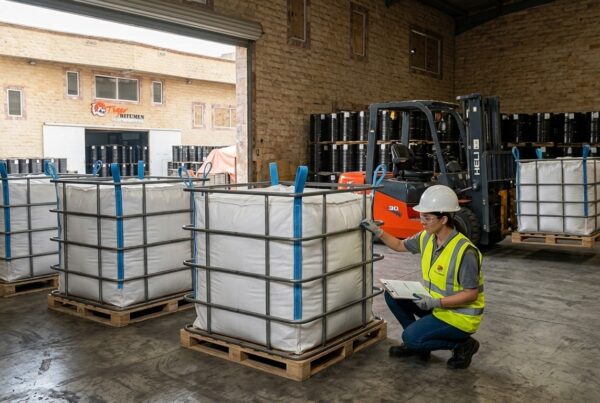
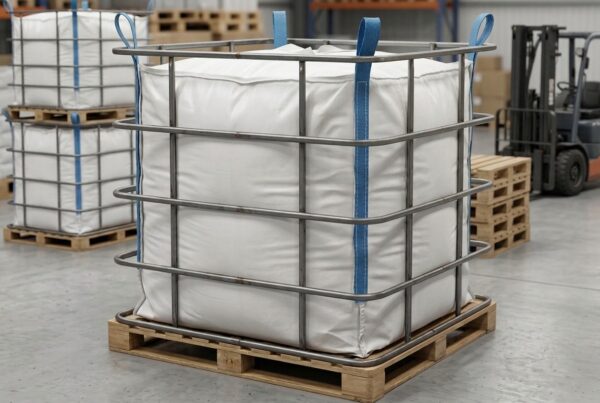
Tiger Bitumen’s confirmed bagged format is a single, specific unit: a 1 Metric Ton (1,000 kg) PP woven bag housed in a steel cage.
The woven polypropylene bag contains the bitumen. The steel cage provides structural support for handling and transport of the full 1,000 kg load.
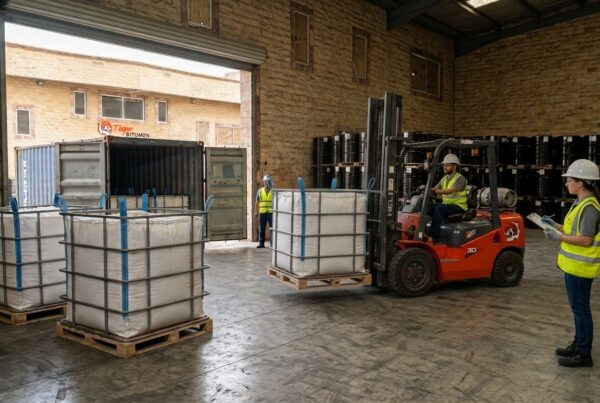
Tiger Bitumen supplies this combined unit rather than a standalone flexible bag. Operators typically handle the unit using forklifts or cranes, with pallets used during loading.
Full detail is available on Bitumen Bags and the Technical page.
What Drum Packed Bitumen Generally Means
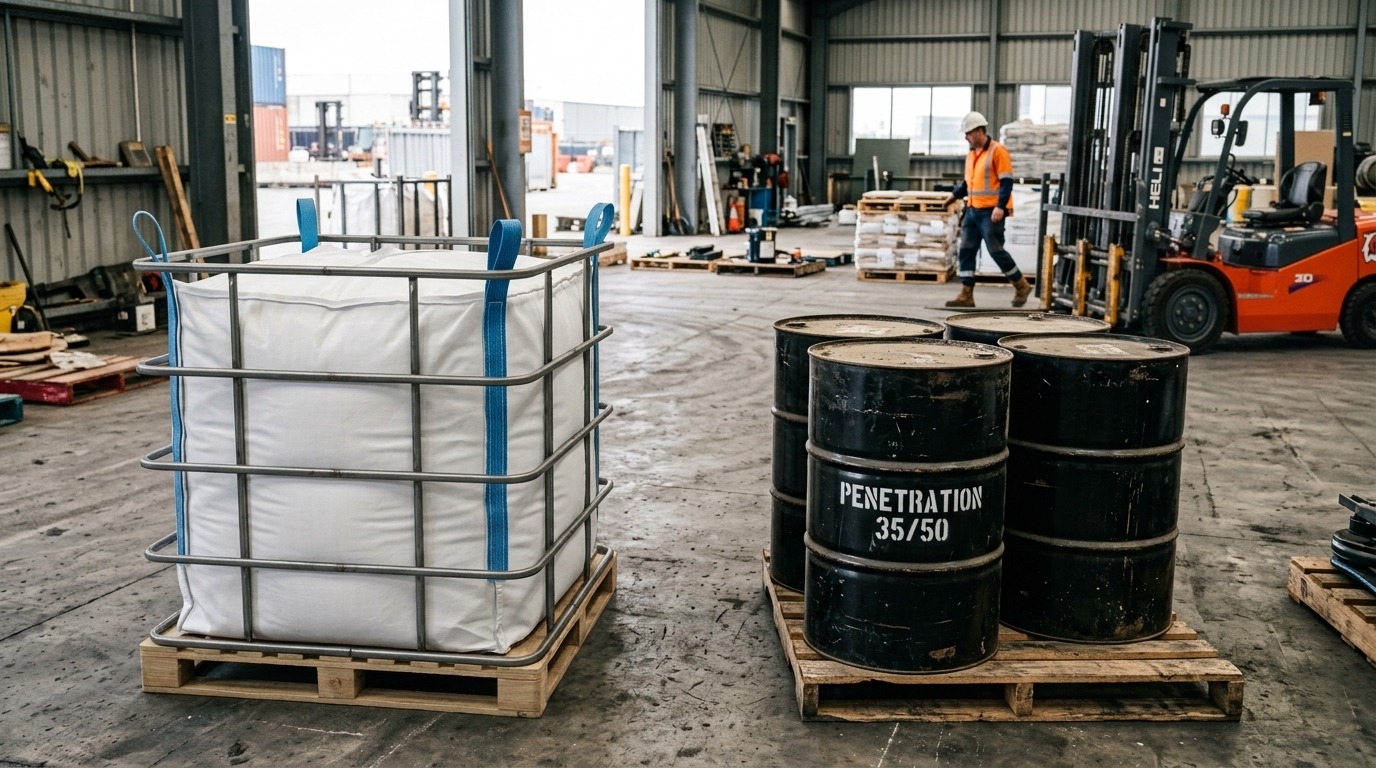
Steel drums package bitumen into individual sealed metal containers. This format has a long history in the international bitumen trade because each unit remains individually sealed and self-contained.
Tiger Bitumen supplies its own new steel drums in 150 kg and 180 kg sizes. Each drum works as a separate handling unit and typically moves with forklifts.
The sealed metal construction also provides a practical containment format during long-distance transport.
Where this article discusses drums generally beyond Tiger Bitumen’s own confirmed sizes, it stays at the level of established industry practice. It does not introduce specific figures that Tiger Bitumen has not confirmed.
Bitumen Bags vs Drums: Key Construction and Packaging Differences
The two formats use different packaging principles. Bagged bitumen combines a woven PP bag with a steel cage. Drummed bitumen uses an individual sealed metal container.
| ASpect | Bitumen Bags (Tiger Bitumen) | Steel Drums (general) |
| Unit weight | !Metric Ton (1,000kg) per bag | Tiger bitumen supplies 150kg and 180kg sizes |
| Containment | Woven PP bag | Sealed metal drum |
| Structural support | Steel cage, housing the PP bag | The drum shell itself is rigid |
| Unit count per tonne | 1 unit = 1 MT | Multiple drums needed to reach 1 MT |
| Individual sealing | Bags + cage as one unit | Each drum individually sealed |
The practical difference is straightforward. With bags, buyers handle far fewer and much larger units to move the same total tonnage.
With drums, buyers handle more units, but each individual unit is smaller and lighter.
Weight and Unit Format Considerations
Weight represents one of the biggest practical differences when comparing bitumen bags vs drums.
A given tonnage of bitumen arrives as a small number of one-tonne bag units or as a much larger number of 150–180 kg drums.
That difference affects several downstream handling tasks:
- Fewer, heavier units: Bags require less individual handling per tonne. However, each lift requires equipment rated for a one-tonne load.
- More, lighter units: Drums provide smaller individual loads. However, operators need more handling operations to move the same total tonnage.
Neither format is automatically more efficient. The practical result depends on the equipment, layout, labour, and workflow at the receiving site.
Handling and Unloading Differences
Bagged bitumen moves as a rigid, palletised unit because the steel cage supports the PP bag.
This setup allows operators to move the full 1,000 kg load with a suitable forklift or crane. They do not need to break the unit into smaller pieces for normal handling.
Drummed bitumen moves drum by drum or on pallets containing multiple drums, depending on the loading configuration.
Each drum represents a smaller handling unit. As a result, operators can use lighter equipment for individual movements, while larger quantities can move together on pallets.
Therefore, the practical question is not simply which format is easier to handle. Buyers should ask what their site already has and which workflow their people and equipment can repeat safely and efficiently.
Forklift and Crane Considerations
For bagged bitumen, the steel cage allows the unit to move like a one-tonne rigid palletised load.
The handling equipment must support the full weight. However, the basic lifting process remains familiar for sites that already handle similar heavy palletised loads.
For drums, equipment requirements work differently. Individual drums weigh less than a one-tonne bag unit.
Many sites move drums with standard warehouse forklifts and suitable attachments. Some operations may also use manual handling for individual units. Larger volumes, however, typically benefit from palletised forklift handling.
In both cases, the key difference is the load size per handling operation rather than the general category of equipment.
Palletisation and Warehouse Handling
Bagged bitumen uses palletisation during loading. Each pallet typically carries the bag and steel cage as a combined package.
Drums are also commonly palletised for warehouse and export handling. This approach allows operators to move multiple drums together instead of handling every drum individually.
In both formats, palletisation supports efficient forklift handling. The main difference is what sits on the pallet: one large rigid unit or a grouped arrangement of smaller sealed units.
Storage Considerations
Both formats benefit from similar general storage principles. Buyers should protect the material from direct weather exposure, excessive heat, and contamination.
Tiger Bitumen does not publish fixed temperature ranges or shelf-life figures for either format. These factors depend on the bitumen grade and local climate. Buyers should therefore confirm specific storage requirements with the export team for their order.
The practical difference comes mainly from storage footprint and arrangement.
A small number of one-tonne bag units requires a different layout from a larger number of smaller drums. However, both formats require an organized and suitable storage environment.
Export and Loading Considerations
Both formats can ship through containerized sea freight under FOB, CFR, or CIF terms, depending on the buyer’s preferred arrangement.
Both formats can also involve palletisation during export preparation. The general documentation set can include the Commercial Invoice, Packing List, Bill of Lading, Certificate of Origin, and Certificate of Analysis. SGS inspection may also apply where required.
However, the exact loading configuration is not a fixed published figure for either format.
The number of units that fit into a container depends on the specific order, container type, and destination. Buyers should therefore confirm the loading plan with the export team instead of relying on general industry figures.
Site Infrastructure and Equipment Requirements
Site infrastructure often plays a major role when buyers compare bitumen bags vs drums. The available equipment, storage area, and project workflow can affect which format fits the operation.
Bagged bitumen suits sites that:
- Have forklift or crane capability rated for one-tonne loads
- Can accommodate palletised storage and handling
- Are working with project volumes that divide sensibly into 1 MT units
Drum packed bitumen suits sites that:
- Have lighter handling equipment or need more granular unit sizes
- Need smaller individual quantities for phased use or distribution
- Are set up for drum-based storage and handling as an established practice
These lists are not exhaustive. Many sites could work with either format.
For this reason, buyers should compare the available infrastructure with the actual requirements of their project before selecting a packaging format.
When Buyers May Need to Consider One Format Versus Another
Several practical scenarios can make the difference between the two formats more important.
- Phased or smaller-volume projects may suit drums because their smaller individual unit size supports incremental use. A single 1 MT bag represents a larger single unit than an individual drum.
- Projects with limited heavy lifting equipment may prefer smaller drum units when the site has light forklift or manual handling capacity.
- Sites already equipped for palletised one-tonne handling may integrate bags more naturally into existing workflows, especially when the site already receives similar heavy materials.
- Distributors managing multiple smaller deliveries may find drum-sized units useful when they need to distribute smaller quantities to different end users.
These factors do not create fixed rules. Instead, they help buyers identify which packaging format aligns with their specific site and project requirements.
Questions to Ask Before Selecting a Packaging Format
Before specifying either format in an RFQ, buyers should have clear answers to the following questions:
- What handling equipment does our site have, and what load rating does it support?
- What total volume are we ordering?
- Does the required quantity divide sensibly into 1 MT bag units?
- Would drum-based quantities fit our project workflow better?
- What storage footprint is available?
- Does the site favor fewer large units or more numerous smaller units?
- Do we prefer individually sealed units such as drums or a combined structural unit such as bags?
- Is the project phased in a way that makes smaller drum quantities more practical?
Raising these questions with Tiger Bitumen’s export team, alongside your grade and quantity requirements, can help clarify the suitable format for your project.
Conclusion
Bagged and drummed bitumen are both established packaging formats. The main differences involve unit size, handling requirements, storage arrangement, and compatibility with the receiving site’s infrastructure.
When comparing bitumen bags vs drums, buyers should consider their handling capability, storage footprint, project volume, and delivery workflow together.
Confirming these factors before specifying a format can help buyers select a packaging arrangement that fits their actual operating conditions.
To discuss which format suits your project, visit Bitumen Bags or go directly to Request a Quote with your grade, quantity, and destination.
FAQs
Is bagged bitumen better than drummed bitumen?
Neither is universally better. Bagged bitumen suits buyers with palletised, one-tonne handling capability; drums suit buyers needing smaller individual units or lighter handling equipment. The right choice depends on your project’s volume, site infrastructure, and handling capability.
What are Tiger Bitumen's confirmed drum sizes?
150 kg and 180 kg new steel drums.
What is the confirmed bagged unit weight?
1 Metric Ton (1,000 kg) per bag a PP woven bag in a steel cage.
Do both formats use pallets?
Yes. Bagged bitumen is palletised as standard practice during loading, and drums are commonly palletised for warehouse and export handling as well.
Which format needs heavier handling equipment?
Bagged bitumen requires equipment rated for one-tonne loads, given the bag and cage unit weight. Drums are handled as much lighter individual units, though larger drum volumes are still typically moved on pallets with forklift assistance.
Can I mix bagged and drummed bitumen in one order?
This is a question to raise directly with the export team based on your specific project requirement it isn’t addressed by general published material.
Where can I find a broader comparison including bulk and bitutainer supply?
See the Bitumen Packaging Guide for International Buyers for the full comparison across all four packaging formats.