Quality is one of the most important factors when purchasing bitumen for road construction, waterproofing, roofing, and industrial applications. Even if a product appears similar, its performance can vary significantly depending on its physical properties and manufacturing quality.
For international buyers, quality testing provides confidence that the supplied bitumen meets the required specifications before shipment. Independent laboratory testing and inspection also help reduce procurement risks while ensuring long-term project performance.
This guide explains the most common bitumen quality tests, why they matter, and how they help buyers make informed purchasing decisions.
Why Bitumen Quality Testing Matters
Bitumen performs under demanding conditions, including heavy traffic loads, extreme temperatures, moisture, and continuous environmental exposure.
Without proper testing, buyers may face problems such as:
- Premature pavement failure
- Surface cracking
- Rutting
- Poor waterproofing performance
- Reduced service life
- Increased maintenance costs
Quality testing helps verify that every shipment meets recognized technical standards before it reaches the project site.
Expert Tip from Tiger Bitumen
Never rely solely on product descriptions. Always request laboratory test results and, where required, an independent SGS inspection before shipment. Verified quality today can prevent expensive repairs tomorrow.
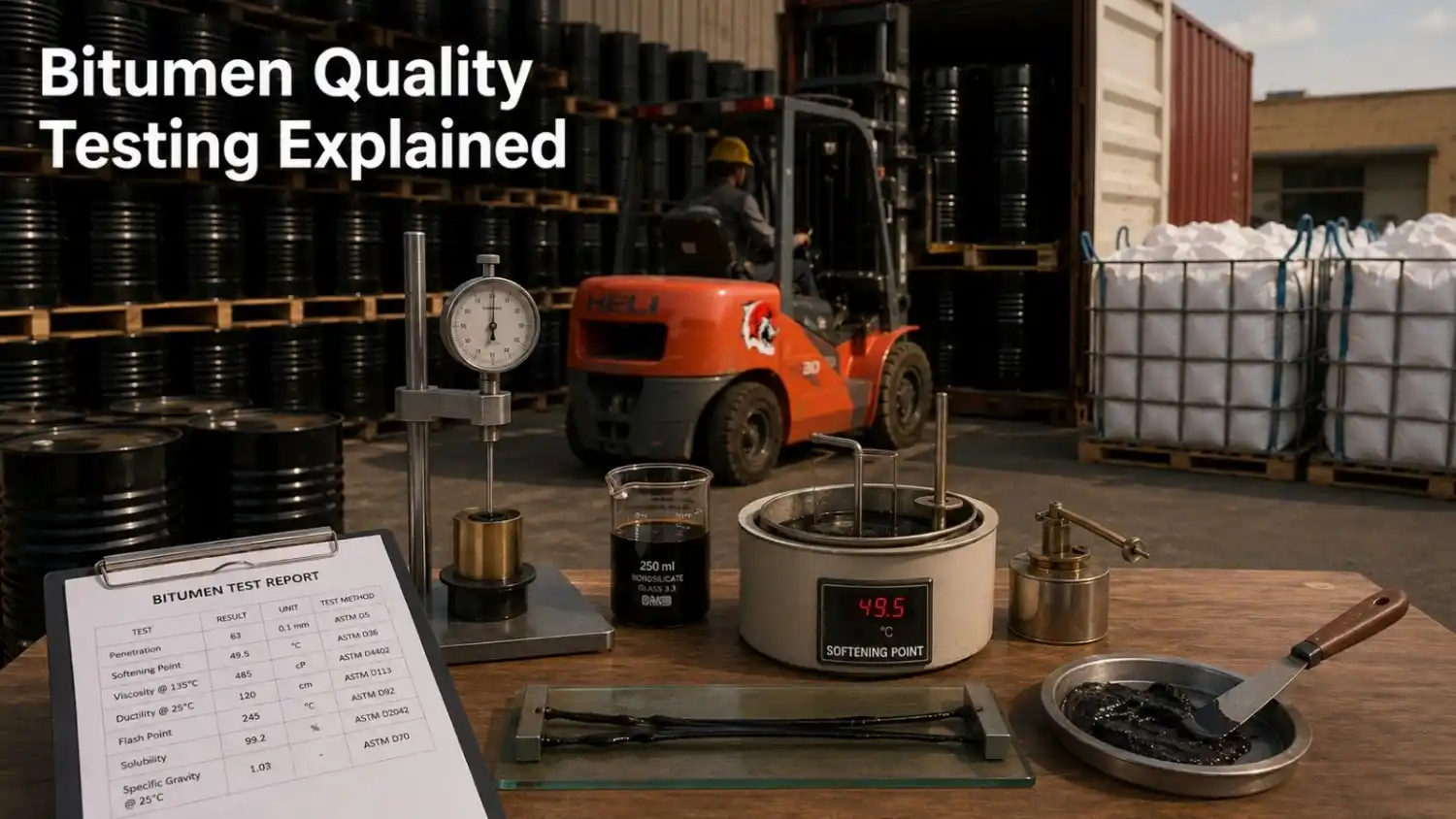
Penetration Test
The penetration test measures the hardness or softness of bitumen by determining how deeply a standard needle penetrates the material under controlled conditions.
This test helps classify grades such as:
It is one of the most widely recognized tests used throughout the road construction industry.
Softening Point Test
The softening point indicates the temperature at which bitumen begins to soften.
This test helps engineers understand how the material will perform in different climates.
A suitable softening point contributes to:
- Better resistance to high temperatures
- Improved pavement stability
- Reduced deformation
This property is especially important in regions exposed to intense heat.
Viscosity Test
Viscosity measures the flow characteristics of bitumen.
Understanding viscosity helps determine:
- Pumping performance
- Mixing behavior
- Asphalt production efficiency
- Application temperature
VG Bitumen is classified primarily according to viscosity, making this test particularly important for heavy-duty road construction projects.
Ductility Test
Bitumen should remain flexible after application.
The ductility test measures how far the material can stretch before breaking.
Good ductility provides:
- Greater flexibility
- Improved crack resistance
- Better long-term pavement durability
This characteristic is particularly valuable where temperature variations are significant.
Flash Point Test
The flash point measures the temperature at which bitumen vapors may ignite.
This test is essential for:
- Safe heating
- Transportation
- Storage
- Site handling
The flash point helps establish safe heating and handling limits during storage, transportation, and asphalt production.
Solubility Test
The solubility test determines the purity of bitumen.
A high solubility value generally indicates that the bitumen contains a low level of insoluble impurities, helping assess its purity and conformity with the applicable specification.
Specific Gravity Test
Specific gravity measures the density of bitumen relative to water.
This information helps engineers:
- Calculate material quantities
- Design asphalt mixes
- Improve production accuracy
Although simple, it plays an important role in asphalt mix design.
The Role of SGS Inspection
In addition to laboratory testing, many international buyers request independent inspection before shipment.
SGS inspection typically verifies:
- Product quality
- Quantity
- Packaging condition
- Loading procedures
- Shipment compliance
Independent inspection provides additional confidence that the exported product matches the agreed specifications.
At Tiger Bitumen, SGS inspection can be arranged according to customer requirements, giving buyers greater transparency throughout the procurement process.
Related Reading
How SGS Inspection Ensures Bitumen Quality
Understanding Test Certificates
Before confirming a shipment, buyers should review the laboratory documentation provided by the supplier.
Important documents may include:
- Certificate of Analysis (COA)
- Laboratory Test Report
- Product Specification Sheet
- SGS Inspection Report (if requested)
Reviewing these documents helps ensure the supplied product meets the technical requirements of the project.
Why Work with a Reliable Supplier
Quality testing is only valuable when carried out consistently.
Experienced exporters such as Tiger Bitumen apply strict quality control procedures throughout production, inspection, packaging, and shipment preparation.
This commitment helps international buyers receive products that comply with recognized industry standards while reducing procurement risks.
Final Thoughts
Bitumen quality testing is essential for ensuring long-term pavement performance, product reliability, and successful project outcomes. Understanding tests such as penetration, softening point, viscosity, ductility, flash point, and solubility enables buyers to evaluate products with greater confidence.
By working with experienced suppliers such as Tiger Bitumen and requesting appropriate laboratory reports and independent inspections, international buyers can minimize risk while ensuring consistent product quality.
About Tiger Bitumen
Tiger Bitumen supplies premium-quality bitumen products supported by strict quality control procedures, laboratory testing, SGS inspection, and reliable export services. Our commitment to quality helps contractors, distributors, and infrastructure developers source bitumen with confidence for projects around the world.