
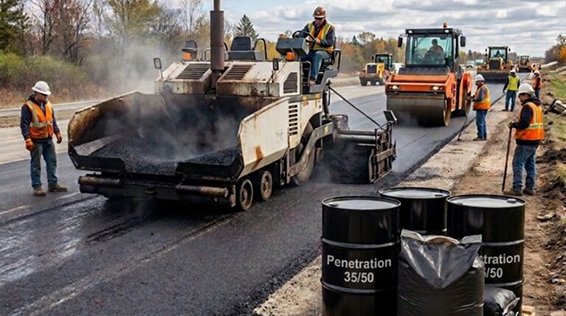

Bitumen is a product closely tied to the construction calendar. Unlike many industrial commodities where demand can remain relatively steady throughout the year, bitumen demand rises and falls with construction and paving activity. Weather conditions, in turn, have a major influence on when road and infrastructure projects can proceed.
For international buyers, understanding this seasonal rhythm is more than a matter of general market awareness. It has practical implications for how far in advance to plan purchases, how to structure delivery schedules, and how to avoid being caught out by predictable changes in demand and supply.
Bitumen Demand Follows Construction Activity, Not Just Price
It is tempting to think of bitumen purchasing purely in terms of price: buy when prices are favorable and wait when they are not. In practice, price is only one variable. Another is timing relative to the construction season in the destination market.
Road paving and infrastructure work is seasonal in many parts of the world. Wet conditions can make asphalt laying difficult or impossible, while extreme cold can halt paving activity entirely in some regions. Conversely, dry conditions and moderate temperatures tend to create periods when contractors move quickly to complete projects before weather conditions change.
As a result, most markets have recognizable periods of higher and lower bitumen demand. Buyers who understand where their market sits within this cycle are better positioned to plan procurement rather than react to sudden increases in requirements.
Weather and Seasonal Bitumen Demand Around the World
While the specifics vary by region, several broad seasonal patterns are worth understanding.
Rainy or monsoon seasons. In many tropical and subtropical markets, an extended wet season can significantly slow paving activity for weeks or months. Demand during these periods may be driven more by essential maintenance work than by large new projects. Once the rains ease, activity and buying interest can increase quickly as contractors look to catch up on delayed work.
Winter halts in colder climates. In regions with cold winters, paving activity can effectively pause during the coldest months. Demand typically concentrates in spring, summer, and early autumn, followed by a natural slowdown as temperatures fall.
Summer holiday slowdowns. In some regions, particularly parts of Europe, certain periods of summer can see reduced site activity because of holiday schedules, even when weather conditions remain suitable for paving. This can create a temporary dip in demand before construction activity increases again.
Dry-season peaks in the Southern Hemisphere. As Northern Hemisphere markets move into cooler or wetter months, some Southern Hemisphere markets may be entering their own dry, construction-friendly season. This means global bitumen demand does not follow one unified seasonal rhythm. Different regions can experience high-demand and low-demand periods at the same time.
The practical lesson is not that one pattern applies everywhere. Rather, every market has some form of seasonal cycle, and understanding your own market’s construction calendar as well as how it aligns with global supply conditions is an important procurement planning input.
Why Seasonality Affects Bitumen Supply, Not Just Demand
Seasonality does not only influence how much bitumen buyers want to purchase; it can also affect how much is available.
Refiners may schedule planned maintenance during periods of lower expected demand, temporarily reducing output. Shipping and freight availability can also tighten around peak paving seasons in major consuming regions as vessels face increased demand across multiple routes.
In addition, unexpected weather events can create short-term disruptions to loading, discharge, port operations, or inland transportation. These disruptions are different from normal seasonal patterns but can occur at the same time as seasonal demand increases.
The result is that supply-side timing and demand-side timing do not always move in perfect sync. A buyer who assumes that supply will always be available whenever required can be caught off guard by a refinery maintenance window, a freight constraint, or a seasonal demand spike occurring elsewhere in a shared supply region.
What Seasonal Bitumen Demand Means for Procurement Planning
For buyers, the practical value of understanding seasonality comes down to several important procurement habits:
- Plan ahead of your peak construction season. Avoid waiting until projects have already started to place orders. Shipping, customs, and inland logistics lead times do not automatically become shorter when a project is behind schedule.
- Monitor supply-side seasonality. Your own local demand cycle is only part of the picture. Refinery maintenance schedules, freight availability, and demand peaks in other regions can influence availability even when your local market is relatively quiet.
- Build a buffer for weather-related disruption. Additional planning time can be particularly useful for grades or origins that depend on specific shipping routes, ports, or loading terminals with known seasonal sensitivities.
- Use quieter periods as planning windows. Lower-demand months can provide an opportunity to review specifications, confirm suppliers, request quotations, and arrange supply before competition for available cargoes increases.
- Review pricing alongside physical availability. Seasonal demand can influence both purchasing urgency and market conditions. Buyers can monitor current bitumen prices while also considering lead times, freight, grade availability, and delivery requirements.
How Buyers Can Prepare for Seasonal Bitumen Demand
Effective procurement planning does not require buyers to predict every weather event or market movement. Instead, it involves preparing for the predictable parts of the annual cycle.
A practical approach is to identify the main construction season in the destination market, estimate expected bitumen requirements, review normal shipping lead times, and establish supply arrangements before demand reaches its seasonal peak.
Buyers should also communicate specifications and delivery requirements early. Confirming the required grade, quantity, packaging, destination port, and shipping terms in advance can reduce avoidable delays when market activity increases.
A Tiger Bitumen Perspective
Because seasonal patterns differ by region and do not always move together globally, buyers can benefit from working with a supplier that understands international supply conditions across multiple markets.
Tiger Bitumen works with international buyers on bitumen supply and export requirements, helping buyers evaluate product specifications, quantities, packaging, shipping terms, and quotation requirements according to their destination and procurement needs.
Understanding how a destination market’s construction season aligns or does not align with supply-side factors elsewhere is an important part of planning realistic delivery timelines and avoiding unnecessary last-minute pressure.
Conclusion
Bitumen procurement is rarely just about finding the lowest price. It is also about understanding timing: when demand in your own market typically rises, when supply conditions elsewhere may tighten, and how far in advance those factors need to be considered.
Buyers who treat seasonal bitumen demand as a procurement planning variable rather than an afterthought are generally better positioned to secure the required volumes and grades when they are needed.
For buyers planning upcoming requirements, reviewing market conditions early and requesting a quotation before the peak construction period can help create a more predictable supply schedule.
Need to plan your next bitumen purchase? Contact Tiger Bitumen for a bitumen quotation based on your required grade, quantity, destination, and shipping terms.
Frequently Asked Questions
Does bitumen demand follow the same seasonal pattern everywhere?
No. Patterns vary by climate and region some markets slow during rainy seasons, others during cold winters, and some see peak demand exactly when other regions are quiet.
How far in advance should I plan bitumen purchases around seasonal demand?
This depends on the market and logistics route, but generally, ordering ahead of your region’s peak construction period rather than once work has already started reduces the risk of delays.
Can supply tighten even during my market's low season?
Yes. Refinery maintenance schedules and demand peaks in other regions can affect global and regional availability independently of your own local season.