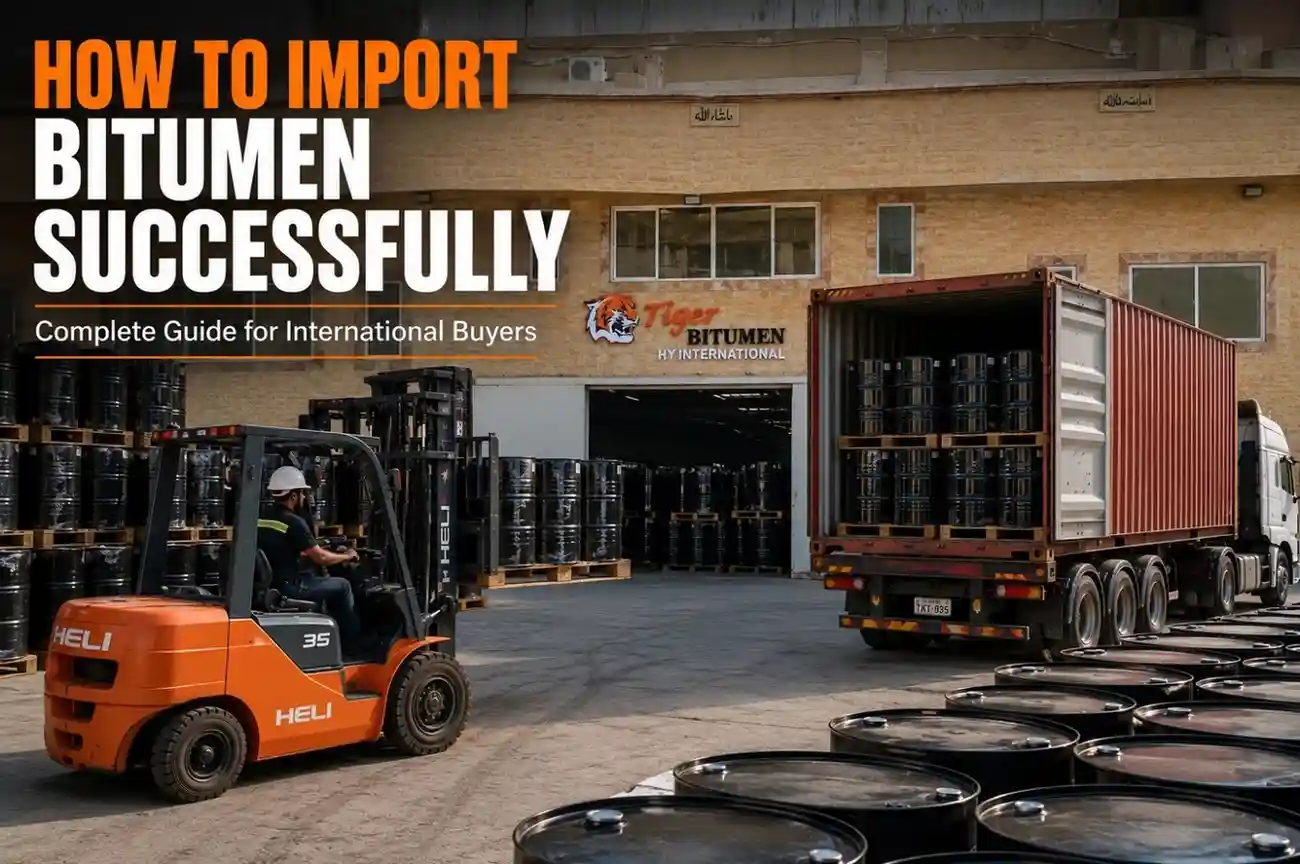
Importing bitumen is a critical part of infrastructure development, road construction, industrial manufacturing, and waterproofing projects. Whether you are a government contractor, construction company, distributor, or industrial buyer, importing bitumen successfully requires much more than simply finding a supplier with the lowest price.
The quality of the product, supplier experience, export documentation, shipping arrangements, packaging methods, and inspection procedures all play an important role in ensuring your shipment arrives safely and performs as expected.
This guide explains how to import bitumen successfully and highlights the key steps every international buyer should follow to reduce procurement risks and improve purchasing efficiency.
Understand Your Project Requirements
Every successful import begins with a clear understanding of your project requirements.
Before requesting quotations, you should identify:
- Project type
- Required bitumen grade
- Climate conditions
- Traffic load
- Engineering specifications
- Quantity required
- Delivery schedule
Selecting the correct product at the beginning helps prevent costly procurement mistakes later in the project.
Expert Tip from Tiger Bitumen
Many buyers request quotations before finalizing project specifications. Defining your grade, quantity, destination port, and delivery schedule first helps suppliers prepare faster and more accurate quotations.
Choose the Right Bitumen Grade
Bitumen is available in several grades, each designed for specific applications.
The most commonly used products include:
- Penetration Bitumen
- VG Bitumen
- Bitumen Emulsion
- Cutback Bitumen
- Polymer Modified Bitumen (PMB)
- Oxidized Bitumen
Each grade offers different performance characteristics depending on pavement design, climate conditions, and construction methods.
Experienced exporters such as Tiger Bitumen help buyers select the most suitable product based on technical requirements rather than simply recommending the most common grade.
Related Reading
How to Choose the Right Bitumen Grade
Choose a Reliable Bitumen Supplier
Selecting the right supplier is one of the most important decisions during the import process.
Rather than comparing prices alone, buyers should evaluate suppliers based on:
- Export experience
- Quality assurance
- International certifications
- Packaging capability
- Inspection procedures
- Customer support
- Global logistics experience
Companies with established export operations generally provide better shipment coordination and documentation support.
At Tiger Bitumen, international buyers receive technical assistance, export guidance, and customised supply solutions designed to simplify procurement for projects of every size.
Request a Detailed Export Quotation
A professional quotation should provide much more than the product price.
It should clearly include:
- Bitumen grade
- Quantity
- Packaging method
- Loading port
- Shipping terms
- Estimated delivery schedule
- Inspection details
- Payment terms
Providing complete project information enables suppliers to prepare quotations that accurately match procurement requirements.
Understand FOB, CFR and CIF
Most international bitumen shipments are supplied under standard Incoterms.
The most common include:
FOB (Free on Board)
The supplier loads the goods onto the vessel, while the buyer arranges freight and insurance.
CFR (Cost and Freight)
The supplier pays ocean freight to the destination port, while the buyer arranges insurance.
CIF (Cost, Insurance and Freight)
The supplier manages freight and marine insurance until the shipment reaches the destination port.
Tiger Bitumen offers flexible FOB, CFR, and CIF export solutions, allowing buyers to choose the shipping arrangement that best suits their procurement strategy.
Related Reading
FOB vs CFR vs CIF Explained
Select the Best Packaging Option
Proper packaging protects bitumen throughout international transportation and storage.
The most common packaging methods include:
- New Steel Drums
- Jumbo Bags
- Bitutainers
- Bulk Vessel Supply
The ideal option depends on shipment size, destination, storage facilities, and unloading capabilities.
Tiger Bitumen provides multiple export packaging solutions to meet the specific requirements of international buyers while ensuring product quality during transit.
Related Reading
Bitumen Packaging Guide for International Buyers
Verify Product Quality Before Shipment
Quality verification is an essential part of every successful import.
Before shipment, buyers should request:
- SGS Inspection
- Certificate of Analysis (COA)
- Quality Test Reports
- Quantity Verification
- Product Specifications
Independent inspections provide additional confidence that products comply with agreed specifications before export.
Tiger Bitumen applies strict quality control procedures to its shipments, with independent inspection services available according to customer requirements.
Related Reading
Bitumen Quality Testing Explained
Prepare Import Documentation
Proper documentation helps prevent unnecessary customs delays.
Typical export documents include:
- Commercial Invoice
- Packing List
- Bill of Lading
- Certificate of Origin
- Inspection Certificate
- Insurance Documents
Experienced exporters understand international documentation requirements and help buyers prepare complete shipping records.
Plan International Shipping
Successful procurement also depends on efficient logistics planning.
Important considerations include:
- Transit time
- Freight costs
- Container availability
- Destination port
- Marine insurance
- Delivery schedule
Tiger Bitumen works closely with shipping partners to coordinate reliable export logistics while helping customers select the most suitable shipping option for their destination.
Related Reading
International Bitumen Shipping Guide
Inspect the Shipment Upon Arrival
After receiving the shipment, buyers should inspect the cargo before unloading.
Check:
- Drum condition
- Packaging integrity
- Product identification
- Quantity received
- Shipping documents
Any damage or discrepancies should be reported immediately to both the supplier and shipping company.
Proper inspection helps ensure the shipment meets contractual requirements before materials are used on-site.
Common Import Mistakes to Avoid
Many procurement issues can be prevented through proper planning.
Common mistakes include:
- Selecting suppliers based only on price
- Ordering the wrong bitumen grade
- Ignoring independent inspections
- Choosing unsuitable packaging
- Incomplete documentation
- Misunderstanding shipping terms
Working with experienced exporters significantly reduces these risks while improving procurement efficiency.
Final Thoughts
Importing bitumen successfully requires careful planning, technical understanding, and reliable supply chain management. By selecting the right supplier, choosing the appropriate bitumen grade, verifying product quality, understanding international shipping terms, and preparing complete documentation, buyers can minimise procurement risks and improve project outcomes.
Partnering with experienced exporters such as Tiger Bitumen further simplifies the process by providing technical guidance, professional export support, flexible shipping solutions, and dependable logistics for international buyers.
About Tiger Bitumen
Tiger Bitumen is a trusted global exporter and supplier of premium-quality bitumen products for road construction, infrastructure development, waterproofing, roofing, and industrial applications. We support international buyers with strict quality control, SGS inspection, flexible packaging options, and reliable FOB, CFR, and CIF export solutions designed to meet the requirements of projects worldwide.