Bitumen Bags for Waterproofing Applications
Bitumen bags for waterproofing are relevant mainly from a packaging and project logistics perspective. Waterproofing is one of the application areas where product selection matters most, while packaging format matters least. Not every bitumen grade suits every waterproofing system, and the fact that a product is supplied in a 1 MT bag does not determine whether it is the right material for a particular membrane, coating, or damp proofing application.
This article looks at how bagged bitumen fits into waterproofing project logistics, specifically receiving, handling, and site organization for waterproofing contractors and construction procurement teams. Product suitability is a separate, grade- and system-specific question that needs to be confirmed before packaging format becomes relevant.
For general handling and storage principles, see How to Handle and Store Bagged Bitumen. Full application detail is available on the Applications page.
The Role of Bitumen in Waterproofing
Bitumen is used across a range of waterproofing-related applications, from membranes and coatings to damp proofing work, depending on the specific grade and formulation involved. Different waterproofing systems call for different bitumen characteristics, so there is not one bitumen product that serves every waterproofing use.
This is worth stating plainly: ordinary paving grade bitumen is not automatically suitable for a waterproofing application simply because it is bitumen. Waterproofing systems are typically engineered around specific product characteristics matched to the membrane, coating, or application method in question.
Selecting the right product for a waterproofing use is therefore a technical and formulation decision that comes before any packaging consideration.
Where Bitumen May Be Used in Waterproofing and Construction
Bitumen-based materials appear in several waterproofing-related and construction contexts, including:
- Membrane systems
- Protective coatings
- Damp proofing applications
- General sealing work within construction projects
Suitability within each of these applications varies significantly by the specific system, product formulation, and project requirement. This is why this article does not generalize about performance characteristics, coverage, or application methods that depend on the specific product and system in use.
How 1 MT Bagged Bitumen Fits Into Waterproofing Project Logistics
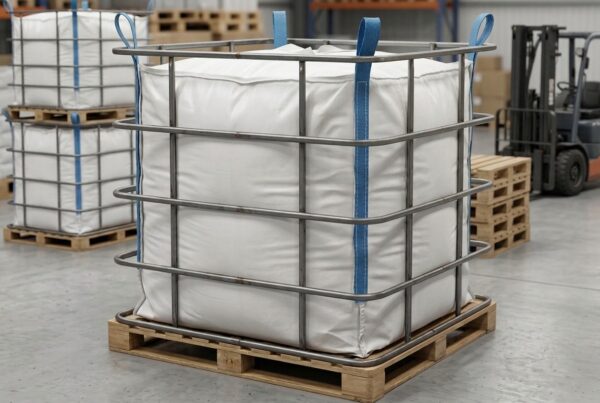
Once the right product has been identified for a waterproofing application, the 1 MT PP woven bag in steel cage becomes a packaging option worth considering based on project volume and site-handling capability.
For waterproofing contractors, this can mean:
- Ordering in tonne increments that align with the project’s material requirement, rather than committing to bulk tanker infrastructure for what may be a smaller or more targeted volume.
- Receiving material according to the project timeline, since bagged units can be delivered and stored without the continuous transfer requirements associated with bulk supply.
- Working within existing site-handling capability, provided the project has suitable forklift or crane access for one-tonne palletised loads.
As with any application, the bagged format does not change what the underlying bitumen product can do. It only changes how the material arrives and is handled once it reaches the project site.
Receiving and Unloading Bagged Bitumen at a Construction Site
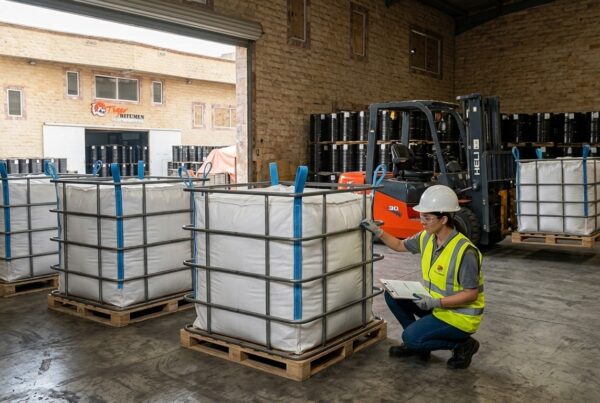
Receiving bitumen bags for waterproofing at a construction site follows the same general principles as other bagged deliveries. Teams should check quantities against shipping documents, inspect the condition of the bag and steel cage, and confirm that the delivered product matches the project’s specification.
For waterproofing work specifically, this receiving check is particularly important because these applications can depend heavily on formulation and system compatibility. Confirm that the correct grade or product line has arrived and matches the project’s Certificate of Analysis and technical requirements.
Moving Bags Using Forklifts or Cranes
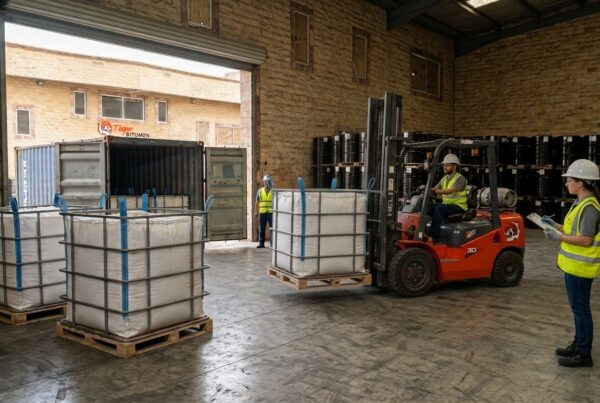
Because the PP woven bag is housed in a steel cage, the unit can be handled using suitable forklifts or cranes, subject to the equipment capacity and the site’s approved handling procedures.
This can be useful for smaller or more targeted waterproofing projects where dedicated bitumen-handling infrastructure may not be practical for the material volume involved. The bagged format can allow a site to work with suitable general-purpose material-handling equipment already available on site.
Handling procedures should always follow the supplier’s guidance and the site’s lifting and safety requirements.
Palletised Handling and Practical Site Organization
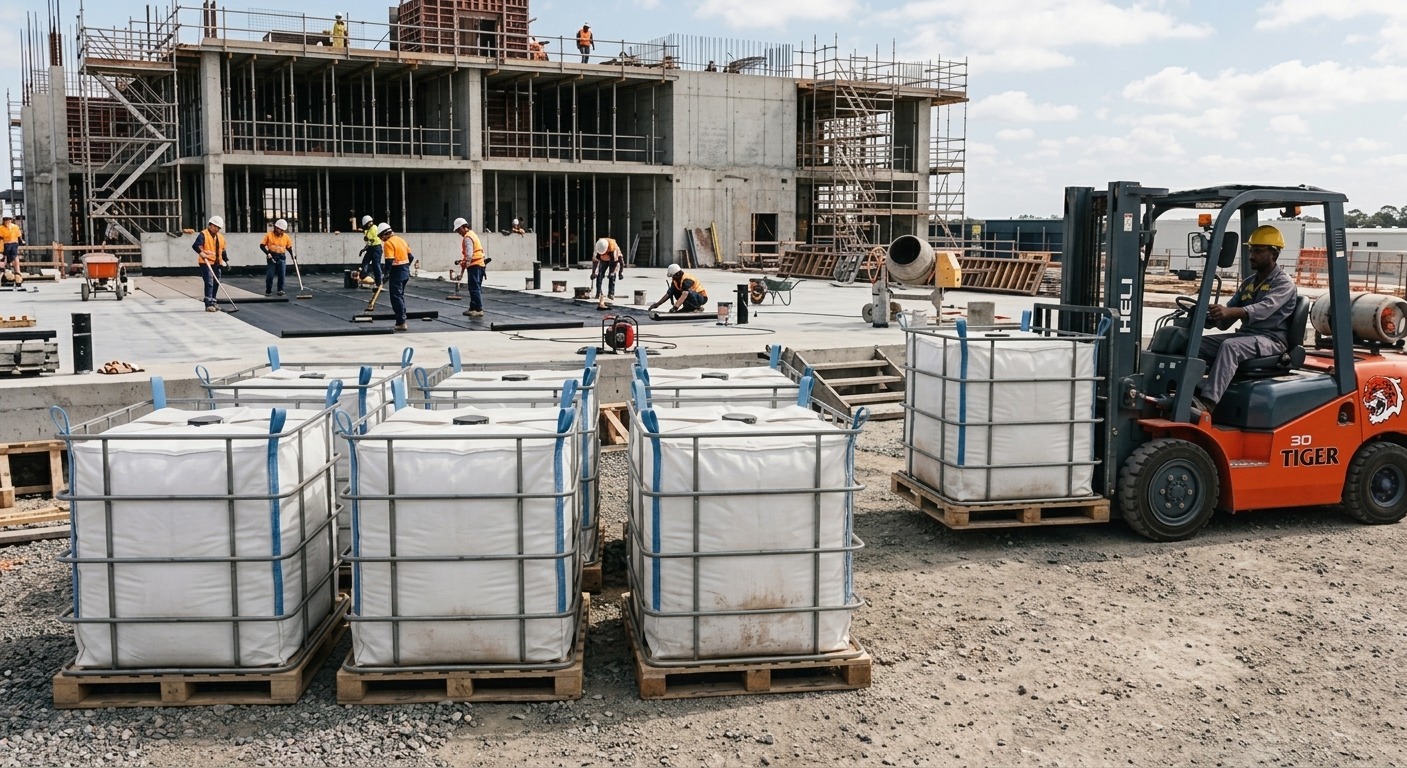
Bags remain on pallets through loading and can generally remain palletised during site storage, subject to the handling arrangement used for the shipment. For a waterproofing project, several practical points are worth considering:
- Store bagged material close to, but clear of, the active work area. Waterproofing work often happens in stages across a building or structure, so material should remain accessible without obstructing other trades or site movement.
- Keep batch and product documentation with the delivery. This is particularly useful where the waterproofing specification calls for a specific formulation. Keeping records associated with each batch makes it easier to confirm that stored material matches the project requirement.
- Protect stored material under suitable conditions. Follow the applicable storage guidance, particularly where waterproofing work is scheduled in stages over an extended construction timeline.
How Bitumen Enters the Waterproofing Process
At a general level, bitumen used in waterproofing work is processed and applied according to the specific product’s technical requirements and the waterproofing system it forms part of. This may involve heating for application, incorporation into a membrane manufacturing process, or use as a coating component.
This article deliberately does not specify application temperatures, coverage rates, drying or curing times, or layer thicknesses. These details depend on the specific product, its formulation, and the waterproofing system’s technical specification.
That information should come from the product’s technical data sheet and Certificate of Analysis rather than from general packaging guidance.
Considerations for Waterproofing Contractors and Procurement Teams
Waterproofing contractors need to confirm product suitability first. Grade, formulation, and compatibility with the specified waterproofing system should be established before packaging format becomes a relevant question.
Construction procurement teams sourcing bitumen for waterproofing work should treat this as a specification-driven procurement process. Waterproofing performance can depend heavily on matching the specific product to the system design.
Infrastructure and building projects involving waterproofing as one component of a larger scope should plan bagged bitumen procurement around the waterproofing specification independently from other bitumen requirements the project may have, such as road or asphalt work.
Project Situations Where 1 MT Bagged Handling May Be Operationally Practical
A few situations where bagged bitumen may fit waterproofing project logistics include:
- Targeted or smaller-volume waterproofing scopes, where bulk tanker infrastructure may not be proportionate to the material quantity required.
- Projects without existing bulk bitumen infrastructure but with suitable forklift or crane access.
- Multi-phase construction projects where waterproofing material is required at a specific stage rather than continuously throughout the build.
- Sites already receiving other materials in palletised formats, where bagged bitumen can fit into existing receiving and storage workflows.
These are factors to weigh against the specific project rather than a default recommendation.
What Buyers Should Confirm Before Ordering Bitumen for Waterproofing
Before ordering bitumen bags for waterproofing, confirm the following:
- Product suitability for your specific waterproofing system. This comes first, before quantity or packaging discussions.
- The exact grade or product line your waterproofing specification requires.
- Total quantity required in 1 MT bag units.
- Delivery timing relative to the project’s waterproofing work stage.
- Your site’s forklift or crane capability for handling one-tonne palletised units.
- Storage conditions available on site through to the point of use.
- Documentation needed for project quality records, including the Certificate of Analysis and SGS inspection where required.
Confirming product suitability with Tiger Bitumen’s export team before finalizing an order is particularly important for waterproofing work. Performance depends on matching the right product to the right system rather than assuming that any bagged bitumen product will fit a given waterproofing application.
Conclusion
The relevance of bitumen bags for waterproofing comes down to two separate questions: whether the specific product is right for the waterproofing system and whether the 1 MT bagged format suits the project’s logistics and site-handling capability.
The first question needs to be answered before the second one matters. Packaging format does not make an unsuitable product suitable for a particular waterproofing application.
To confirm product suitability and discuss bagged bitumen for your waterproofing project, visit Bitumen Bags or go directly to Request a Quote with your project’s specification.
FAQs
Is bagged bitumen suitable for waterproofing applications?
Selected bitumen grades and materials are used in waterproofing related applications, but suitability depends on the specific grade, formulation, and system involved not every bitumen product suits every waterproofing use. Confirm product suitability with the export team before ordering.
Can ordinary paving grade bitumen be used for waterproofing?
Not automatically. Waterproofing systems are typically engineered around specific product characteristics, so product selection for waterproofing is a distinct technical decision, separate from grades used for road or asphalt work.
What equipment is needed to handle bagged bitumen on a waterproofing project site?
Forklifts or cranes capable of handling a one-tonne rigid palletised load equipment generally already available on construction sites.
Does the bagged format affect how bitumen performs in a waterproofing application?
No. The packaging format doesn’t change the underlying product’s characteristics it only affects how the material is transported, stored, and handled before use.
What application temperatures or curing times apply to bagged bitumen used in waterproofing?
These depend on the specific product and waterproofing system involved. Refer to the product’s technical data sheet and Certificate of Analysis rather than general packaging guidance.
Is 1 MT bagged bitumen suitable for small waterproofing projects?
It can be, where the project’s volume and site handling capability suit tonne increment deliveries rather than bulk or drum supply but this should be confirmed against your specific project requirement.