Knowing how to handle and store bagged bitumen safely helps protect the product, packaging and people involved in unloading, moving and storage. For international buyers and site teams, good handling practice starts when the bags arrive and continues until the bitumen is ready for use.
Bagged bitumen handling does not require a complicated bag-specific procedure. Instead, teams should follow suitable site practices, use appropriate lifting equipment and protect the bags from damage, contamination and unsuitable storage conditions. For more information about the packaging format, see our bitumen packaging guide.
How to Handle and Store Bagged Bitumen Safely
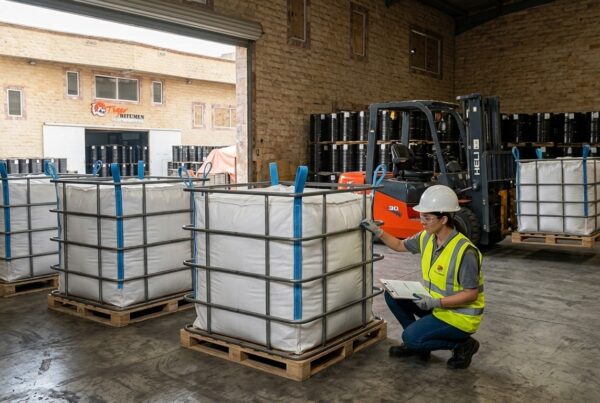
The first step is to inspect the bags when they arrive. Check the packaging, steel cage and surrounding area before moving the units. Any visible damage should be recorded and reported to the supplier or logistics team.
Receiving Bagged Bitumen at the Site
Before unloading, make sure the receiving area is suitable for the expected vehicle and lifting equipment. The ground should provide enough support for safe movement, and the unloading area should give operators sufficient space to work.
Inspect each unit for visible damage before moving it from the unloading point. Check the PP woven bag and steel cage for tears, deformation or other signs of damage. If you identify an issue, document it before further handling.
For product and packaging specifications, refer to the Bitumen Bags Technical Specifications page.
Moving Bags from the Unloading Area to Storage
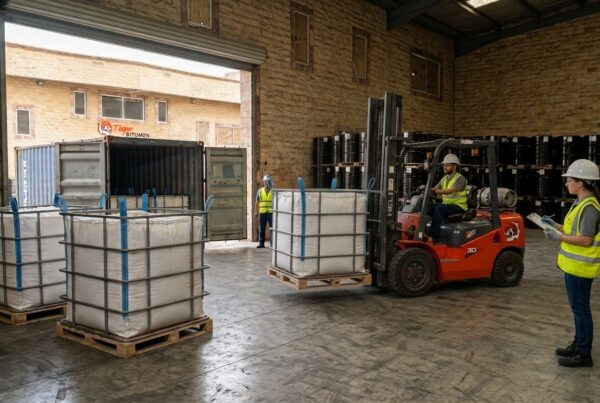
Move bagged bitumen carefully from the unloading area to the designated storage location. Avoid dragging, dropping or striking the bags against structures, vehicles or other equipment.
Plan the movement route before handling begins. Remove unnecessary obstacles and keep people away from areas where lifting equipment is operating. This approach helps teams handle bagged bitumen safely while reducing the risk of packaging damage.
Forklift and Crane Handling Considerations
Use lifting equipment that is suitable for the weight and configuration of the unit. Operators should follow the equipment manufacturer’s instructions and the site’s established lifting procedures.
When using a forklift, position the forks correctly and keep the load stable during movement. Avoid sudden starts, stops or turns that could shift the unit.
When cranes or other lifting equipment are used, confirm that the lifting arrangement is appropriate for the packaged unit. Follow the supplier’s handling guidance and the site’s approved lifting procedure.
For broader guidance on handling practices, see Bitumen Storage and Handling Best Practices.
Why Keeping the Steel Cage and PP Bag Intact Matters
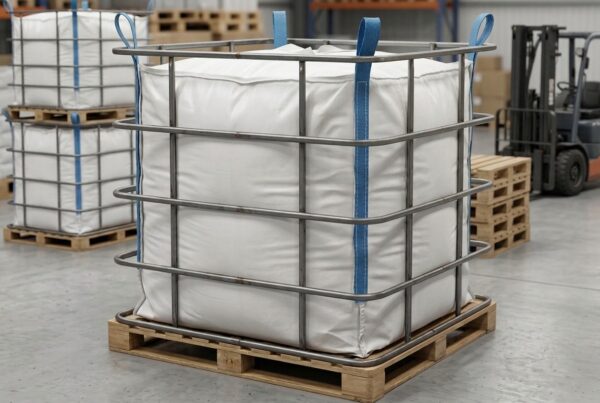
The steel cage and PP woven bag form an important part of the confirmed 1 metric ton packaging format. Keeping both components intact helps protect the packaged bitumen during transportation, unloading and storage.
Do not cut, puncture or deliberately damage the PP woven bag during routine handling. Avoid actions that could deform the steel cage or compromise the overall packaging structure.
Pallet Handling
If pallets are used as part of the site’s handling system, check that they are suitable for the packaged unit and capable of supporting the load safely.
Keep the load stable when moving it with pallet-handling equipment. Avoid uneven surfaces and unnecessary impacts that could damage the packaging.
Choosing a Suitable Storage Area
To store bagged bitumen safely, choose a clean, stable and suitable storage area. The location should protect the bags from unnecessary exposure to conditions that could damage the packaging or affect the product.
Keep the storage area clear of sharp objects, standing water, contaminants and other materials that could damage the PP woven bag. Where practical, provide suitable protection from weather and direct environmental exposure.
Storage arrangements should also follow the supplier’s product-specific recommendations. Requirements can vary depending on the packaging, site conditions and intended period of storage.
For additional information, see Bitumen Shelf Life and Storage Conditions.
Protecting Bags from Damage, Contamination and Unsuitable Conditions
Keep bagged bitumen away from activities that could puncture, tear or contaminate the packaging. Store the units in an area where unnecessary contact with vehicles, machinery and other materials can be avoided.
Do not place the bags where sharp edges, exposed metal, chemicals or other potentially damaging materials could come into contact with the packaging.
Good housekeeping also helps maintain a safer storage area. Remove debris regularly and keep access routes clear for handling equipment.
Warehouse and Site Organization
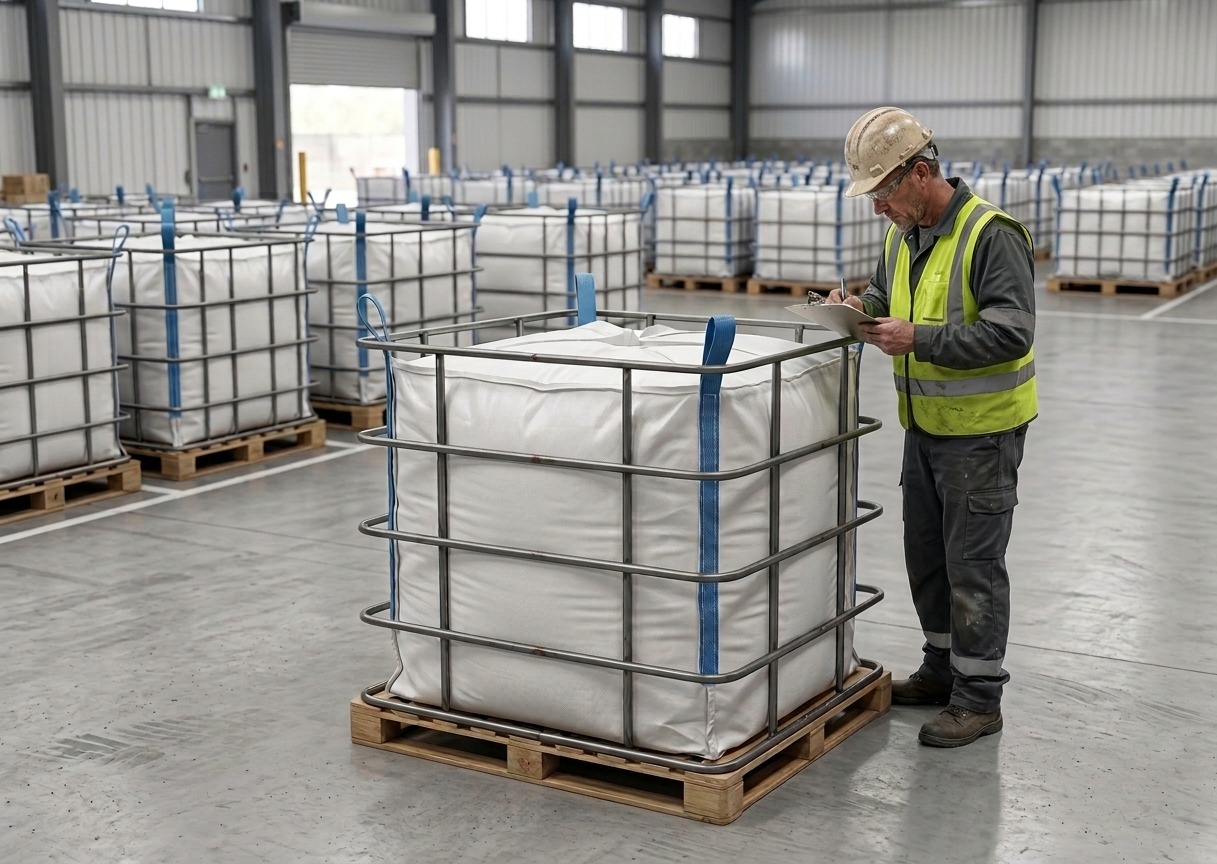
Organize stored bagged bitumen so operators can inspect and move the units without unnecessary handling. Maintain clear access around storage areas and avoid arrangements that make inspection difficult.
Use the site’s established storage procedures and follow any supplier recommendations concerning positioning, stacking or storage duration. Do not assume that one arrangement is suitable for every site or packaging configuration.
A well-organized storage area can also make stock checks easier. Record incoming units and monitor stored material according to your normal warehouse or site-control procedures.
Inspection Before and After Handling
Before Handling
Before moving a unit, check the PP woven bag and steel cage for visible damage. Look for tears, holes, deformation or other conditions that could affect safe handling.
Also check the lifting equipment and handling area before work begins. Make sure the equipment is suitable for the load and that the movement route is clear.
After Handling
After moving the bags, inspect the units again. Confirm that the PP woven bag and steel cage remain intact and that no visible damage occurred during unloading or transportation within the site.
If damage is found, isolate or manage the affected unit according to your site’s procedures and contact the supplier or relevant logistics team when necessary.
Practical Points to Confirm with Your Supplier and Logistics Team
Before shipment or delivery, buyers can confirm several practical details with their supplier and logistics team. These may include the confirmed packaging format, unit weight, lifting method, unloading requirements, storage recommendations and any site-specific handling considerations.
For the current Tiger Bitumen bagged format, buyers should confirm the applicable product grade and packaging details before arranging site handling. The Bitumen Bags resource provides additional information about the bagged bitumen offering.
For quality-related requirements, buyers can also review the information about SGS inspection and bitumen quality before shipment.
Conclusion
Good site practices make it easier to handle and store bagged bitumen safely from delivery through storage. Inspect the packaging, use suitable lifting equipment, avoid unnecessary impacts and keep the storage area clean and suitable for the packaged product.
Because storage and handling conditions can vary between sites, buyers should also confirm the relevant requirements with their supplier and logistics team. If you need further information about bagged bitumen supply, you can request a quote from Tiger Bitumen.
FAQs
How should bagged bitumen be stored on site?
Under cover, protected from direct weather exposure, excessive heat, and contamination general practice for packaged industrial materials. Grade specific and climate-specific guidance should be confirmed with the supplier for your particular order.
What equipment is needed to move bagged bitumen?
Forklifts or cranes suited to handling a one-tonne rigid palletised load, consistent with the steel cage’s structural role.
Should bags be removed from pallets during storage?
Generally, no maintaining the palletised configuration used during loading keeps the unit stable and consistent with the handling equipment already in use on site.
What should I check when bagged bitumen first arrives?
Quantities against shipping documents, visible condition of both the bag and steel cage, and batch details against your Certificate of Analysis if relevant to your project.
Is there a fixed maximum stacking height?
This isn’t published as a general specification it depends on grade and order specific factors. Confirm with your supplier for guidance specific to your shipment.
What's the biggest risk during handling?
Damage to either the PP bag or the steel cage, since each plays a distinct role containment and structural support respectively and damage to one undermines the safety and reliability of the whole unit.