November 2026 | Tiger Bitumen, a brand of HY International Group
Australia and New Zealand rely on imported bitumen to keep their road networks moving, and both markets are now entering their main paving season. This year, buyers in both countries have faced a difficult sourcing environment: tight supply from traditional Asian origins, high prices and a growing need to look further afield for Australia bitumen imports, New Zealand bitumen imports and reliable bitumen suppliers.
This article looks at current trends in Australia bitumen imports and New Zealand’s market, the supply options available to buyers, the factors that matter most when choosing a supplier, and practical steps for planning shipments and securing dependable supply.
Key Points
- Australian buyers have increasingly turned to long-haul origins such as Europe and the Americas, as offers from Singapore have been seen as too high for many projects.
- Wet weather and high import costs have led some Australian road projects to be postponed, while dry weather has kept New Zealand demand steady.
- Asia-Pacific prices have recently started to ease, but supply from several regional producers remains limited.
- Specification compliance, product consistency, packaging and supplier reliability are central to successful sourcing, especially when switching origins.
- Longer supply chains mean buyers need to plan further ahead and manage price and timing risk carefully.
Import Demand in Australia and New Zealand
Australia
Australia’s main paving activity generally takes place in the warmer, drier months, although conditions vary widely across such a large country. In late October, wet weather in key east coast cities such as Brisbane slowed demand for Australia bitumen imports. At the same time, the arrival of high-priced cargoes from Asian origins has led several road projects to be postponed, as contractors found current bitumen import costs difficult to absorb.
Australian importers have also been reluctant to buy at current seaborne levels from traditional regional suppliers. Some received offers for Singapore-origin cargoes but considered them too high to be workable for contractors.
New Zealand
New Zealand’s conditions have been more favorable. Dry weather has supported road paving, and importers expect demand and consumption to remain largely steady until the Christmas period. However, some market participants have warned that large increases in fuel and bitumen prices could lead smaller and less urgent projects to be postponed, which could reduce demand later in the season.
For both markets, these are current conditions and expectations rather than settled outcomes, and they can change with weather, funding and prices. Our guide to how seasonal weather patterns affect bitumen demand explains why timing matters.
How Sourcing Patterns Are Changing
Australia and New Zealand have traditionally drawn much of their imported bitumen from nearby Asian refineries, with Singapore a key source. This year, tight supply in that region has pushed buyers to diversify. As we reported in our article on tight Singapore supply pushing buyers to alternative origins, regional refiners struggled to increase output earlier in the quarter.
In response, many Australian importers are now sourcing from alternative origins such as Europe and the Americas. Mediterranean suppliers have also been shipping cargoes to Asia-Pacific, where supply has been tight and prices have been among the highest globally.
Conditions are now shifting again. Asia-Pacific prices have started to ease for the first time since July, and some market participants expect Singapore output to increase in December. At the same time, relatively cheaper long-haul arrivals from Europe and the US could limit Australian and New Zealand demand for spot Singapore cargoes. Read more in our analysis of Asia-Pacific bitumen prices easing.
Supply Options for Australian and New Zealand Buyers
| Supply option | Current situation | Points to consider |
| Singapore | A traditional source, but supply has been tight and recent offers were seen as too high for many projects. Some participants expect more output in December. | Short voyage; watch whether December supply improves. |
| Other Southeast Asian origins | Export supply from Thailand has been limited, while Malaysia has offered competitive cargoes to some regional buyers. | Availability can change quickly; confirm loading windows early. |
| China and North Asia | Cargoes from China have been arriving in Australia, though at high prices. Chinese winter demand is slowing. | Check specification compliance and delivered cost carefully. |
| Europe and the Americas | Many Australian importers are now sourcing from these long-haul origins. | Longer voyages mean longer lead times and more price exposure in transit. |
| Containerized supply | Drums and jumbo bags shipped in containers from international suppliers. | Suits regional and remote projects, smaller buyers and sites without heated bulk storage. |
Factors That Shape Procurement Decisions
Product Quality and Specification Compliance
Australian bitumen for road construction is classified under the relevant Australian Standard by viscosity at 60°C, with common classes such as Class 170, Class 320 and Class 600. Buyers sourcing from new origins must confirm that the product meets the relevant class and any additional project requirements. Tiger Bitumen supplies Australian Standard bitumen grades, including Class 170, Class 320 and Class 600.
New Zealand uses its own national specifications, which differ from Australia’s. Buyers should always confirm the grade and test requirements set by the relevant road authority or project specification before ordering.
Consistency Between Shipments
When buyers switch between origins, product characteristics can vary even within the same nominal grade because they depend on the crude and refining process used. For asphalt producers, consistent properties from one shipment to the next help avoid changes to mix design and plant settings. Regular testing and clear specifications reduce this risk.
Inspection and Documentation
Certificates of analysis, independent inspection at loading and clear documentation are essential, particularly with long-haul cargoes, where problems discovered on arrival are costly to resolve. Our bitumen inspection articles explain what buyers should look for.
Shipping and Delivered Cost
Distance matters a great deal for Australian and New Zealand buyers. Freight from Asian origins differs between Australia’s east and west coasts, and long-haul cargoes from Europe or the Americas involve much longer voyages. Comparing offers on a delivered basis is essential. Our article on freight and logistics in landed bitumen prices explains why.
Packaging Format
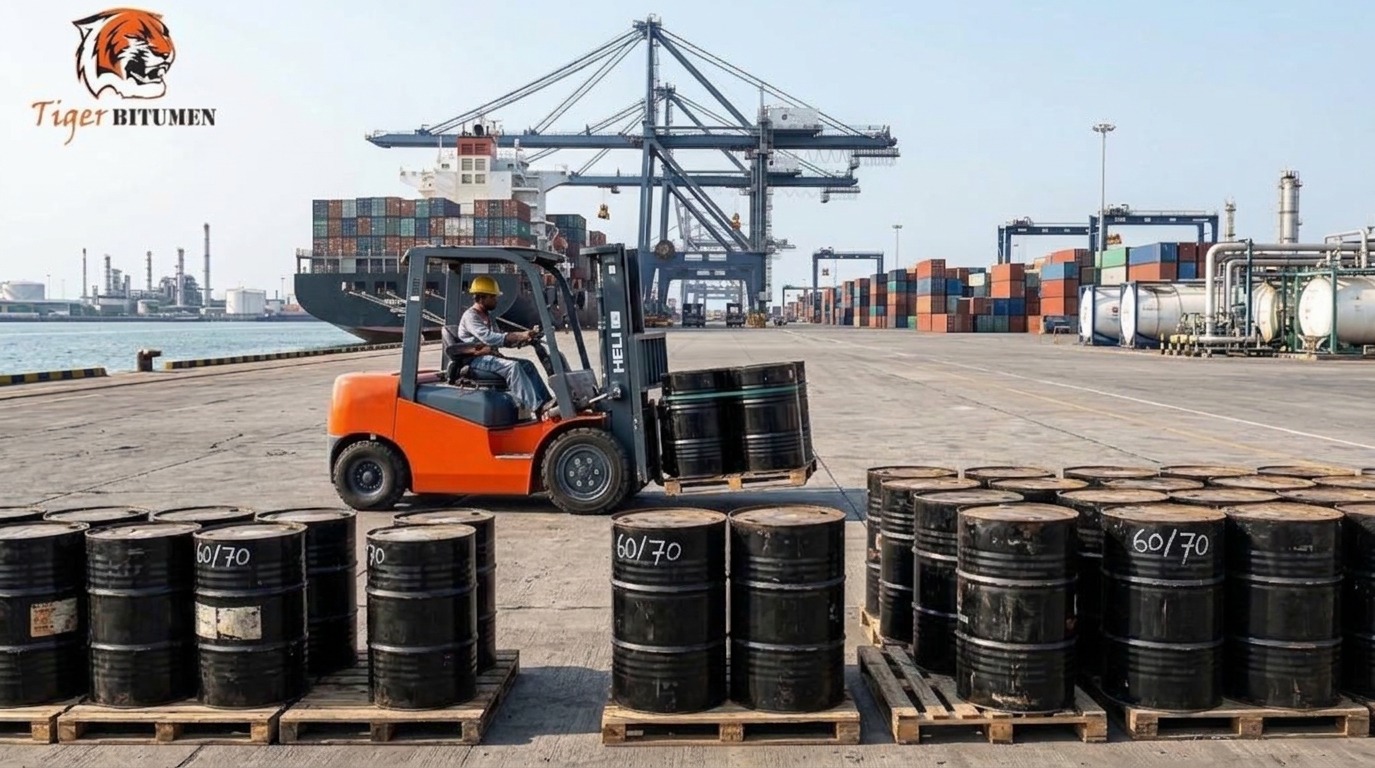
Bulk supply into heated terminals suits large importers and asphalt producers on the coast. For regional and remote projects, smaller contractors, maintenance work and sites without heated storage, drummed or jumbo bag bitumen shipped in containers can be more practical, although it requires suitable heating and handling equipment on site. Our comparison of drum, bulk and jumbo bag bitumen explains the trade-offs.
Import Requirements
Both Australia and New Zealand apply import and biosecurity controls. Buyers importing packaged bitumen should check the current requirements for containers, pallets and packaging materials with the relevant authorities before shipment.
Supplier Reliability
A reliable supplier delivers on time, meets specifications consistently and communicates clearly when problems arise. For long supply chains, the ability to supply from more than one origin can also help protect buyers against disruption at any single refinery.
Challenges When Planning Shipments
| Challenge | Practical response |
| Distance from major supply sources means long shipping times. | Order earlier and build realistic lead times into project schedules. |
| Prices can move while a cargo is at sea. | Agree pricing terms clearly and consider staggered purchases. |
| Regional supply can tighten quickly when key refiners cut output. | Qualify more than one origin before you need it. |
| Product from new origins must meet local specifications. | Require certificates of analysis and independent inspection. |
| Weather affects project timing and can leave stock sitting unused. | Match delivery timing to realistic paving windows. |
| High prices can lead to project postponements. | Keep supply flexible so volumes can be adjusted. |
Practical Procurement Considerations
- Plan around the paving season. Order early enough for product to arrive before peak demand, allowing for longer voyages from distant origins.
- Qualify more than one origin. Pre-approving suppliers from different regions makes it easier to switch if one source becomes tight or expensive.
- Confirm the exact specification. Check the Australian Standard class or New Zealand grade required, and make it part of the contract.
- Insist on testing and inspection. Require certificates of analysis and independent inspection at loading, especially for new origins.
- Compare delivered costs. Evaluate offers on a delivered basis, including freight, insurance where applicable, port charges and inland costs. Remember that CFR and CIF have different insurance responsibilities.
- Choose the right format. Use bulk for terminal-based supply and drums or jumbo bags for regional, remote or smaller requirements.
- Balance term and spot buying. A mix of term supply for base needs and spot purchases for peaks can combine security with flexibility. Our guide to term contracts vs spot purchases explains the options.
- Watch the regional market. Keep track of Singapore output, Asian price trends and long-haul offers, which are all shifting at present.
What to Watch in the Coming Months?
- Singapore output for December loading, and whether regional supply improves.
- Asia-Pacific price trends, which have recently started to ease.
- Long-haul offers from Europe and the Americas, and how competitive they remain.
- Weather in key Australian regions during the paving season.
- Project budgets and postponements in both countries as high costs continue.
Conclusion
Australian and New Zealand buyers are navigating a changing bitumen supply landscape. Tight and expensive regional supply has pushed many importers towards long-haul origins, while recent easing in Asian prices and possible improvements in Singapore output could shift the balance again. In this environment, successful procurement of Australia bitumen imports and New Zealand bitumen imports depends on more than price: specification compliance, consistent quality, the right packaging, realistic shipping lead times and dependable suppliers all play a central role.
At Tiger Bitumen, a brand of HY International Group, we supply Australian Standard bitumen in Class 170, Class 320 and Class 600, alongside a wide range of other bitumen products. Our products are packed in new steel drums and jumbo bags and shipped in containers to ports worldwide, with inspection arranged to meet buyer requirements. Importers and contractors in Australia and New Zealand are welcome to request a quotation or contact our team to discuss their specifications and delivery plans.
Frequently Asked Questions
Where does Australia import bitumen from?
Australia has traditionally imported much of its Australia bitumen imports from Asian refineries, including Singapore. This year, many bitumen importers and buyers have also turned to Europe and the Americas because of tight and expensive bitumen supply in Asia.
What bitumen grades are used in Australia?
Australian road bitumen is classified by viscosity under the Australian Standard, with common classes including Class 170, Class 320 and Class 600. Buyers should confirm the exact class required by their project.
Are New Zealand bitumen specifications the same as Australia's?
No. New Zealand uses its own national specifications. Buyers should check the requirements of the relevant road authority or project before ordering.
Why are Australian bitumen projects being postponed?
Some Australian projects have been postponed because of wet weather in key cities and the high cost of recently arrived import cargoes.
Is drummed bitumen suitable for Australian and New Zealand projects?
Drummed and jumbo bag bitumen can suit regional, remote or smaller projects and sites without heated bulk storage, making them suitable packaging options for Australia bitumen imports. Buyers should check site heating and handling arrangements and current import requirements for bitumen packaging.