Between a confirmed order and a departing vessel, a bitumen bag shipment goes through a specific sequence: packing, palletising, yard handling, and container loading. Each stage has its own handling requirements, and each is a point where a buyer or freight forwarder might reasonably ask, “What exactly happens here, and what do I need to confirm?”
How bitumen bags are packed and loaded matters because each stage affects how the shipment moves from the packing floor to the export container. This article covers the confirmed 1 Metric Ton (1,000 kg) PP woven bag in steel cage format. It focuses on the physical export workflow rather than providing a general packaging overview or a shipping-documentation guide.
The article explains how the bag moves from the packing floor to a loaded container and what buyers and freight forwarders should confirm at each stage. For the packaging specification itself, see Bitumen Bags and Technical. For the full operational detail behind palletising and shipping, see Packaging & Logistics.
The Export Workflow, Step by Step
Tiger Bitumen’s export preparation for bagged bitumen follows a structured sequence. At a high level, the process includes:
- Packing: Bulk bitumen is packed into the confirmed 1 MT bag-in-cage unit.
- Palletising: Packed units are placed on pallets for handling and loading.
- Yard handling: Palletised units are moved and staged using suitable forklifts or cranes.
- Container loading: Palletised bags are loaded into containers under export supervision.
- Port and shipping: Containers move through port handling toward the confirmed destination.
Each step is described below in more detail, along with what is confirmed at each stage and what depends on the specific order.
Step 1: Packing the 1 MT Bag
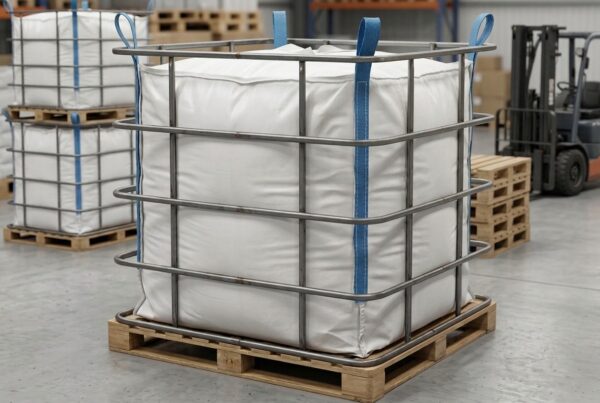
Bulk bitumen sourced in tankers and vessels is packed into the confirmed 1 Metric Ton (1,000 kg) PP woven bag housed in a steel cage at Tiger Bitumen’s packaging facility.
This is the confirmed bagged format for the current offering. The steel cage is not added after packing as an afterthought. It forms part of the supported packed unit, allowing the bag and cage to move together through the subsequent handling and export stages.
For the detailed packaging specifications, including the confirmed unit format, see the Bitumen Bags page.
Step 2: Palletising
Palletising forms part of the container-loading preparation for Bitumen Bags shipments. It allows the packed units to be organized and handled as palletised cargo during subsequent movement and loading.
What is not necessarily standardised is the exact arrangement: how bags are placed on a pallet and how many units are assigned to each pallet. That arrangement is confirmed against the specific order and destination rather than treated as a fixed figure.
Factors such as receiving equipment, forklift access, dock clearance, and the agreed shipping configuration can affect the practical loading arrangement. If your unloading site has particular constraints, such as a maximum pallet footprint or specific dock requirements, flag them before loading begins.
For more information about the operational packaging and logistics setup, see Packaging & Logistics.
Step 3: Export-Yard Handling
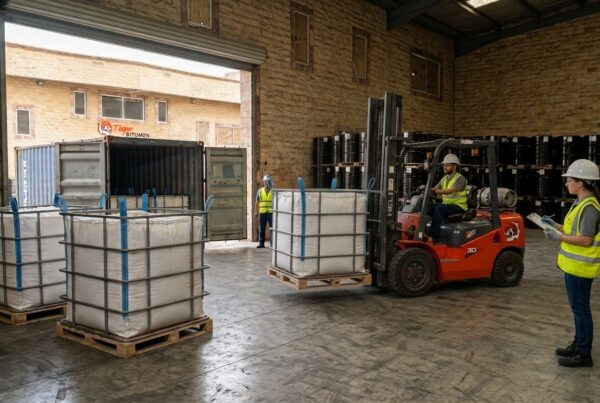
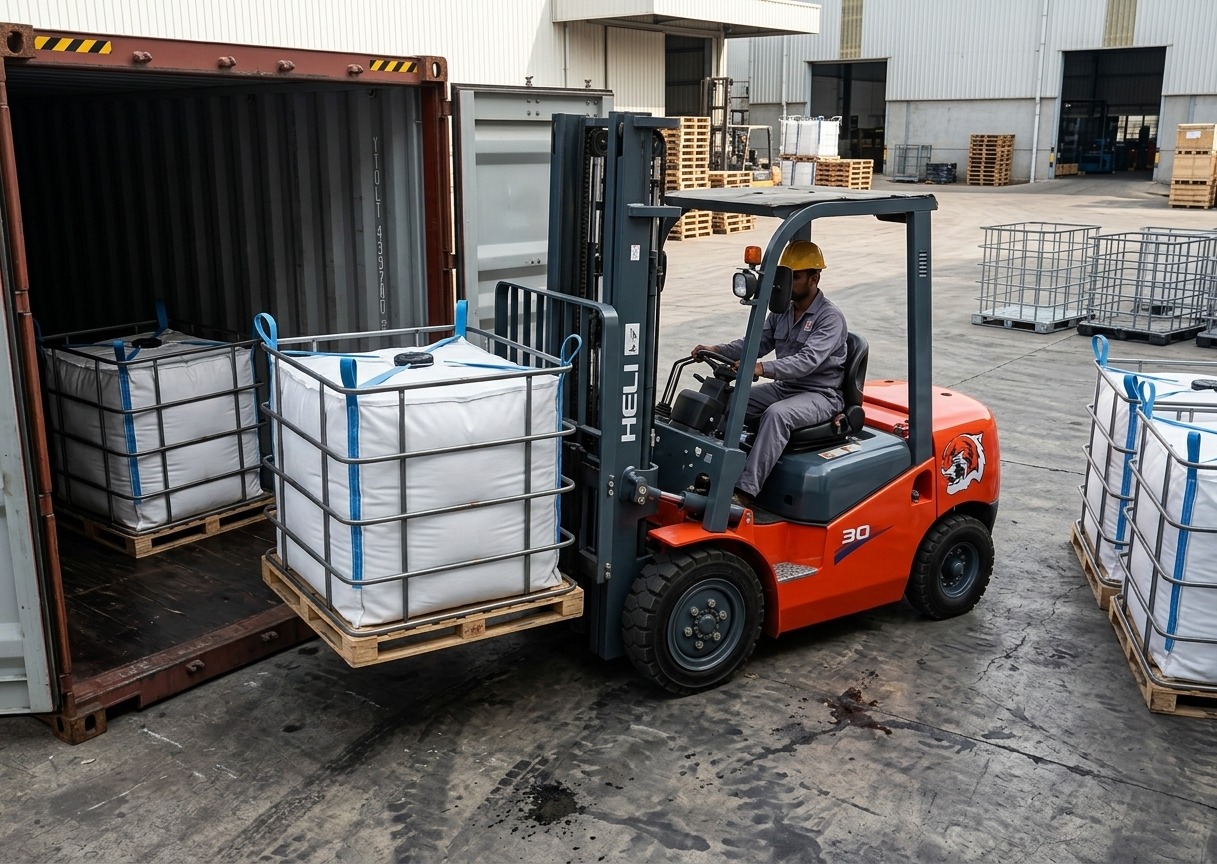
Once palletised, units are moved and staged in the export yard using suitable forklifts or cranes. The steel cage provides support around the PP woven bag, allowing the packed unit to be handled as a supported load when the appropriate equipment and procedures are used.
Practically, this means:
- Units can be repositioned and staged using suitable material-handling equipment.
- Equipment must have sufficient capacity for the one-tonne load.
- Handling should follow the site’s approved lifting and cargo-safety procedures.
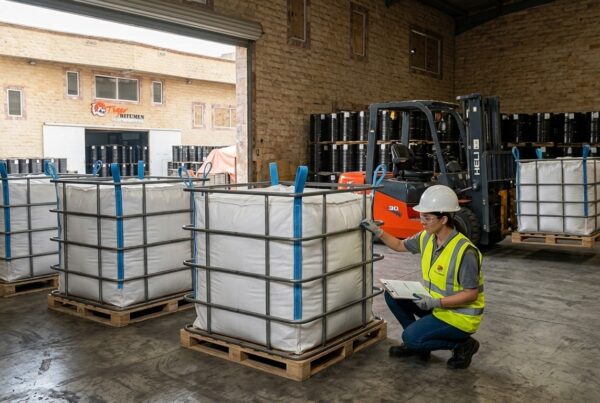
- Packaging condition should be checked before the units proceed to container loading.
This is also an important point for checking whether bags and cages remain in suitable condition before loading. Buyers can also review the separate guide on How to Handle and Store Bagged Bitumen for practical handling considerations after delivery.
Step 4: Container Loading Considerations
Container loading forms part of the export preparation process. Product is inspected, packaging is verified, and palletised bags are loaded according to the shipping plan confirmed for the order.
A few practical points are worth understanding at this stage.
Loading configuration is order-specific. The number of pallets and bags loaded into a given container is not a fixed industry-wide figure. It depends on the destination, shipping arrangement, container type, and configuration confirmed for the specific shipment. Treat any loading quantity provided to you as specific to your order rather than as a general loading figure.
Shipping is by containerised sea freight. Shipments can be arranged under FOB, CFR, or CIF terms depending on the agreed logistics arrangement. The specific container type and loading capacity are confirmed as part of preparing the order.
Packaging verification also matters at loading. The cargo moves from the packing facility to the export yard and then into the container. Checking pallet integrity, bag condition, and quantities before the container is sealed helps confirm that the loaded cargo matches the shipment plan.
Coordinating with Freight Forwarders
If you are working with a freight forwarder rather than managing logistics directly, clarify the main loading and receiving requirements early. The forwarder needs to coordinate your destination requirements with the export loading plan.
- Confirm the container type and configuration your forwarder has arranged, since this affects how palletised units can be loaded.
- Share your destination’s unloading capability, including pallet-handling equipment, forklift access, and dock constraints.
- Clarify loading verification responsibilities, including whether an independent inspection such as SGS forms part of the arrangement and who receives the resulting documentation.
- Confirm the Incoterm (FOB / CFR / CIF) being used, since it defines the agreed responsibilities and transfer point during the shipping process.
Coordinating these points before loading begins can help prevent a common logistics problem: cargo arriving in a configuration that the receiving site is not properly prepared to unload.
What Buyers Should Confirm Before Loading
Before your shipment reaches the loading stage, it is worth having the following details confirmed in writing:
- The palletising arrangement for your order.
- The container type and loading configuration confirmed for your shipment.
- Whether an independent inspection, such as SGS, will be carried out during loading and what it will cover.
- The shipping method and Incoterm (FOB / CFR / CIF).
- Your destination port and any known local unloading constraints.
- The documentation you will receive confirming loaded quantities and packaging condition.
Raising these questions before loading rather than after the container has departed gives you an opportunity to address anything that does not match your receiving setup.
How Bitumen Bags Are Packed and Loaded for Export
The physical export sequence can be summarized as packing the bulk bitumen into the confirmed 1 MT bag-in-cage unit, palletising the packed units, moving them through the export yard, and loading them into the container according to the shipment plan.
While this sequence provides a consistent overall workflow, details such as pallet arrangement, container type, loading quantity, and inspection arrangements can vary by order. Buyers should therefore confirm shipment-specific details with the export team or freight forwarder before loading begins.
Conclusion
How bitumen bags are packed and loaded is ultimately a question of understanding the physical export workflow and knowing which details are fixed and which are confirmed for each shipment.
The confirmed format is a 1 Metric Ton (1,000 kg) PP woven bag in a steel cage. From packing through palletising, yard handling, and container loading, the units move through a structured export process. The exact loading configuration, container type, and inspection arrangements are confirmed according to the specific order.
For buyers and freight forwarders, the most useful approach is to confirm these details before loading begins. This helps align the export preparation with the destination’s unloading capabilities and the agreed shipping arrangement.
To confirm the packing and loading plan for your specific order, visit Bitumen Bags or go directly to Request a Quote with your grade, quantity, and destination.
FAQs
Are bitumen bags always palletised before loading?
Yes. Palletising is a standard part of the export preparation process for every Bitumen Bags shipment.
How many bags go into a container?
This isn’t a fixed figure it depends on the container type and configuration confirmed for your specific order and destination.
What equipment is used to move bags in the export yard?
I am text block. Click edit button to change this text. Lorem ipsum dolor sit amet, consectetur adipiscing elit. Ut elit tellus, luctus nec ullamcorper mattis, pulvinar dapibus leo.
Is packaging checked before container loading?
Yes, product and packaging are inspected as part of the loading process, alongside verification of quantities, ahead of the confirmed shipping schedule.
What should a freight forwarder confirm before arranging loading?
The container type and configuration, the buyer’s destination unloading capability, whether an independent inspection is required, and the applicable Incoterm.
Is a smaller quantity than a full pallet load available?
The confirmed packaging unit is the 1 Metric Ton bag. Quantity and loading arrangements for your specific order should be confirmed directly with the export team.