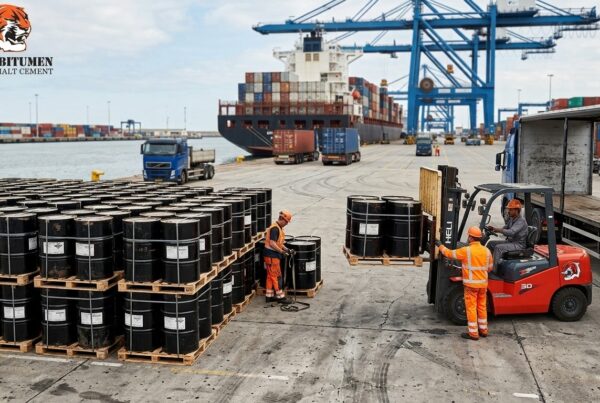

South Africa bitumen imports are closely connected to shipping schedules, port handling and storage capacity as the paving season approaches. In some markets, increased road construction activity is met largely through local refinery output. In South Africa, imported supply plays an important role, so preparing for the paving season is also a shipping, port and storage question.
When a cargo leaves its loading port, how it moves through Durban and where it is stored can matter as much to a project as the seasonal demand itself.
This article looks at import activity, Durban’s role and storage capacity as the season begins. It does not forecast prices, volumes or demand. Sections describing this week’s reporting are marked as market observations. General explanations and procurement guidance are identified separately.
South Africa’s Reliance on Imported Bitumen
Market observation. The reporting describes South Africa as heavily reliant on imported bitumen and links this import dependence with domestic firms expanding storage capacity and adding new terminals.
General explanation. In an import-reliant market, supply depends on a chain of events: a cargo is loaded abroad, shipped, discharged, stored and then delivered to contractors. A delay at any stage can affect the stages that follow.
Buyers in these markets therefore tend to pay close attention to cargo schedules and terminal capacity alongside the product price. This makes South Africa bitumen imports a matter of logistics as well as product sourcing.
Durban and South Africa Bitumen Import Flows
Market observation. Durban remains the country’s busiest bitumen import hub, according to the reporting. Regional suppliers reported increased activity in southeastern South Africa during the reporting week.
Several cargoes were reported to be heading to the country ahead of the paving season, including cargoes loaded at Turkish and Spanish loading points. Additional cargoes were reported to be due in the coming month or so.
General explanation. A busy import hub shapes how supply reaches the market. Cargoes arriving at a port are discharged into terminal storage, after which the product can move to contractors and distributors by road or in drums.
Understanding the role of Durban can help buyers assess timing more accurately. A cargo’s arrival at the port is not necessarily the same as the date when the product becomes available at the project site.
For buyers monitoring Durban bitumen imports, the relevant factors can therefore include vessel arrival, discharge arrangements, terminal availability, storage and onward transportation.
How the South Africa Paving Season Affects Import Planning
Market observation. The reporting says the onset of spring has begun to lift bitumen demand. Road paving typically accelerates from October and reaches its annual peak over the summer months.
The timing matters because import supply cannot always be adjusted quickly. A cargo that arrives after a project needs it does not help the immediate requirement, while stock that arrives well ahead of demand has to be stored and financed.
Seasonal demand can also build in stages rather than all at once. Some buyers may start purchasing early, while others may initially draw on existing stocks.
This means the South Africa paving season needs to be considered alongside cargo lead times, inventory levels and terminal capacity rather than as a standalone demand signal.
For broader seasonal planning, see our article on seasonal bitumen demand and supply planning.
Current South African Bitumen Market Conditions
Market observation. Domestic bitumen prices in South Africa were reported as steady during the week of 19–25 September 2026. Market participants were watching for possible upward revisions in October.
One domestic supplier cited rising demand, along with recent volatility in crude and fuel oil markets, as reasons for expecting firmer prices.
This represents one market participant’s view and should be treated as a signal to monitor rather than as a confirmed price forecast. It is not a forecast from Tiger Bitumen and does not confirm that prices will change.
Buyers can monitor the drivers identified by market participants, including seasonal demand and volatility in underlying energy markets, without treating any particular price direction as certain.
General explanation. When prices are subject to potential revisions at the start of a month, buyers may see differences between offers made before and after a revision. Confirming price validity, delivery terms and offer expiry dates is therefore a sensible procurement step, particularly around known revision periods.
Bitumen Storage in South Africa and Supply Planning
Market observation. Because South Africa relies on imported supply, domestic firms have been expanding storage capacity and adding new terminals. The reporting refers to new heated liquid bitumen storage being developed in Johannesburg and Durban, with start-up timings reported over the coming months.
One of the facilities is also reported to include the ability to transfer bitumen into drums, a delivery format used across southern African markets. These timings come from market participants and may change.
General explanation and interpretation. Storage does not create supply, but it can change how a market handles imported material. Additional storage can give importers more flexibility to receive cargoes, hold product between arrival and use, and serve different delivery formats.
It can also help manage the gap between when a cargo arrives and when project demand builds. However, the practical effect of additional bitumen storage in South Africa will depend on how the facilities operate once they are fully available.
Storage capacity should therefore be viewed as part of the wider import infrastructure rather than as a direct measure of available supply.
Freight and Delivered Cost Considerations
For a market that imports a significant share of its bitumen, freight, vessel availability and delivery terms are central to procurement costs. A supplier’s FOB price is only one component of what a South African buyer ultimately pays.
Voyage length, cargo parcel size, discharge arrangements, port charges, storage costs and onward transportation can all contribute to the delivered cost.
General procurement guidance. Comparing offers works best on a like-for-like delivered basis, using the same destination, laycan and commercial terms.
Buyers should also confirm whether an offer is for a full cargo or a part-cargo, since parcel size can affect discharge timing, freight economics and how the product is allocated.
For current sourcing requirements, buyers can also request a bitumen quotation based on their required grade, quantity, packaging and destination.
What South African Bitumen Buyers Should Check Before Importing
General procurement guidance, not trading advice.
- Grade and specification requirements. Confirm the penetration grade or other specification required by the project and verify that the supplier’s product meets the applicable requirements. Buyers can review the bitumen grades and specifications available from Tiger Bitumen.
- Delivery format. Decide whether the requirement is bulk, drums or another format, since freight, storage and handling requirements can differ.
- Cargo timing against project timing. Allow sufficient time between vessel arrival, discharge, storage and final delivery to the project site.
- Terminal access and storage. Check that the receiving terminal can handle the required cargo, grade and delivery format when the shipment arrives.
- Terms behind the price. Confirm the delivery basis, price validity period, laytime conditions and any applicable demurrage terms.
- Compliance and documentation. Allow sufficient time for import documentation and any other requirements applicable at the destination.
None of these steps guarantees a particular commercial outcome. They are intended to reduce the risk of avoidable delays and differences between the quoted price and the actual delivered requirement.
What to Monitor in the Coming Months
These are signals to watch, not predictions:
- Cargo arrivals into Durban. Monitor how the reported cargoes arrive and whether additional cargoes are scheduled.
- October price revisions. Watch whether market participants’ comments about possible revisions result in published changes, and document the actual changes rather than relying on expectations.
- Pace of seasonal demand. Observe how quickly paving activity develops as spring progresses and whether buyers draw on existing stock before placing additional import orders.
- New storage facilities. Monitor whether the reported facilities open on their expected timelines and what handling and distribution options they provide.
- Crude and fuel oil volatility. Track changes in underlying energy markets because market participants cited these factors alongside seasonal demand when discussing possible price movements.
These indicators can help buyers distinguish between reported market developments and assumptions about what may happen next.
Buyers can also review bitumen availability by region when comparing supply conditions across different markets.
Tiger Bitumen Perspective
Tiger Bitumen is an international bitumen supplier and exporter. We follow regional market developments so that we can discuss current conditions with importers, distributors and contractors.
We work with buyers on grade, specification, sourcing and delivery requirements, and we welcome conversations with buyers who are planning ahead for the paving season.
Any supply discussion depends on the buyer’s specific requirements and current market conditions. This article is general commentary and does not constitute a price or availability offer.
For sourcing discussions and project requirements, buyers can request a bitumen quote.
Conclusion
South Africa’s reliance on imported bitumen means preparation for the paving season involves more than monitoring demand. Cargo schedules, Durban port activity, terminal capacity and storage can all influence how imported supply reaches the market.
The reporting for 19–25 September 2026 describes increasing import activity ahead of the paving season, steady domestic prices and market participants watching October. These observations should be distinguished from forecasts about future prices or demand.
For buyers, careful planning means comparing delivered costs, confirming specifications early, checking storage and terminal arrangements, and allowing sufficient time between cargo arrival and final delivery. Monitoring South Africa bitumen imports through these logistics and procurement factors can provide a clearer view of the conditions affecting supply as the paving season develops.