Once a buyer decides that bagged bitumen is the right format for a project, the next question is operational: exactly what are you receiving, how is it moved from the warehouse to the vessel, and what should you have confirmed in writing before the order is finalised?
This article answers those questions from a reference perspective. It sets out the confirmed 1 Metric Ton (1,000 kg) PP woven bag in steel cage specification, explains how the unit is physically handled and shipped, and, just as importantly, identifies which details are standardised across every order and which details depend on your specific requirements.
For broader context on terminology, construction philosophy, and how this format compares with drums and bulk supply, see Bitumen Jumbo Bags: What They Are, How They’re Built, and How They’re Shipped (companion Pedia article). For the full commercial offering, see Bitumen Bags.
What Are 1 MT Bitumen Bags?
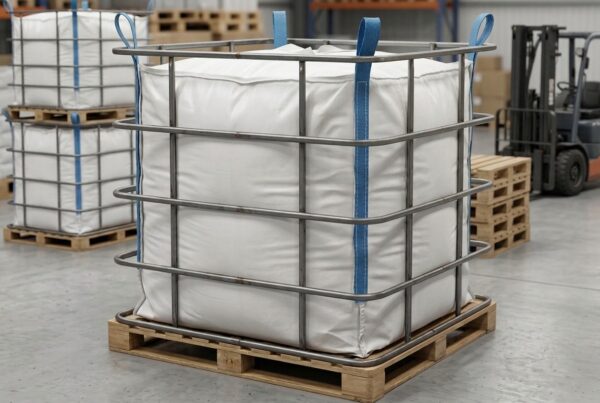
A 1 MT bitumen bag is the confirmed packaging unit Tiger Bitumen supplies through its dedicated Bitumen Bags offering: bitumen packed into a woven polypropylene (PP) bag housed inside a steel cage, with each unit holding 1,000 kg of product.
Bulk bitumen is sourced in tankers and vessels, then packed into this format at Tiger Bitumen’s packaging facility in the Karachi Export Processing Zone and prepared according to the buyer’s confirmed specification. Whatever grade of bitumen is inside, the packaging unit itself does not change; it is always the same 1,000 kg bag-in-cage configuration.
Confirmed Packaging Format
The published specification for the bagged product is straightforward:
| Field | Confirmed Detail | |
| Product | Bitumen, bagged | |
| Packaging format | 1 Metric Ton(1,000 kg) PP woven bag in steel cage | |
| Bag weight | 1,000kg per bag | |
| Packaging meterial | Woven polypropylene (PP) bag, housed in a steel cage | |
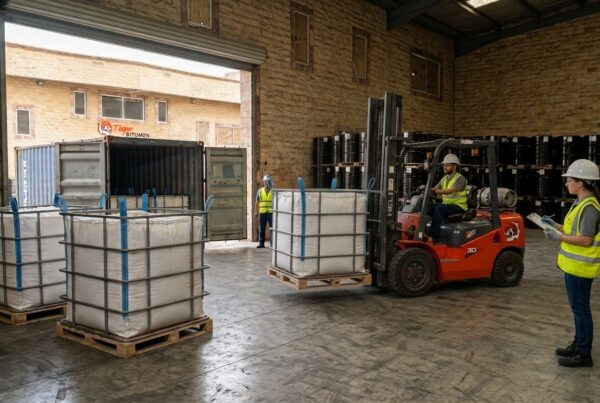
| Loading | Placed on pallets, loaded into containers under export supervision | |
| Shipping method | Containerised sea freight | |
| Incoterms offered | FOB, CFR, CIF | |
This is a single confirmed format; there is no published smaller or larger bagged unit. Total order quantity, and how many 1 MT units that translates into, is a separate matter to confirm directly with the export team rather than something governed by a fixed published minimum.
Bag Construction and Steel Cage Function
The bag has two confirmed components.
The PP woven outer bag is made from woven polypropylene fabric, the standard outer material used across the bulk bag industry generally. It is what directly contains the bitumen.
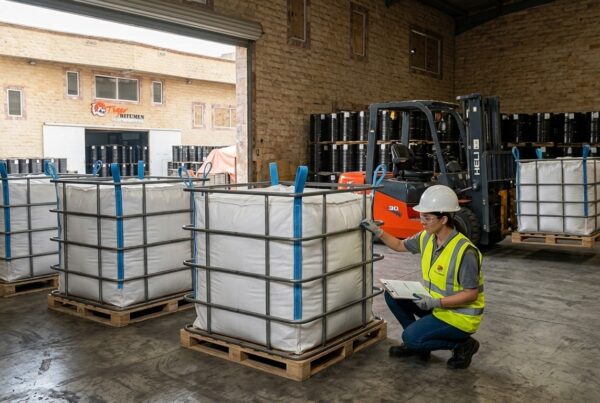
The steel cage houses the PP bag and provides structural support for handling and transport of the full 1,000 kg load. This is the functional core of the format: it allows a semi-solid, one-tonne unit to be lifted, moved, and stacked as a rigid load using standard equipment, rather than relying on the bag’s own fabric to bear that weight during handling.
Beyond these two confirmed elements, cage dimensions, cage material grade, and bag liner specification have not been published by Tiger Bitumen. If your project needs this level of technical detail for engineering sign-off, customs classification, or handling-equipment compatibility checks, request it directly through the Technical page or your RFQ.
Palletising and Loading
Placing bags on pallets is a standard part of Tiger Bitumen’s export preparation for every Bitumen Bags shipment; this is not optional or order-dependent.
What is order-dependent is the exact arrangement: how many bags sit on a pallet and how those pallets are then arranged for loading. There is no published fixed figure here because it depends on your specific order, destination, and the shipping arrangement confirmed with the logistics team.
For additional context on how bagged bitumen compares with drums in terms of packaging, handling, storage, and loading, see Bitumen Bags vs Drums: Packaging & Handling Differences.
If your receiving facility has particular constraints — such as a maximum pallet footprint, specific forklift reach, or a fixed dock height — raise them early so they can be factored into the loading plan.
Forklift and Crane Handling
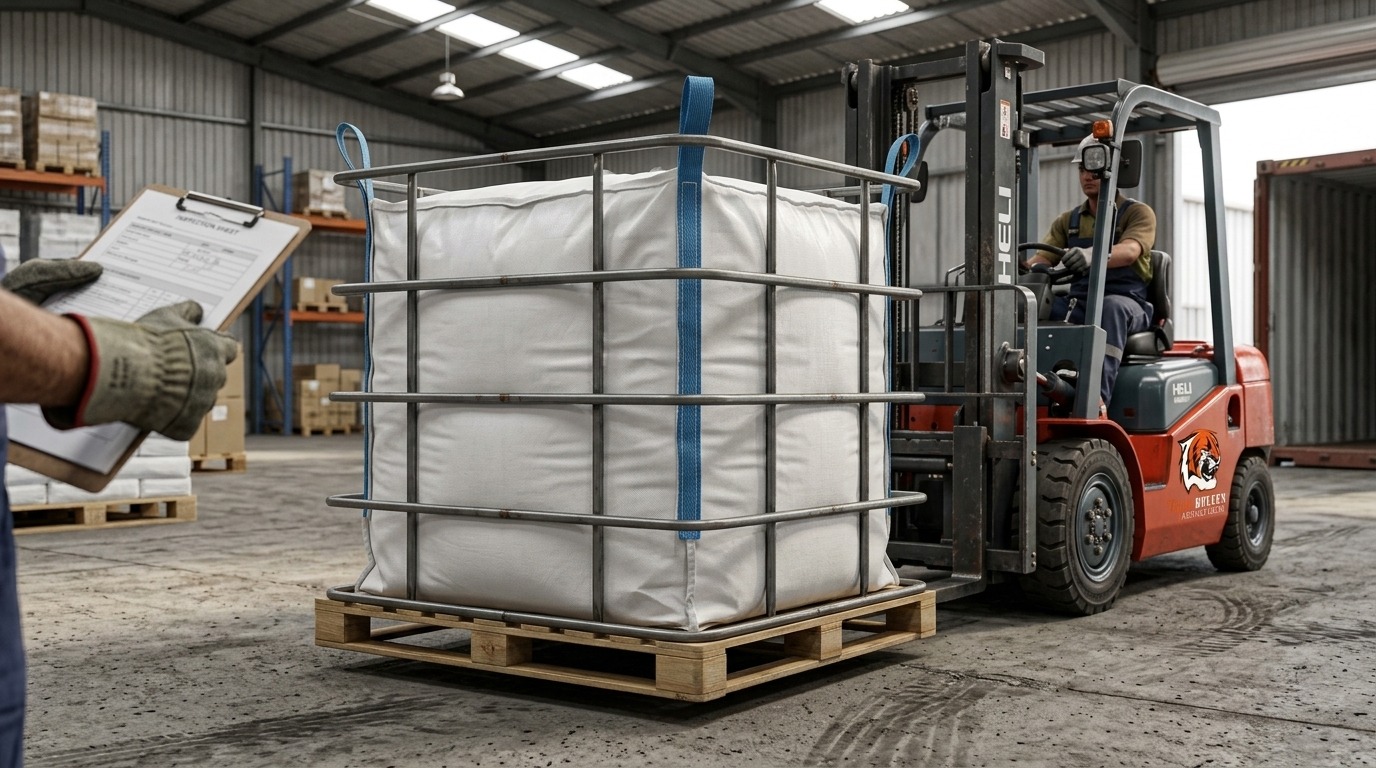
Because the bag is housed in a steel cage, it is typically handled using forklifts or cranes, standard equipment already present in many warehouses, ports, and site yards, capable of moving a one-tonne load.
This is a practical distinction worth understanding: a soft-sided flexible bag with no rigid support generally needs specific lifting-loop attachments and more careful handling. The steel-caged version is designed to behave more like conventional rigid palletised cargo, which is one reason it fits into standard material-handling workflows without specialised lifting equipment.
For more practical guidance, see How to Handle and Store Bagged Bitumen, which covers receiving, forklift handling, storage, and inspection considerations.
Handling should always follow your site’s own safety procedures, in addition to any guidance the export team provides for your specific order.
Containerized Sea Freight
Bagged bitumen ships internationally via containerised sea freight, under FOB, CFR, or CIF terms depending on your preferred logistics arrangement.
Container type, size, and the exact loading configuration for a given shipment are confirmed as part of preparing your order; they depend on total quantity, destination, and route. Rather than assuming a fixed figure, treat this as one of the details to lock down with the logistics team once your grade and quantity are settled.
Transit time is not standardised either. It depends on shipping route, destination country, vessel schedule, weather, and port conditions, so any timeline you are given should be treated as specific to your shipment’s route rather than a general benchmark for the format.
Export Documentation to Confirm
A bagged bitumen shipment typically travels with the following documentation:
- Commercial Invoice
- Packing List
- Bill of Lading
- Certificate of Origin
- Certificate of Analysis (COA), which confirms the tested technical properties of the specific batch supplied
- SGS inspection report, where required
Many buyers request an independent SGS inspection as an added layer of confidence on quantity, packaging condition, and loading. See How SGS Inspection Ensures Bitumen Quality for what that process typically covers.
Exactly which documents your shipment needs can vary by destination and buyer requirement, so confirm the required set with the export team ahead of shipment rather than assuming the standard list covers everything your customs process requires.
Product and Grade Considerations
The packaging format does not determine which bitumen grade you receive; that is a separate specification decision. Tiger Bitumen’s most prominent bagged product lines are:
- Penetration Grade bitumen, including 35/50, 50/70, 60/70, and 80/100
- Oxidized Bitumen, including 85/25, 95/25, and 115/15
These are described as the grades most consistently referenced across Tiger Bitumen’s bagged-format materials. For road and asphalt applications, see Bitumen Bags for Road Construction & Asphalt Projects.
The wider product range — Performance Grade, Viscosity Grade, Australian Standard, Cutback, Coat, and Emulsion Bitumen — is not confirmed grade by grade for bagged-format availability. If your specification calls for something outside the two core lines, that is a fit-check to run with the export team before assuming it is available in this packaging format.
What’s Confirmed vs What You Must Confirm
Separating these two categories clearly avoids assuming more than has actually been published:
| Confirmed for every order | Confirmed per order (ask the export team) | |
| 1,000 kg bag weight | Bitumen grade and its bagged-format availability | |
| PP woven bag + steel cage construction | Total order quantity | |
| Palletising as part of loading preparation | Bags per pallet and pallet arrangement | |
| Containerized sea freight | Container type,size,and loading configuration | |
| FOB / CFR / CIF Incoterms offered | Which Incoterm applies to your shipment | |
| Core bagged grade: Penetration & Oxidized lines | Availability of other grades in bagged format | |
| Typical documentation set (Invoice, Packing List, B/L, COO, COA, SGS where required) | Exact document set required for your destination | |
| — | Destination port and receiving/unloading capability | |
| — | Storage guidance for your grade and climate | |
| — | Target shipment date | |
Practical Checklist for International Buyers
Before submitting an RFQ for 1 MT bitumen bags, have answers ready for:
- Which grade your project specification calls for and whether it is confirmed in bagged format
- Your total required quantity
- Any additional bag or cage construction detail your engineering or customs process needs
- The Incoterm you want to work under (FOB / CFR / CIF)
- Your destination port and any known local unloading constraints
- Whether your site has forklift or crane capability suited to a one-tonne palletised load
- Which export documents your import process specifically requires
- Your target shipment window
Bringing this information to the first conversation with the export team can shorten the quotation process considerably, since most of it directly shapes the packaging, loading, and shipping plan.
Conclusion
The 1 MT PP woven bag in steel cage is a fixed, well-defined packaging unit, but a fair amount of what determines your actual shipment — quantity, container configuration, documentation set, and destination handling — is confirmed per order rather than standardised.
Treating those two categories separately and bringing the right questions to your RFQ can help turn a general enquiry into an accurate quotation.
To move forward, get a written specification against your exact grade, quantity, and destination. Visit Bitumen Bags for the full commercial offering, or go directly to Request a Quote with your requirement.
FAQs
Is 1 Metric Ton the minimum order quantity?
The 1,000 kg bag is the confirmed packaging unit. Total order quantity requirements should be confirmed directly with the export team as part of your RFQ, rather than assumed from the bag size alone.
What container size is used to ship bitumen bags?
Shipment is by containerized sea freight. The specific container type and loading configuration for your order are confirmed as part of preparing the shipment, based on your quantity and destination.
How many bags fit on a pallet or in a container?
This isn’t published as a fixed figure it depends on your specific order and is confirmed by the logistics team when your shipment is being planned.
What is the bag made of?
A woven polypropylene (PP) outer bag housed inside a steel cage. Further construction detail liner type, cage material grade, cage dimensions isn’t published and should be confirmed with the export team if your project requires it.
What documentation should I expect with a shipment?
Typically a Commercial Invoice, Packing List, Bill of Lading, Certificate of Origin, and Certificate of Analysis, with an SGS inspection report where required. Confirm the exact set your destination requires.
Which grades are available in the 1 MT bagged format?
Penetration Grade and Oxidized Bitumen are the confirmed core bagged product lines. Other grades in the wider range aren’t confirmed grade by grade check with the export team for your specific requirement.
How is the 1 MT bag physically handled?
Using forklifts or cranes the steel cage is what allows the full 1,000 kg load to be handled as a rigid, supported unit rather than as a soft-sided bag alone.