Bitumen Bags for Road Construction & Asphalt Projects
Bitumen bags for road construction are mainly relevant because of their packaging, handling, storage, and delivery format. The packaging itself does not give the bitumen a special performance advantage for road or asphalt applications. The bitumen grade determines whether the material is suitable for a particular road specification or asphalt mix design. The bag determines how that material arrives, moves, and stays in storage before use.
This article looks specifically at what that means in practice for contractors, asphalt producers, and infrastructure teams. It covers how 1 MT bagged bitumen fits into project logistics, what receiving and handling can involve at a project site or plant, and what to confirm before using this format for a road or asphalt project.
For a comparison against other packaging and supply formats, see Bitumen Bags vs Drums and Bitumen Bags vs Bulk Bitumen. This article stays focused on the road construction and asphalt use case itself.
Why Bitumen Bags Are Relevant to Road Construction Projects
Bitumen is widely used as a binder in road and pavement construction. It helps bind aggregate together in asphalt and pavement layers. That role does not change based on packaging. Bagged, drummed, or bulk bitumen can serve the same binder function when the selected grade meets the project specification.
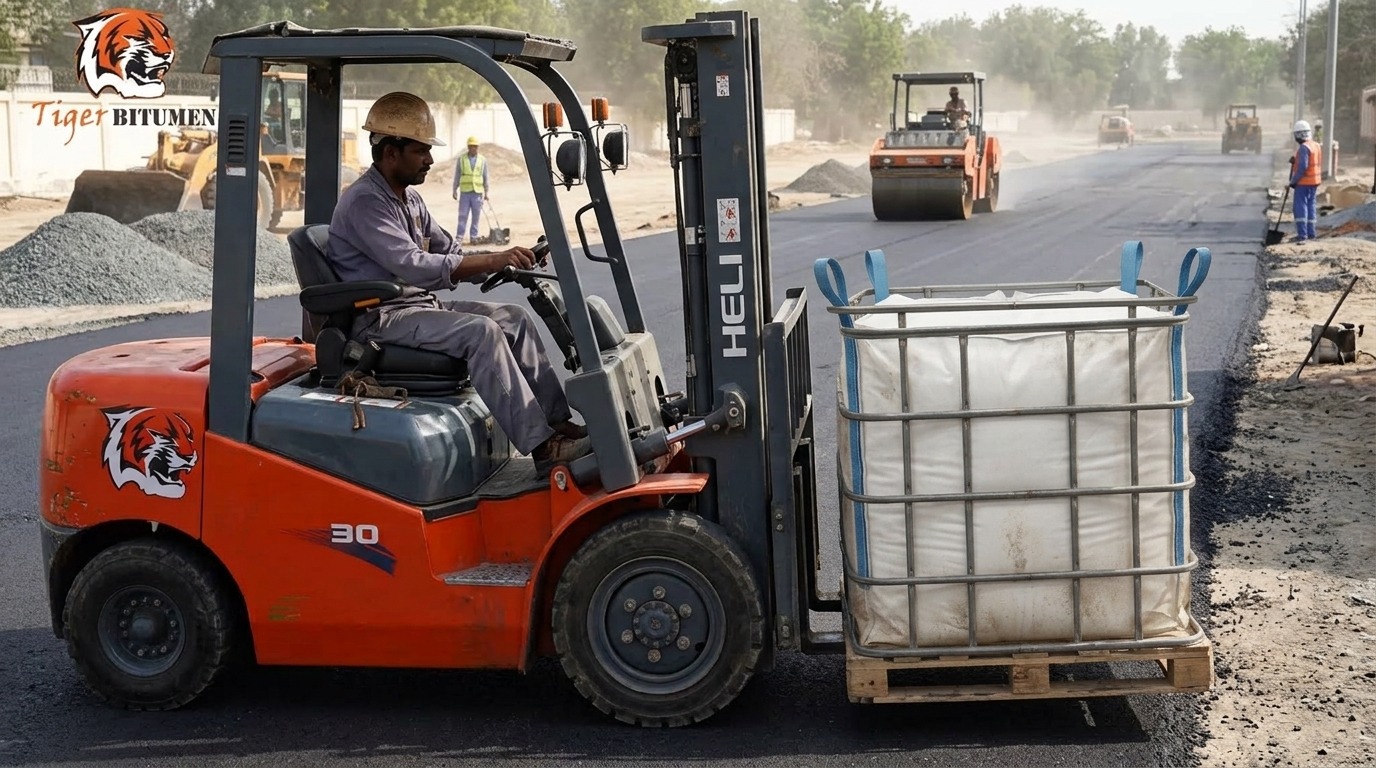
Bitumen bags for road construction become practically relevant on the receiving and handling side. The format suits project sites whose infrastructure better matches palletised, forklift-handled material than bulk tanker receiving or individual drum handling.
This can be particularly relevant for project-based or phased works where material arrives according to a construction schedule rather than through continuous high-volume bulk deliveries.
Full application information is available on the Bitumen Bags Applications page.
How 1 MT Bags Fit Into Asphalt and Road Project Logistics
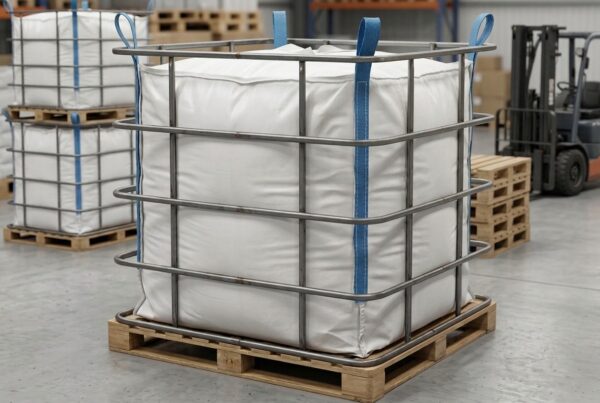
For a contractor or asphalt producer planning material delivery, the 1,000 kg bag unit creates a clear logistics structure. Instead of planning around drum counts or tanker deliveries against tank capacity, teams can plan quantities in whole-tonne bag units.
This has several practical implications:
- Ordering in round-tonne quantities can simplify volume planning against a project’s material take-off because each bag represents a known unit.
- Deliveries can be staged across a project timeline, allowing material to arrive in planned tonne increments rather than through one large bulk delivery.
- Site storage planning focuses on allocating suitable covered space for a known number of pallet-mounted units rather than sizing bulk storage tank infrastructure.
These points describe the logistics of the format after a project has selected it. They do not determine whether bagged bitumen is suitable for every road or asphalt project.
Receiving Bagged Bitumen at a Project or Asphalt Plant Site
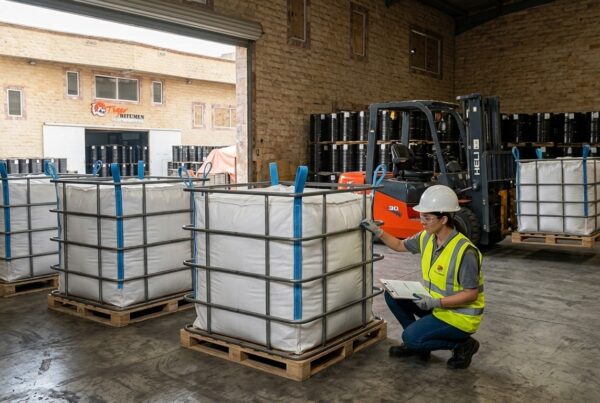
Receiving bagged bitumen at a road construction site or asphalt plant follows general material-receiving principles. Teams should check quantities against shipping documents, inspect the condition of the bag and steel cage, and confirm that the delivered grade matches the project specification and Certificate of Analysis.
At an asphalt plant, delivery timing also matters. The receiving team needs to coordinate incoming material with production scheduling so the bags can move from receiving to storage and then into the plant’s processing workflow as required.
Unloading and Moving Bags Using Forklifts or Cranes
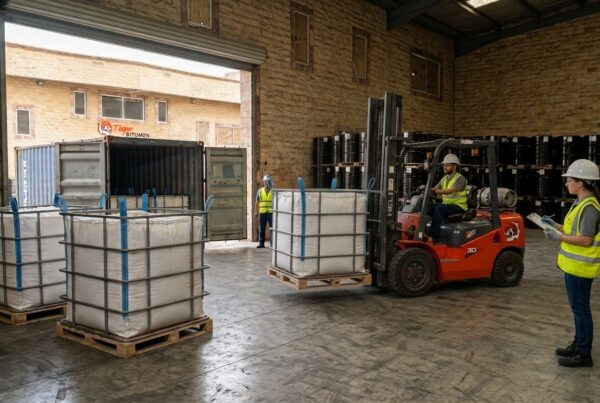
Because the PP woven bag sits inside a steel cage, the combined unit can typically be unloaded and moved using forklifts or cranes, subject to the site’s equipment capacity and handling procedures.
For road construction sites, this means the bagged format can work with equipment already used for general material handling. The site does not necessarily need a separate handling system dedicated only to the packaging format.
The same principle can apply at asphalt plants where forklifts and other material-handling equipment already form part of normal plant operations.
The exact handling method should always follow the supplier’s guidance and the site’s approved lifting and safety procedures.
Palletised Storage and Site Organization
Bags remain on pallets during loading and can generally remain palletised during storage, consistent with the handling approach for the format. On a road construction or asphalt project site, this creates several practical considerations:
- Allocate covered storage space close enough to the point of use, such as the paving operation or asphalt plant, to reduce unnecessary re-handling.
- Plan for staged consumption. Because each bag represents a tonne-sized unit, teams can organize stock according to project phases and expected material use.
- Keep delivery documentation with the relevant stock records. This is particularly useful when a project receives multiple deliveries and needs to track grade consistency against the project specification.
For detailed handling and storage guidance, see How to Handle and Store Bagged Bitumen.
How Bagged Bitumen Enters the Production or Use Process
At a general level, bagged bitumen moves from its packaged state into the process required by the project. This may involve heating and incorporation into an asphalt mix or preparation for direct application, depending on the project type.
The exact processing method depends on the asphalt producer’s or contractor’s operational setup and the technical requirements of the selected bitumen grade. The packaging format itself does not determine processing temperatures, plant equipment, or the production sequence.
This article therefore does not provide specific temperatures or plant settings. Those details should come from the project’s technical specification, operating procedures, and the bitumen’s Certificate of Analysis.
What the packaging format determines is how the material arrives at the point where processing begins: as a palletised, tonne-sized unit that can be moved into position using suitable handling equipment.
Considerations for Contractors, Asphalt Plants and Infrastructure Projects
Contractors managing road construction need to consider the project’s total material requirement and construction phases. A key question is whether the project requires large, continuous volumes or whether tonne-increment deliveries fit the project schedule and site infrastructure.
Asphalt plants need to consider how bagged receiving fits into their existing raw-material workflow. They should also confirm that their plant setup can process material supplied in palletised bag units rather than relying entirely on bulk tank storage.
Infrastructure project teams, particularly on larger multi-phase developments, may need to consider bagged bitumen alongside other supply formats across different project stages. Material requirements can change significantly between early, middle, and late phases of a project.
In all three cases, the underlying question is the same: does the project’s volume, timeline, and site infrastructure support the use of bagged bitumen?
Project Situations Where Bagged Handling May Be Operationally Practical
Several project situations may make bitumen bags for road construction operationally practical:
- Phased road construction projects, where material arrives incrementally across different project stages.
- Remote or smaller project sites without established bulk tank infrastructure but with suitable forklift or crane access.
- Asphalt plants supplementing primary bulk supply with bagged material for specific grades or smaller batches.
- Infrastructure projects with variable material timing, where staged tonne-increment deliveries fit the project schedule better than a single bulk delivery.
These are indicators rather than fixed rules. Project teams should assess their own volume, timeline, storage arrangements, equipment, and site capabilities before selecting a supply format.
Important Points to Confirm Before Ordering
Before specifying bitumen bags for road construction or an asphalt project, confirm the following:
- The bitumen grade required by the project specification and whether that grade is available in the confirmed bagged format.
- The total quantity required in 1 MT bag units against the project’s material take-off.
- Delivery staging and timing relative to the construction or asphalt production schedule.
- Your site’s or plant’s forklift/crane capacity for handling one-tonne palletised units.
- The available storage space and conditions on site.
- The documentation required for project quality records, including the Certificate of Analysis and SGS inspection where required.
Confirming these details with Tiger Bitumen’s export team alongside the project specification provides a practical basis for assessing whether bagged supply fits the road or asphalt project.
Bitumen Bags for Road Construction: Key Project Factors
When evaluating bitumen bags for road construction, project teams should focus on the factors that directly affect day-to-day operations:
- Grade: confirm that the selected bitumen meets the project specification.
- Quantity: calculate the requirement around the confirmed 1 MT unit format.
- Handling: confirm suitable forklift or crane capacity before delivery.
- Storage: prepare suitable covered and organized storage space.
- Scheduling: coordinate delivery timing with construction or asphalt production requirements.
- Documentation: confirm the quality and shipment documents required for the project.
These factors help separate the practical logistics of the packaging format from the technical suitability of the bitumen itself.
Conclusion
The relevance of bitumen bags for road construction and asphalt projects comes mainly from logistics and site fit, not from a change in the bitumen’s underlying performance. The selected grade remains responsible for meeting the project’s technical requirements.
For contractors and asphalt producers with suitable pallet-handling equipment, storage space, and project schedules, the 1 MT format provides a defined way to receive, store, and move bitumen in tonne increments.
The right way to assess the format is against your specific grade, quantity, delivery schedule, storage conditions, and site infrastructure rather than through general assumptions about packaging.
To discuss bagged bitumen for your road construction or asphalt project, visit Bitumen Bags or go directly to Request a Quote with your grade, quantity, and project timeline.
FAQs
Is bagged bitumen suitable for road construction?
Bitumen is a common binder in road and pavement construction generally, and bagged bitumen can be a practical format where the project’s receiving and handling setup suits palletised material. The grade still needs to match the project specification.
Can bagged bitumen be used at an asphalt plant?
Yes, where the plant’s receiving and processing setup can accommodate palletised material arriving in tonne sized units rather than bulk tanker or drum delivery.
What equipment is needed to receive bagged bitumen at a project site?
Forklifts or cranes capable of handling a one tonne rigid palletised load equipment typically already present at construction sites and asphalt plants.
Does the bag affect the bitumen's performance in asphalt or road use?
No. The bitumen’s grade and technical characteristics are determined by the product itself, not by the packaging format.
What temperatures are needed to process bagged bitumen for asphalt production?
This depends on the bitumen grade and the plant’s own processing setup figures should come from your project’s technical specification and Certificate of Analysis, not from general packaging guidance.
Is bagged bitumen suitable for every road or asphalt project?
No single format suits every project. Suitability depends on grade requirements, project volume, timeline, and site or plant infrastructure confirm fit with the export team for your specific project.