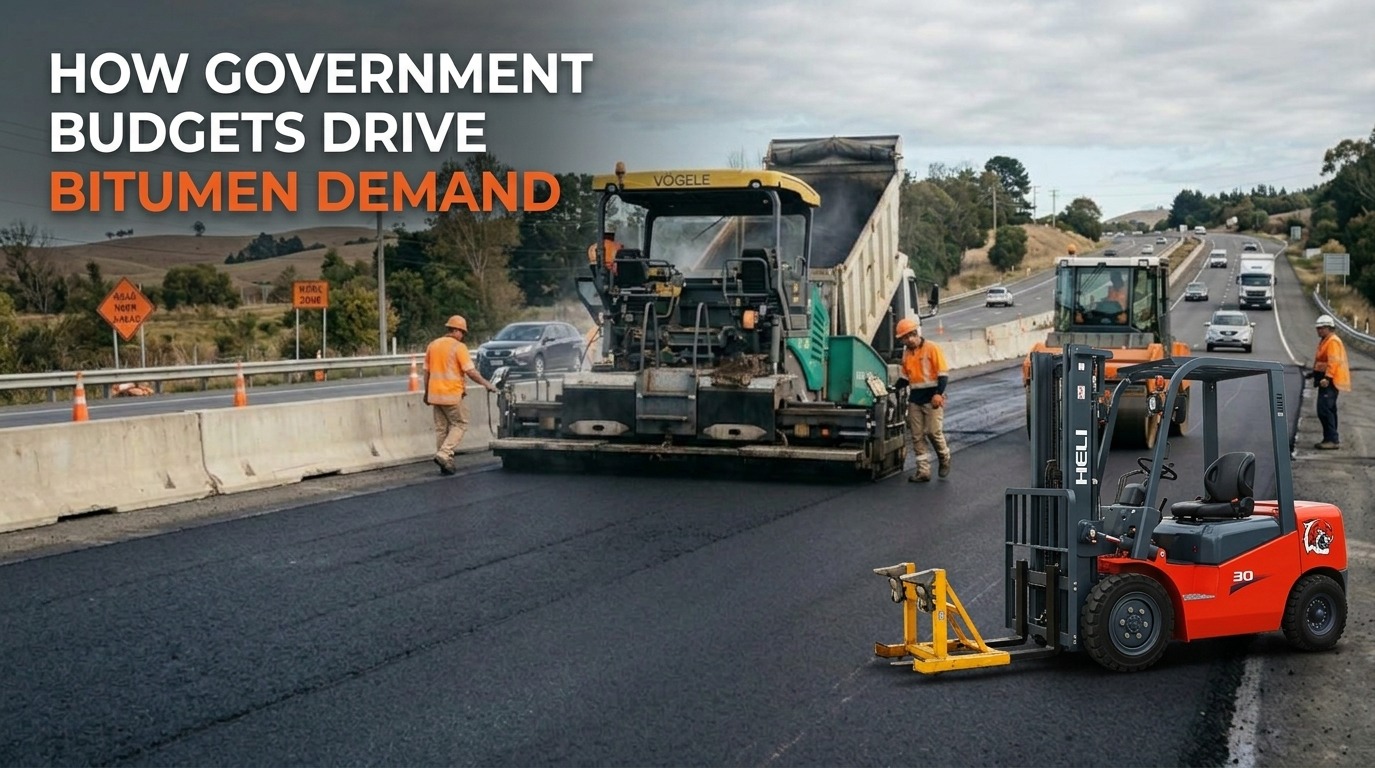
Bitumen demand and infrastructure spending are closely linked. Budget allocations determine how much road work can be funded, while fiscal deadlines and election cycles shape project timelines.
Weather decides when paving is physically possible, but budgets and politics decide how much paving actually happens. For importers, distributors and contractors, understanding this funding cycle is as important as watching refinery output or the construction calendar.
This article explains how public infrastructure spending, budget deadlines and election cycles shape bitumen demand. It also covers how contractors respond when budgets meet rising prices, and what buyers can watch to anticipate changes.
Why public money drives bitumen demand
Road building and maintenance are mainly funded by national and local governments, either directly or through publicly backed programmes. Bitumen demand is therefore a derived demand. It follows the road contracts that governments award and pay for.
That creates a chain:
- Budgets are allocated to transport or works ministries and to regional authorities.
- Contracts are awarded to road-building companies.
- Contractors schedule paving and place bitumen orders with distributors and importers.
- Importers buy cargoes or drummed supply to meet those orders.
A delay or shortfall at any link in the chain reduces bitumen purchasing further down, even if the underlying need for roads remains. The same applies in reverse: new funding can lift demand quickly once contracts are released.
How budget cycles shape the timing of demand
Fiscal-year deadlines create rushes
Many public works budgets run on an annual cycle. Where funds must be spent or projects completed before a fiscal year ends, contractors often accelerate work in the final months. This can produce a burst of bitumen buying that is driven by financial deadlines rather than weather.
Delayed budgets stall projects
When budgets are approved late or released in stages, contractors may hold back until funding is confirmed. Bitumen demand can stay subdued even during good paving weather. Weather-driven demand is covered in our guide to how seasonal weather patterns affect bitumen demand. Budget timing can override that seasonal pattern.
Allocation size sets the ceiling
The share of public spending allocated to roads limits how much work can be contracted in a year. Larger allocations, or new multi-year infrastructure programmes, can support steady demand over several seasons. Cuts, or a year of scant funding, can depress consumption regardless of the state of the road network.
How election cycles influence road building
Pre-election acceleration
Roads are visible public works. Ahead of national or local elections, governments often push to complete or launch highway projects, and contractors may face pressure to finish on schedule. This can lift bitumen demand in the months before a vote.
Political instability and caretaker periods
The opposite can happen when governments fall or coalitions break down. New contracts may stall, approvals may slow and funding decisions may be postponed until a stable administration is in place. During these periods, demand for bitumen can remain weak even where road needs are significant.
Domestic demand can absorb export supply
Election-driven road building does not only affect importing countries. When a producing country accelerates domestic paving before an election, local consumption can absorb output that would otherwise be exported. This reduces availability for buyers elsewhere. Our article on how demand in one major market can affect bitumen availability elsewhere explains this spillover.
When budgets meet rising bitumen prices
Public road contracts are usually priced and budgeted in advance. When bitumen prices rise sharply, the funded budget buys less material, and contractors respond in different ways:
- Scaling back or delaying projects. Where budgets are fixed and margins are thin, contractors may reduce project scope or postpone work until prices ease.
- Capping purchase prices. Importers serving budget-constrained customers may limit what they can pay for cargoes, even when they need stock.
- Pressing ahead under deadline pressure. Contractors facing firm completion dates, whether set by fiscal years, contracts or elections, are more likely to accept higher prices to finish on time.
This often splits a single market in two. Deadline-driven buyers keep purchasing, while price-sensitive buyers step back. The result can look like strong demand and weak demand at the same time, depending on which customers an importer serves. As our article on why rising bitumen prices don’t always mean tighter supply explains, price movements need to be read alongside the demand behind them.
What international markets showed in 2026?
Market reporting in early October 2026 illustrated each of these mechanisms. The examples below are reported developments and market participants’ expectations, grouped by theme. They are not Tiger Bitumen forecasts.
Election-linked acceleration
- Kenya. Road contractors were reported to be under government pressure to complete major highway projects ahead of the 2027 national elections. Bitumen truck requirements were described as high.
- Malaysia. Market participants expected demand to rise in the fourth quarter as contractors rushed to finish projects before year-end, having delayed paving earlier because of higher prices. They also said fresh highway works ahead of the next general election, together with infrastructure funding in the national budget, should support consumption.
- Taiwan. Strong domestic consumption ahead of local elections left a key refiner with limited volumes to offer on the export spot market.
Funding shortfalls
- Poland. Bitumen consumption was reported to be weak in a year of scant government infrastructure funding.
- Romania. Demand stayed low because of a lack of project work linked to political instability following the collapse of the government in May.
- Southern Africa. Several regional markets outside South Africa were reported to be performing below par because of weak government funding for major road projects.
- Eastern Indonesia. Consumption was subdued because of stricter budget constraints. Market participants said existing government funding made current seaborne prices unviable.
Budgets under price pressure
- Benelux. Elevated bitumen prices during the summer were reported to have led some end users and contractors to reduce the scale of planned projects or delay works.
- South China. Available government funding was reported to be insufficient relative to rising domestic bitumen values, dampening downstream demand. Contractors with strict highway deadlines were still expected to resume work.
- Vietnam. Importers resumed previously delayed projects during the peak construction period, but market participants warned that budget constraints could become a challenge if prices rose sharply.
Long-term programmes versus cost shocks
- Nordic region. Regional demand had been rising on long-term infrastructure investment programmes in Sweden and Denmark. Higher costs linked to the US-Iran conflict were reported to have delayed or suspended some projects.
Our interpretation: Across very different markets, the same pattern appears. Firm deadlines and politically important projects kept bitumen buying going, while fixed or uncertain budgets made buyers more sensitive to price.
Signals buyers and suppliers can watch
Budget and political signals are often public well before they show up in bitumen orders. Useful indicators include:
- National budget announcements, especially allocations to transport, works and road ministries.
- Fiscal-year end dates in each market served, and any spending or completion deadlines tied to them.
- Election calendars at national and local level, and government statements about flagship road projects.
- Contract awards and project launches for major highways and road maintenance programmes.
- Political stability, including coalition changes or caretaker periods that may slow approvals.
- Contractor feedback on prices, such as reports that projects are being resized or postponed because of material costs.
What this means for importers and distributors
Plan stock around the funding calendar
Where demand is driven by fiscal deadlines or election timetables, importers can plan purchases and storage ahead of expected peaks. This avoids buying in the same rush as everyone else. Our seasonal bitumen demand guide can be read alongside budget calendars to see where the two pressures coincide.
Understand your customer mix
Customers with firm deadlines and those with fixed budgets respond differently to price changes. Knowing which group dominates your order book helps predict how demand will hold up when prices move.
Match supply arrangements to funding visibility
Multi-year programmes with confirmed funding may justify planned, regular supply. Markets with uncertain or delayed budgets may be better served by flexible purchasing. Our guide to term vs spot bitumen procurement explains the trade-offs.
Watch the total cost, not just the product price
When budgets are tight, every cost component matters to the customer. Comparing offers on a full landed cost basis helps importers stay competitive with price-sensitive buyers.
Conclusion
Bitumen demand follows public money. Budget allocations set how much road work can be funded, fiscal deadlines and budget delays shape when it happens, and election cycles can accelerate or stall projects. Rising prices then test those budgets, often splitting markets between deadline-driven buyers who keep purchasing and budget-constrained buyers who step back.
The international examples reported in 2026 show these forces at work across Africa, Asia and Europe. For importers and distributors, tracking budget announcements, election calendars and contractor feedback offers an early view of demand, often well before orders arrive.
Buyers planning purchases around project and budget timelines can request a bitumen quote with their required grade, quantity, packaging and destination. This article is general commentary and does not constitute a price or availability offer.