What to check before buying bitumen in bags starts with confirming the product, packaging format, handling requirements, documentation, and commercial terms. Most problems with an international bitumen order do not come from a bad product. They usually come from something the buyer did not confirm before placing the order.
A grade may appear in a supplier’s wider product range but may not be available in the required bagged format. A receiving site may also lack the forklift capacity needed for the shipment. Documentation required by the buyer’s customs process may not have been specified in the RFQ.
This article provides a practical, procurement-focused checklist for international buyers. It follows the order process from grade and quantity to packaging, handling, logistics, documentation, and commercial terms. For detailed technical information, see 1 MT Bitumen Bags: Packaging, Handling & Export Specifications. For bag construction details, see Bitumen Bag Construction: PP Woven Bags & Steel Cage Explained.
Confirm the Bitumen Grade and Required Specification
Grade comes before everything else because your project specification determines it. The packaging format does not determine which grade you need.
Before placing an order, confirm:
- The exact grade your project specification requires, such as a specific Penetration Grade or Oxidized Bitumen grade
- Whether that grade is confirmed as available in bagged format
- Whether your application requires a specific grade for road construction, asphalt production, or waterproofing
Tiger Bitumen’s prominent bagged product lines include Penetration Grade (35/50, 50/70, 60/70, 80/100) and Oxidized Bitumen (85/25, 95/25, 115/15). Other grades in the wider product range are not automatically confirmed for bagged availability.
For road and asphalt applications, buyers can also review Bitumen Bags for Road Construction & Asphalt Projects. For waterproofing requirements, see Bitumen Bags for Waterproofing Applications.
Do not assume a grade is available in bagged format because it appears elsewhere in the supplier’s product range. Confirm it specifically with the supplier.
Confirm the Required Quantity and Packaging Format
Once you confirm the grade, check the required quantity and packaging format.
- Confirm your total volume requirement and how it divides into 1 MT bag units
- Confirm whether bagged supply suits your project volume and receiving setup
- Confirm whether your requirement is a one-off order or part of an ongoing supply relationship
If you are comparing packaging options, see Bitumen Bags vs Drums for packaging and handling considerations.
For buyers comparing bags with bulk supply, Bitumen Bags vs Bulk Bitumen provides additional information about the two formats.
Understand How the Bitumen Bag Is Constructed and Supported
You do not need to be a packaging engineer to order confidently. However, you should understand what the confirmed packaging format includes.
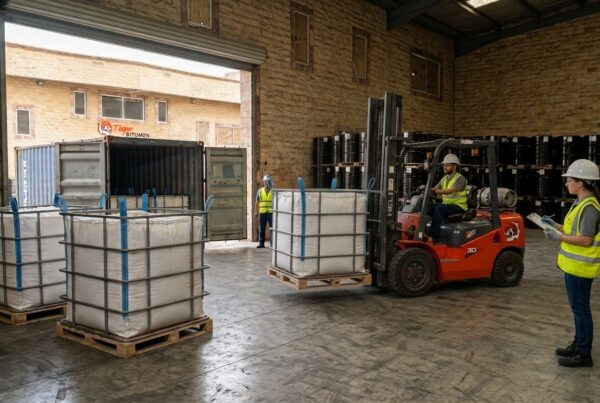
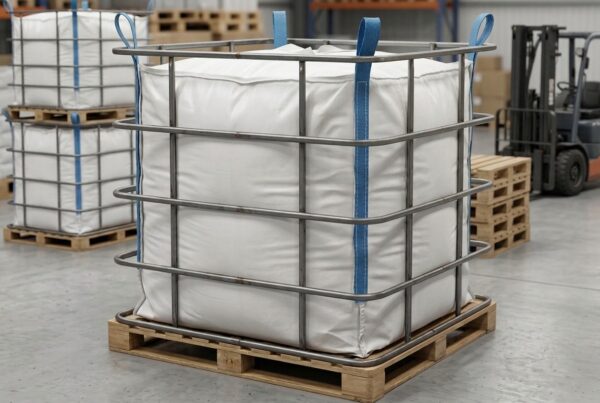
- The confirmed format is a 1 Metric Ton (1,000 kg) PP woven bag housed in a steel cage
- The woven polypropylene bag contains the bitumen
- The steel cage provides structural support during handling and transport of the full load
- Further construction details, such as cage dimensions, material grade, and bag liner specification, are not published as general specifications
- If your project needs these details for engineering approval, customs classification, or equipment compatibility, request a written specification sheet against your RFQ
For a detailed explanation of the packaging structure, see Bitumen Bag Construction: PP Woven Bags & Steel Cage Explained.
Confirm Handling Requirements at the Receiving Location
Before committing to bagged format, check what your receiving site can actually handle.
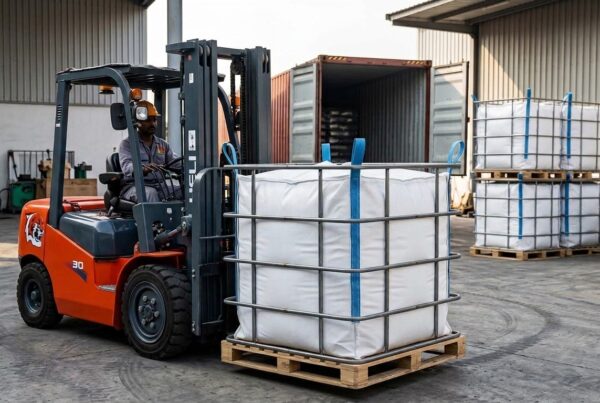
- Confirm that your site has forklift or crane capability rated for a one-tonne rigid load
- Check the route from the unloading point to storage and make sure a one-tonne palletised load can move through it safely
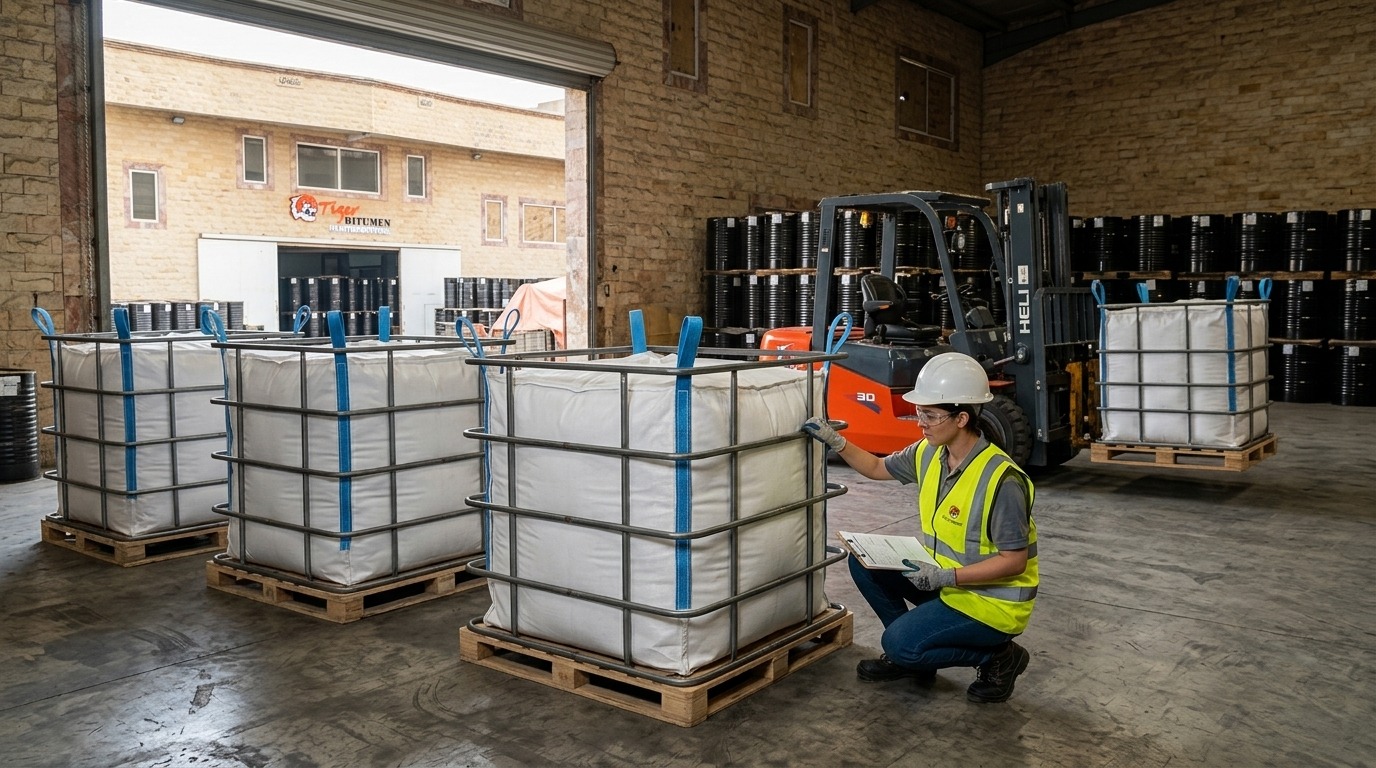
- Assign a person at your site to inspect quantities, bag condition, cage condition, and batch documentation on arrival
These checks form an important part of what to check before buying bitumen in bags. A suitable product still needs suitable receiving equipment.
Check Forklift or Crane Access at the Project or Site
Equipment access deserves a separate check because site conditions can differ from initial expectations.
- Confirm that the equipment is rated for the full load, not just available on site
- If the project site is remote or temporary, confirm that suitable equipment will be available and operational when the shipment arrives
- For asphalt plants or waterproofing projects, confirm that equipment access will not conflict with other site operations
For more information about the 1 MT format and handling considerations, see 1 MT Bitumen Bags: Packaging, Handling & Export Specifications.
Clarify Palletisation and Loading Arrangements
Palletisation is part of the Bitumen Bags loading process. The specific arrangement can vary, so buyers should confirm the details for their order.
- Confirm how the bags will be arranged on pallets
- Check whether your receiving equipment and storage space can accommodate the palletised arrangement
- Communicate site-specific constraints such as maximum pallet footprint, dock height, or aisle width before loading
For the full packing, palletising, and container loading process, see How Bitumen Bags Are Packed, Palletised & Loaded for Export.
Confirm Shipping and Delivery Requirements
Shipping terms influence what happens between order confirmation and final delivery.
- Confirm which Incoterm applies, such as FOB, CFR, or CIF, and understand the responsibilities at each stage
- Confirm your destination port and any known local unloading or import constraints
- Confirm the shipping method; bagged bitumen ships via containerized sea freight
- Allow for route, destination, vessel schedule, and port conditions when planning transit time
- Align the target shipment date with your project or production schedule
For a broader view of the international shipping process, see Bitumen Bag Export & Shipping: A Guide for International Buyers.
Check Storage and Site Handling Considerations
Storage planning should match the way the shipment will arrive and how your team will use the material.
- Store the 1 MT bag under cover and protect it from weather exposure, excessive heat, and contamination
- Confirm grade-specific storage guidance with the export team if your project involves extended storage
- Consider the location of the storage area in relation to the point of use, especially for phased projects
Storage temperature limits and shelf life figures are not published as general specifications. Confirm the appropriate guidance for your specific grade and order.
For practical storage and handling guidance, see How to Handle and Store Bagged Bitumen.
Confirm Documentation and Certifications Actually Required
Do not assume that a standard document set will cover every import requirement. Typical documentation can include:
- Commercial Invoice
- Packing List
- Bill of Lading
- Certificate of Origin
- Certificate of Analysis (COA), which confirms tested technical properties of the specific batch
- SGS inspection report, where required
However, a typical document set does not guarantee that it meets your destination’s requirements. Confirm the required documents with your customs or import team. Then check that list against what the supplier will provide.
For buyers who require additional information about inspection documentation, see How SGS Inspection Ensures Bitumen Quality.
Clarify Commercial Terms, Lead Time and Delivery Arrangements
Before finalising an order, get clear written information about the commercial and delivery terms.
- Confirm pricing and payment terms for your specific grade, quantity, and destination
- Confirm lead time from order confirmation to shipment
- Check whether the required quantity can ship as one consignment or requires staged deliveries
- Confirm your main point of contact for issues between order confirmation and delivery
Published material generally does not provide order-specific pricing. Request a direct quotation based on your grade, quantity, destination, and selected Incoterm.
Questions to Send Your Supplier Before Placing an Order
A practical RFQ should include clear questions that help you confirm what to check before buying bitumen in bags.
- Is [specific grade] confirmed available in the 1 MT bagged format?
- What documentation will accompany this shipment, and can you confirm it matches [your specific requirement]?
- What is the expected lead time from order confirmation to shipment for this quantity?
- What Incoterms are available, and what would you recommend for our situation?
- Can you provide a written specification sheet covering [any specific technical detail your project requires]?
- What is the process if there is a discrepancy between the order and what arrives?
Final Pre-Order Checklist for Buying Bitumen in Bags
Use this final checklist before confirming your order:
- Grade confirmed against project specification and confirmed available in bagged format
- Total quantity confirmed in 1 MT units
- Packaging format confirmed as the right fit compared with drums or bulk supply
- Site forklift or crane capability confirmed as suitable for one-tonne palletised loads
- Storage space and conditions confirmed as adequate
- Incoterm and shipping method agreed
- Destination port and import constraints identified
- Required documentation list confirmed against the customs or import process
- Pricing, payment terms, and lead time confirmed in writing
- Target delivery date aligned with the project or production schedule
Conclusion
Knowing what to check before buying bitumen in bags makes international procurement more straightforward. Start with the grade, then confirm quantity and packaging. After that, check handling capability, storage, shipping, documentation, and commercial terms.
Most avoidable problems in international bitumen procurement come from an assumption that was not checked before the order. A clear pre-order checklist gives the buyer and supplier a shared reference before the shipment moves.
To confirm your specification and request a written quotation, visit Bitumen Bags or go directly to Request a Quote with your grade, quantity, and destination.
FAQs
What's the most common mistake buyers make when ordering bagged bitumen?
Assuming a grade is available in bagged format without confirming it directly, or assuming site handling equipment is adequate without checking load ratings against the one tonne unit weight.
Do I need to confirm documentation requirements, or is a standard set always provided?
Confirm your specific requirement. A typical document set (Invoice, Packing List, Bill of Lading, Certificate of Origin, Certificate of Analysis) is standard, but destination specific import requirements can vary and should be checked against your own customs process.
Is bagged bitumen always the right format to order?
No. Suitability depends on your project’s volume, site infrastructure, and handling capability. See Bitumen Bags vs Drums and Bitumen Bags vs Bulk Bitumen if you’re still deciding between formats.
What should I check about site handling equipment before ordering?
Confirm forklift or crane capability is rated for a one tonne rigid load, and that equipment will genuinely be available and operational at the time your delivery arrives.
Can I get a written specification sheet before ordering?
Yes request one against your RFQ if your project requires confirmed detail beyond the general published specification.
What if my quantity doesn't divide neatly into 1 MT units?
Raise this directly with the export team as part of your RFQ rather than assuming a standard answer.